

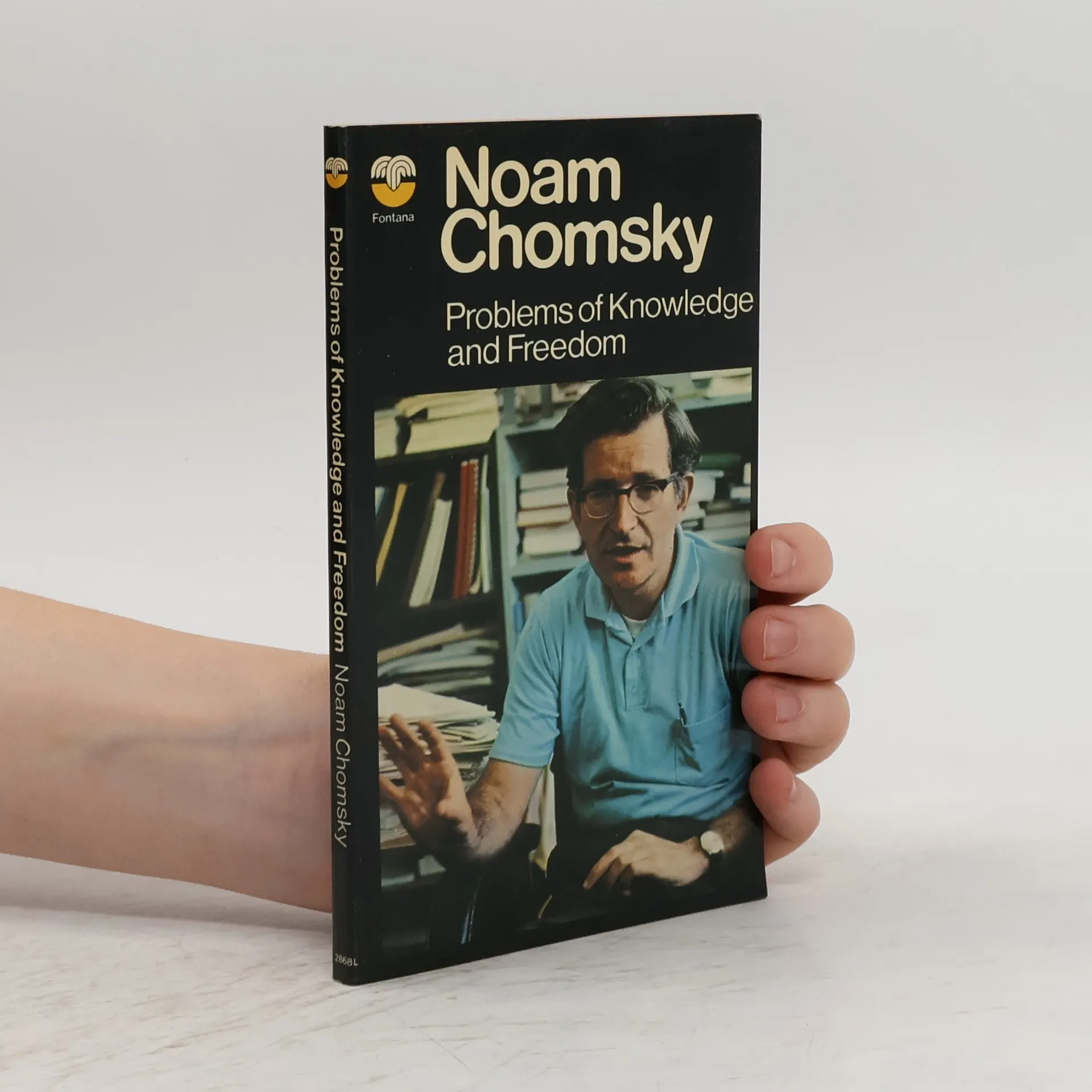


Mehr zum Buch
In the first half of this wide-ranging work, Chomsky takes up Russell's lifelong search for the empirical principles of human understanding, in a philosophical overview referencing Hume, Leibniz, Wittgenstein, and others. In the following half, aptly-titled "On Changing the World," Chomsky applies these concepts to the issues that would remain the focus of his increasingly political work of the period. These include the war in Indochina and the Cold War ideology that supported it, the centralization of U.S. decision-making in the Pentagon and the growing influence of multinational corporations in those circles, the politicization of American universities in the post-World War II years, along with his reflections on the Cuban missile crisis and the mass liberation movements of the era.
Publikation

Buchkauf
Problems of Knowledge and Freedom, Noam Chomsky
- Sprache

- Erscheinungsdatum
- 1972
- Einband
- (Paperback)
Hier könnte deine Bewertung stehen.
- Titel
- Problems of Knowledge and Freedom
- Sprache
- Englisch
- Autor*innen
- Noam Chomsky
- Verlag
- Fontána
- Erscheinungsdatum
- 1972
- Einband
- Paperback
- ISBN10
- 0006328687
- ISBN13
- 9780006328681
- Reihe
- Kategorien
- Schlagwörter
- Historisches Thema, Philosophisches Thema, Politik, Linguistik
- Bewertung
- 3,7 von 5 Sternen
- Beschreibung
- In the first half of this wide-ranging work, Chomsky takes up Russell's lifelong search for the empirical principles of human understanding, in a philosophical overview referencing Hume, Leibniz, Wittgenstein, and others. In the following half, aptly-titled "On Changing the World," Chomsky applies these concepts to the issues that would remain the focus of his increasingly political work of the period. These include the war in Indochina and the Cold War ideology that supported it, the centralization of U.S. decision-making in the Pentagon and the growing influence of multinational corporations in those circles, the politicization of American universities in the post-World War II years, along with his reflections on the Cuban missile crisis and the mass liberation movements of the era.