

Ausverkauft, aber heiß begehrt!
Liegt es in deinem Regal?Verdiene zwischen 5,65 € und 7,36 € beim Verkauf dieses Buches.
Bücher verkaufenFacilitating Emotional Change
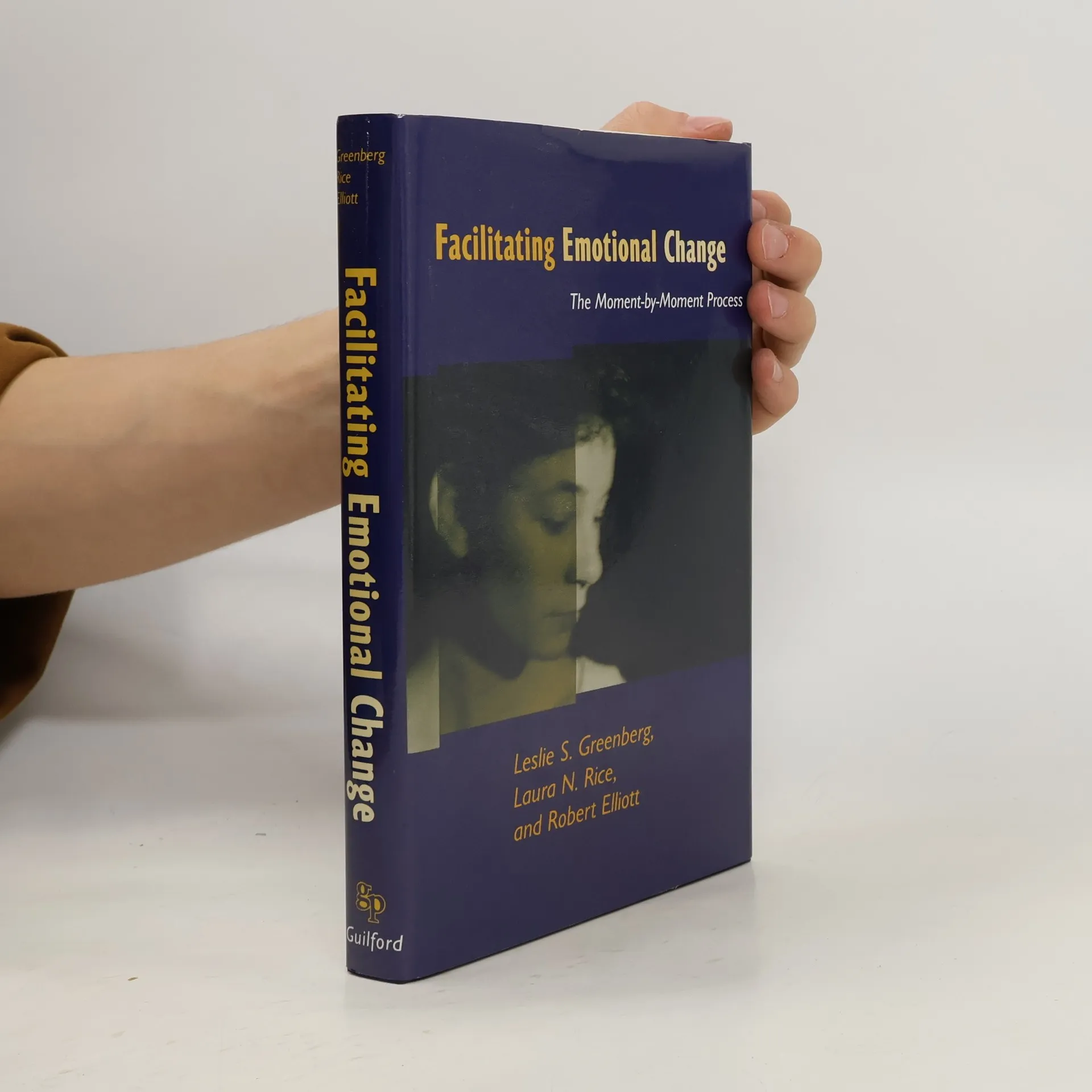
The Moment-by-Moment Process
Autor*innen
Buchbewertung
Mehr zum Buch
While emotions are often given a negative connotation--people are described as being ``too emotional'' or as needing to ``control their emotions''--the authors of this volume argue that, to the contrary, emotions are organizing processes that enhance adaptation and problem solving. Within an experiential framework, they show how to work with moment-by-moment emotional processes to effect shifts in meaning and resolve various psychological difficulties. Illuminated by clinical transcripts, general theoretical principles and six methods of intervention are described in detail.
Publikation

Buchkauf
Facilitating Emotional Change, Robert Elliott, Les Greenberg, Laura N. Rice
- Sprache

- Erscheinungsdatum
- 1993
- Einband
- (Hardcover)
Wir benachrichtigen dich per E-Mail.
4,1
Sehr gut
32 Bewertung
Hier könnte deine Bewertung stehen.
- Titel
- Facilitating Emotional Change
- Untertitel
- The Moment-by-Moment Process
- Sprache
- Englisch
- Autor*innen
- Robert Elliott, Les Greenberg, Laura N. Rice
- Verlag
- Guilford Press
- Erscheinungsdatum
- 1993
- Einband
- Hardcover
- Seitenzahl
- 346
- ISBN10
- 0898629942
- ISBN13
- 9780898629941
- Reihe
- Kategorien
- Schlagwörter
- Sonstige Lehrbücher, Emotionen, EQ, emotionale Intelligenz
- Bewertung
- 4,05 von 5 Sternen
- Beschreibung
- While emotions are often given a negative connotation--people are described as being ``too emotional'' or as needing to ``control their emotions''--the authors of this volume argue that, to the contrary, emotions are organizing processes that enhance adaptation and problem solving. Within an experiential framework, they show how to work with moment-by-moment emotional processes to effect shifts in meaning and resolve various psychological difficulties. Illuminated by clinical transcripts, general theoretical principles and six methods of intervention are described in detail.