

Parameter
- 237 Seiten
- 9 Lesestunden
Mehr zum Buch
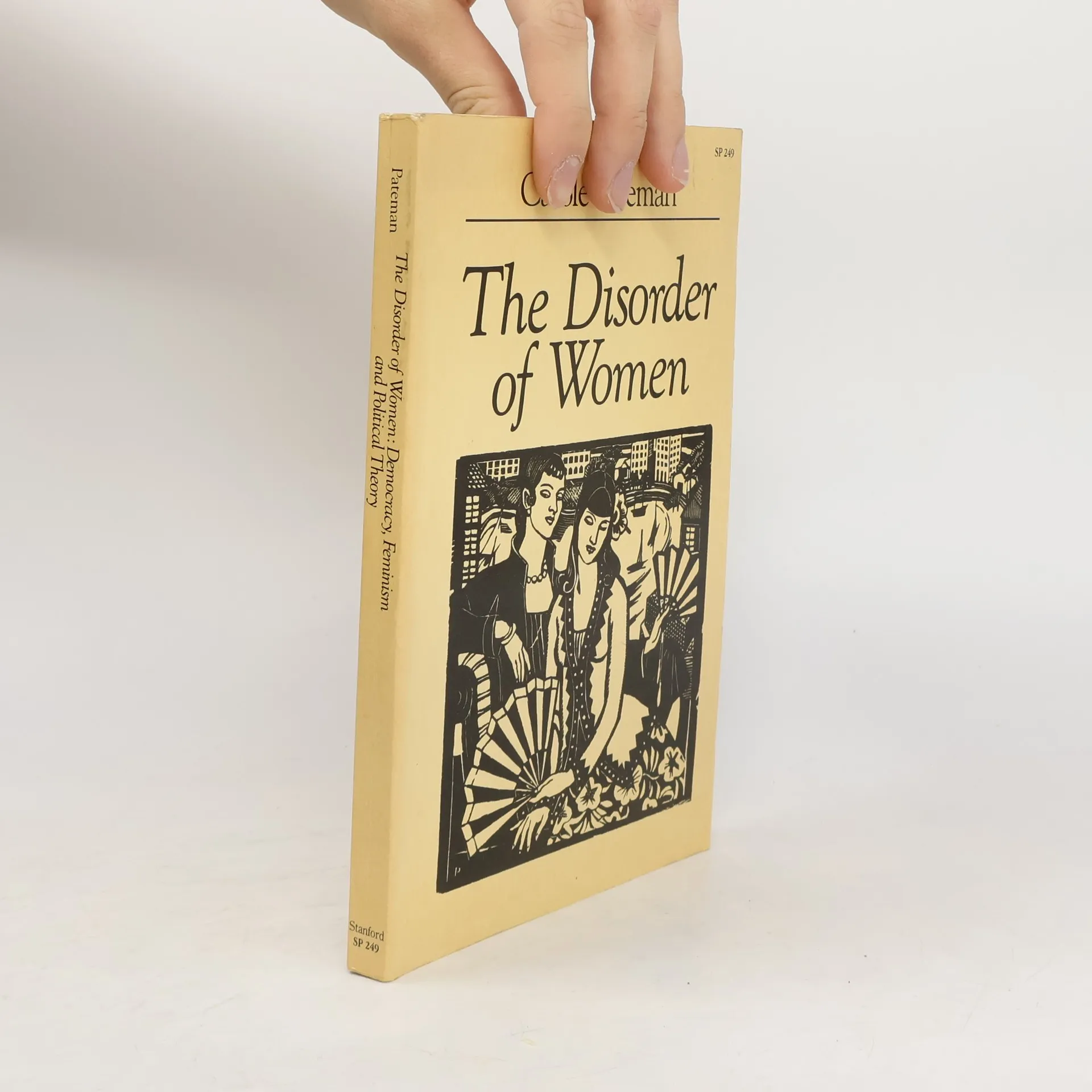
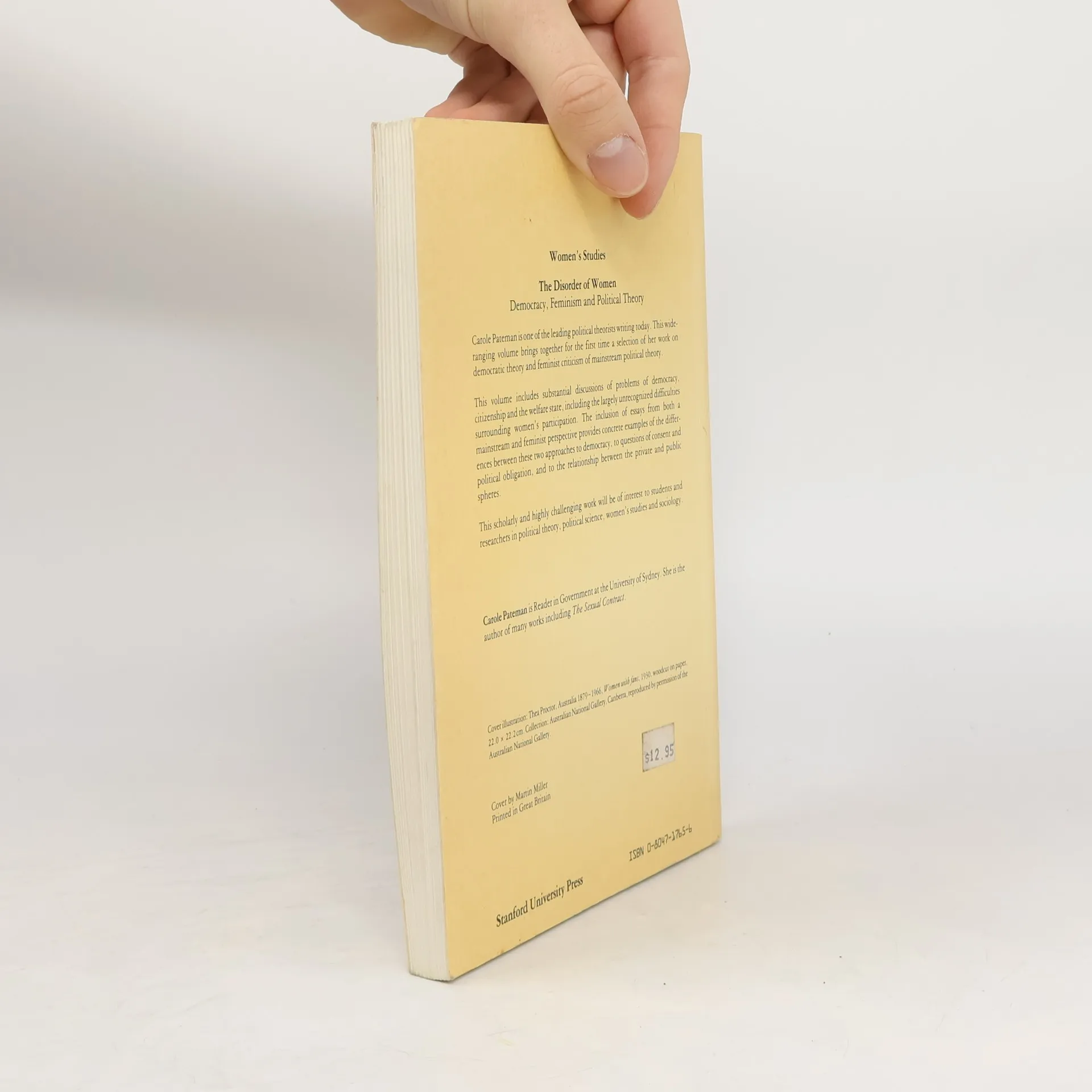
Carole Pateman is one of the leading political theorists writing today. This wide-ranging volume brings together for the first time a selection of her work on democratic theory and feminist criticism of mainstream political theory. The volume includes substantial discussions of problems of democracy, citizenship and the welfare state, including the largely unrecognized difficulties surrounding women's participation. The inclusion of essays from both a mainstream and feminist perspective provides concrete examples of the differences between these two approaches to democracy, to questions of consent and political obligation, and to the relationship between the private and public spheres. This scholarly and highly challenging work will be of interest to students and researchers in political theory, political science, women's studies and sociology.
Buchkauf
The Disorder of Women, Carole Pateman
- Sprache

- Erscheinungsdatum
- 1989
- Einband
- (Paperback)
Hier könnte deine Bewertung stehen.
- Titel
- The Disorder of Women
- Untertitel
- Democracy, Feminism, And Political Theory
- Sprache
- Englisch
- Autor*innen
- Carole Pateman
- Erscheinungsdatum
- 1989
- Einband
- Paperback
- Seitenzahl
- 237
- ISBN10
- 0804717656
- ISBN13
- 9780804717656
- Reihe
- Kategorien
- Schlagwörter
- Philosophisches Thema, Frauen, Feminismus, Politische Theorien, Gender
- Bewertung
- 4 von 5 Sternen
- Beschreibung
- Carole Pateman is one of the leading political theorists writing today. This wide-ranging volume brings together for the first time a selection of her work on democratic theory and feminist criticism of mainstream political theory. The volume includes substantial discussions of problems of democracy, citizenship and the welfare state, including the largely unrecognized difficulties surrounding women's participation. The inclusion of essays from both a mainstream and feminist perspective provides concrete examples of the differences between these two approaches to democracy, to questions of consent and political obligation, and to the relationship between the private and public spheres. This scholarly and highly challenging work will be of interest to students and researchers in political theory, political science, women's studies and sociology.