

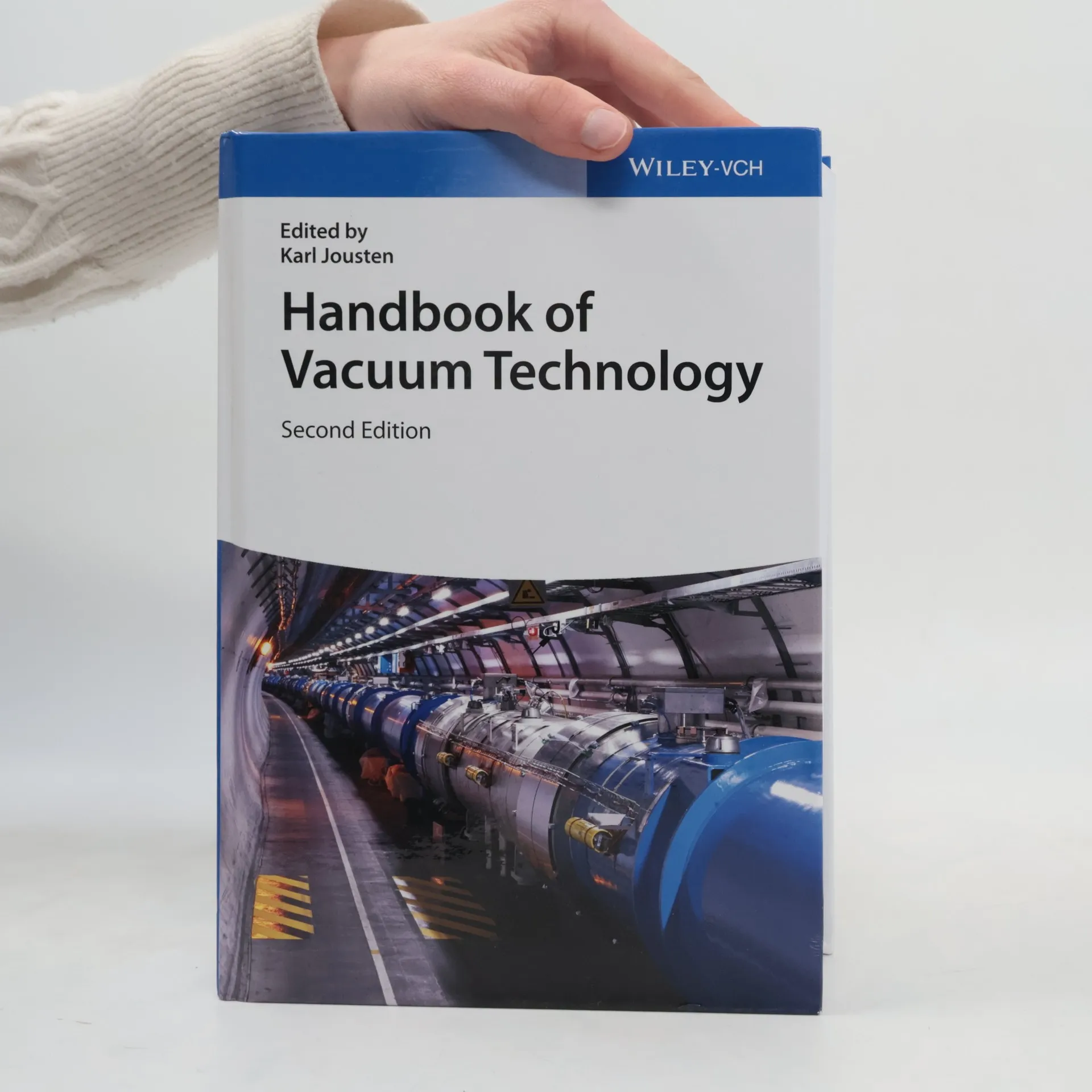


Handbook of Vacuum Technology - Second Edition
Autor*innen
Mehr zum Buch
This comprehensive, standard work has been updated to remain an important resource for all those needing detailed knowledge of the theory and applications of vacuum technology. The text covers the existing knowledge on all aspects of vacuum science and technology, ranging from fundamentals to components and operating systems. It features many numerical examples and illustrations to help visualize the theoretical issues, while the chapters are carefully cross-linked and coherent symbols and notations are used throughout the book. The whole is rounded off by a user-friendly appendix of conversion tables, mathematical tools, material related data, overviews of processes and techniques, equipment-related data, national and international standards, guidelines, and much more. As a result, engineers, technicians, and scientists will be able to develop and work successfully with the equipment and environment found in a vacuum.
Publikation

Buchkauf
Handbook of Vacuum Technology - Second Edition, Karl Jousten, C. Benjamin Nakhosteen
- Sprache

- Erscheinungsdatum
- 2016
- Einband
- (Hardcover)
Keiner hat bisher bewertet.
- Titel
- Handbook of Vacuum Technology - Second Edition
- Sprache
- Englisch
- Autor*innen
- Karl Jousten, C. Benjamin Nakhosteen
- Verlag
- Wiley-VCH
- Erscheinungsdatum
- 2016
- Einband
- Hardcover
- Seitenzahl
- 1050
- ISBN10
- 3527413383
- ISBN13
- 9783527413386
- Reihe
- Kategorien
- Schlagwörter
- Deutschland, Technologie, Fachliteratur, Maschinenbau, Über Bücher, Mechanik
- Beschreibung
- This comprehensive, standard work has been updated to remain an important resource for all those needing detailed knowledge of the theory and applications of vacuum technology. The text covers the existing knowledge on all aspects of vacuum science and technology, ranging from fundamentals to components and operating systems. It features many numerical examples and illustrations to help visualize the theoretical issues, while the chapters are carefully cross-linked and coherent symbols and notations are used throughout the book. The whole is rounded off by a user-friendly appendix of conversion tables, mathematical tools, material related data, overviews of processes and techniques, equipment-related data, national and international standards, guidelines, and much more. As a result, engineers, technicians, and scientists will be able to develop and work successfully with the equipment and environment found in a vacuum.