

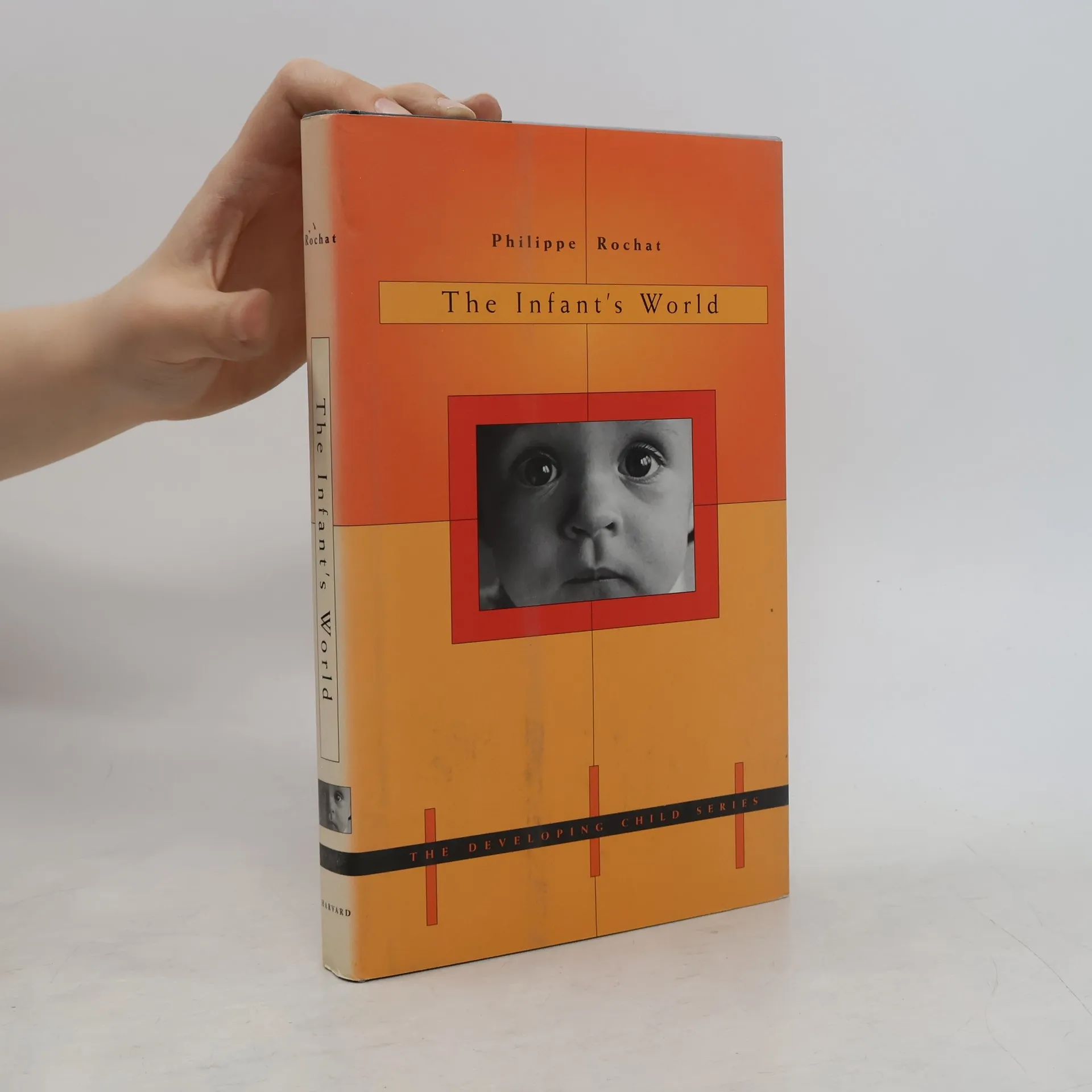
The Developing Child: The Infant's World
Autor*innen
Mehr zum Buch
"As they stare at crib mobiles, their mothers, or their own toes, what do infants know? What do they feel, and how do they come to understand what's happening around them and within their own bodies? What do they perceive and know about objects? How do they begin to construe others as persons with feelings and intentions? These questions inspire this remarkable new look at the infant's world. The short answer: Infants are much more sophisticated perceivers, feelers, and thinkers of their world than we may assume.". "In this Philippe Rochat departs from traditional approaches in psychology to make a case for an ecological approach to human development. Looking at the ecological niche infants occupy, he describes how infants develop capabilities and conceptual understanding in relation to three interrelated domains: the self, objects, and other people. Drawing on the great body of contemporary "competent infant" research, Rochat offers a thoughtful overview of many current controversial topics, from neonatal imitation, to early numerosity, to the development of self-awareness. In a provocative conclusion, he describes infancy as a series of key transitions - so dramatic that they are sometimes called "revolutions" - and maps out the mechanisms and processes that impel development."--BOOK JACKET.
Buchkauf
The Developing Child: The Infant's World, Philippe Rochat
- Sprache

- Erscheinungsdatum
- 2001
- Einband
- (Hardcover)
Keiner hat bisher bewertet.
- Titel
- The Developing Child: The Infant's World
- Sprache
- Englisch
- Autor*innen
- Philippe Rochat
- Verlag
- Harvard University Press
- Erscheinungsdatum
- 2001
- Einband
- Hardcover
- Seitenzahl
- 272
- ISBN10
- 0674003225
- ISBN13
- 9780674003224
- Reihe
- Schlagwörter
- Medizin & Gesundheit, Psychologische Thematik
- Beschreibung
- "As they stare at crib mobiles, their mothers, or their own toes, what do infants know? What do they feel, and how do they come to understand what's happening around them and within their own bodies? What do they perceive and know about objects? How do they begin to construe others as persons with feelings and intentions? These questions inspire this remarkable new look at the infant's world. The short answer: Infants are much more sophisticated perceivers, feelers, and thinkers of their world than we may assume.". "In this Philippe Rochat departs from traditional approaches in psychology to make a case for an ecological approach to human development. Looking at the ecological niche infants occupy, he describes how infants develop capabilities and conceptual understanding in relation to three interrelated domains: the self, objects, and other people. Drawing on the great body of contemporary "competent infant" research, Rochat offers a thoughtful overview of many current controversial topics, from neonatal imitation, to early numerosity, to the development of self-awareness. In a provocative conclusion, he describes infancy as a series of key transitions - so dramatic that they are sometimes called "revolutions" - and maps out the mechanisms and processes that impel development."--BOOK JACKET.