

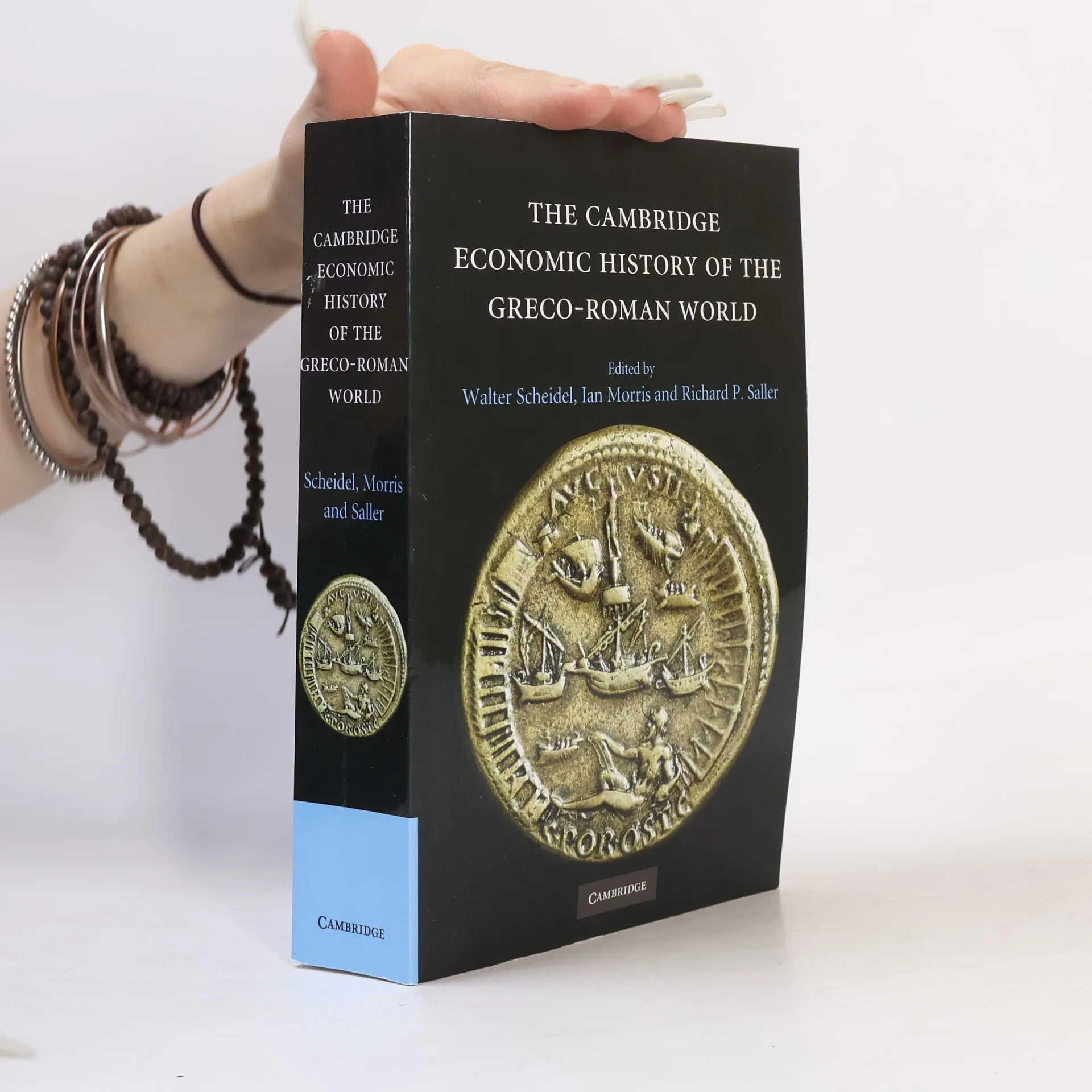



The Cambridge Economic History of the Greco-Roman World
Autor*innen
Mehr zum Buch
In this, the first comprehensive one-volume survey of the economies of classical antiquity, twenty-eight chapters summarise the current state of scholarship in their specialised fields and sketch new directions for research. The approach taken is both thematic, with chapters on the underlying determinants of economic performance, and chronological, with coverage of the whole of the Greek and Roman worlds extending from the Aegean Bronze Age to Late Antiquity. The contributors move beyond the substantivist-formalist debates that dominated twentieth-century scholarship and display a new interest in economic growth in antiquity. New methods for measuring economic development are explored, often combining textual and archaeological data that have previously been treated separately. Fully accessible to non-specialist, the volume represents a major advance in our understanding of the economic expansion that made the civilisation of the classical Mediterranean world possible.
Buchkauf
The Cambridge Economic History of the Greco-Roman World, Ian Morris, Walter Scheidel, Richard P. Saller
- Sprache

- Erscheinungsdatum
- 2013
- Einband
- (Paperback)
Keiner hat bisher bewertet.
- Titel
- The Cambridge Economic History of the Greco-Roman World
- Sprache
- Englisch
- Autor*innen
- Ian Morris, Walter Scheidel, Richard P. Saller
- Erscheinungsdatum
- 2013
- Einband
- Paperback
- Seitenzahl
- 960
- ISBN10
- 1107673070
- ISBN13
- 9781107673076
- Reihe
- Schlagwörter
- Handel, Altertum, Griechenland, Rom, Wirtschaftsgeschichte
- Beschreibung
- In this, the first comprehensive one-volume survey of the economies of classical antiquity, twenty-eight chapters summarise the current state of scholarship in their specialised fields and sketch new directions for research. The approach taken is both thematic, with chapters on the underlying determinants of economic performance, and chronological, with coverage of the whole of the Greek and Roman worlds extending from the Aegean Bronze Age to Late Antiquity. The contributors move beyond the substantivist-formalist debates that dominated twentieth-century scholarship and display a new interest in economic growth in antiquity. New methods for measuring economic development are explored, often combining textual and archaeological data that have previously been treated separately. Fully accessible to non-specialist, the volume represents a major advance in our understanding of the economic expansion that made the civilisation of the classical Mediterranean world possible.