




Mehr zum Buch
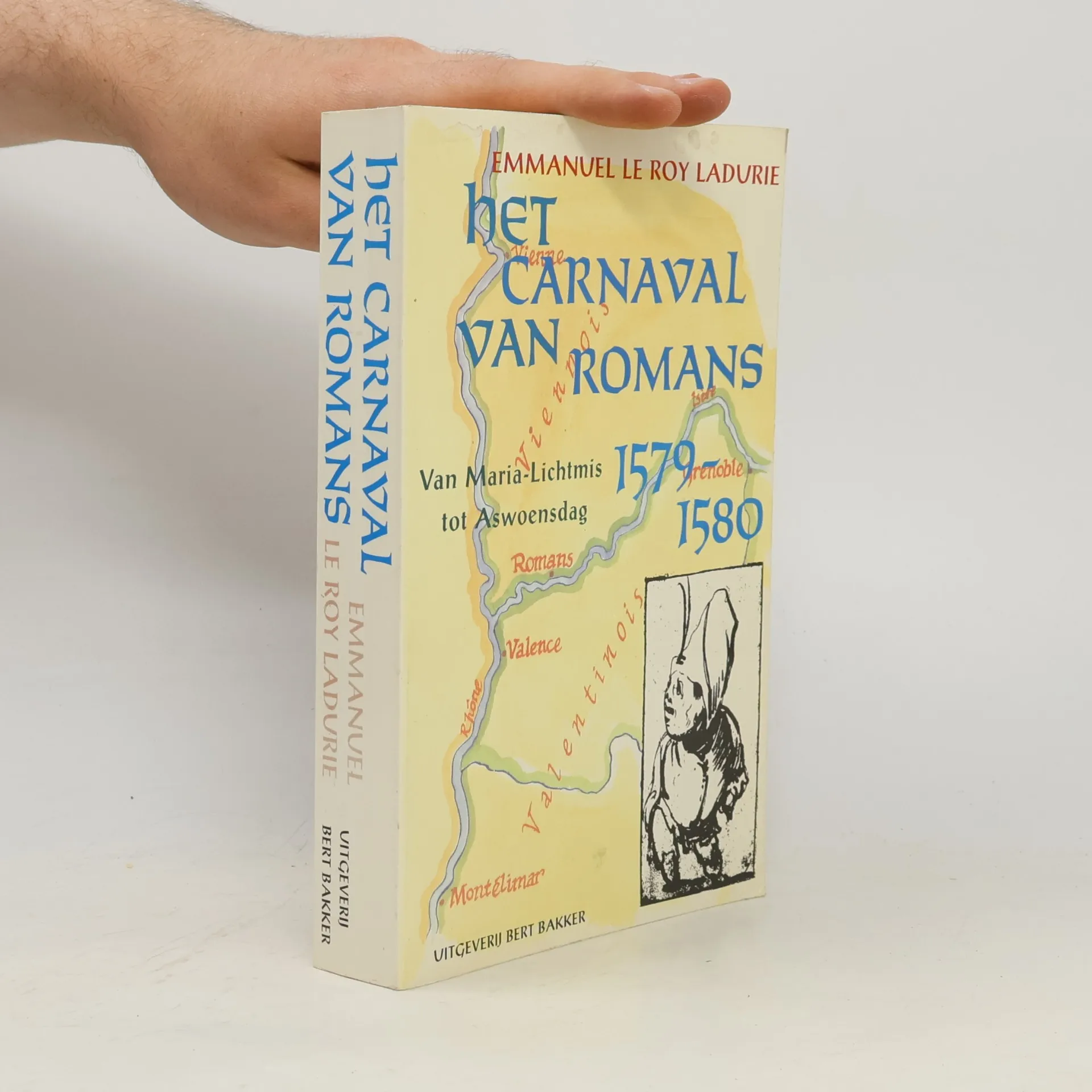
The city of Romans, in Dauphine province in S. France, was the annual scene of a colorfully animated Mardi gras carnival. In 1580, however, winter festivities degenerated into bloody ambush. While costumed craftsmen & peasants mimed & danced their uprising in the streets, & notables & bourgeoisie hurried from banquets to balls in ostentatious finery, Jean Serve-Paumier, master craftsman, draper & popular party leader was assassinated, his supporters beaten & pursued by a mob hired by Judge Antoine Guerin, leader of the inflexibly reactionary part of the ruling party. More than a cruel incident, this night marked the intersection of an urban movement & even larger rural stirrings. Ladurie marshals a wealth of evidence & reveals the town of Romans as a microcosm of the political & religious antagonisms tearing 16th-century France. Le Carnival de Romans: de la chandeleur au mercredi des cenders describes the massacre of about 20 artisans at an annual carnival. Ladurie uses the two surviving eyewitness accounts--one hostile towards the victims by Guérin, the other sympathetic yet often inaccurate by Piémond--along with such information as plague & tax lists, to treat the massacre as a microcosm of rural political, social & religious conflicts, thereby providing a good example of microhistory.
Buchkauf
Het carnaval van Romans, Emmanuel Bernard Le Roy Ladurie, F. F. Haan
- Sprache

- Erscheinungsdatum
- 1985
- Einband
- (Paperback),
- Buchzustand
- Beschädigt
- Preis
- 2,75 €inkl. MwSt.
Keiner hat bisher bewertet.
- Titel
- Het carnaval van Romans
- Sprache
- Niederländisch
- Autor*innen
- Emmanuel Bernard Le Roy Ladurie, F. F. Haan
- Verlag
- Uitgeverij Bert Bakker
- Erscheinungsdatum
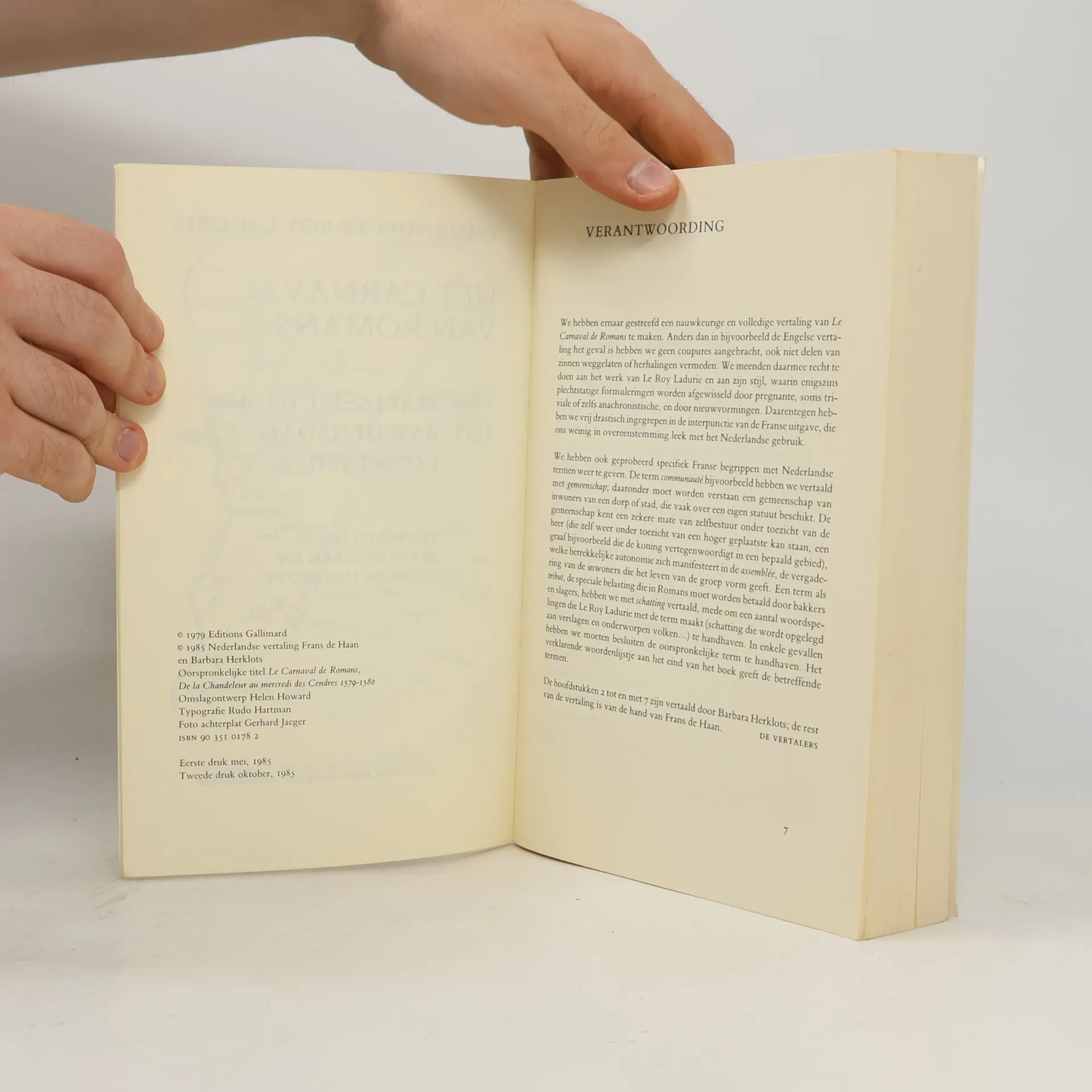
- 1985
- Einband
- Paperback
- Seitenzahl
- 425
- ISBN10
- 9035101782
- ISBN13
- 9789035101784
- Reihe
- Kategorien
- Schlagwörter
- Frankreich, Tod, Mittelalter, Geschichte Europas
- Beschreibung
- The city of Romans, in Dauphine province in S. France, was the annual scene of a colorfully animated Mardi gras carnival. In 1580, however, winter festivities degenerated into bloody ambush. While costumed craftsmen & peasants mimed & danced their uprising in the streets, & notables & bourgeoisie hurried from banquets to balls in ostentatious finery, Jean Serve-Paumier, master craftsman, draper & popular party leader was assassinated, his supporters beaten & pursued by a mob hired by Judge Antoine Guerin, leader of the inflexibly reactionary part of the ruling party. More than a cruel incident, this night marked the intersection of an urban movement & even larger rural stirrings. Ladurie marshals a wealth of evidence & reveals the town of Romans as a microcosm of the political & religious antagonisms tearing 16th-century France. Le Carnival de Romans: de la chandeleur au mercredi des cenders describes the massacre of about 20 artisans at an annual carnival. Ladurie uses the two surviving eyewitness accounts--one hostile towards the victims by Guérin, the other sympathetic yet often inaccurate by Piémond--along with such information as plague & tax lists, to treat the massacre as a microcosm of rural political, social & religious conflicts, thereby providing a good example of microhistory.