Spatial Analysis for the Social Sciences
- 259 Seiten
- 10 Lesestunden
This book shows how to model the spatial interactions between actors that are at the heart of the social sciences.


Diese Reihe befasst sich mit empirischen und formalen Methoden, die für die Sozialforschung unerlässlich sind. Sie bietet tiefe Einblicke in die theoretischen Grundlagen analytischer Techniken und deren praktische Anwendung in der Forschung. Die Bände decken ein breites Spektrum fachübergreifender Themen sowie spezifische methodische Anwendungen in Bereichen wie Politikwissenschaft, Soziologie und Public Health ab. Sie richtet sich an Studierende und Forschende, die fortgeschrittenes Wissen in den Sozialwissenschaften und der Statistik suchen.

This book shows how to model the spatial interactions between actors that are at the heart of the social sciences.
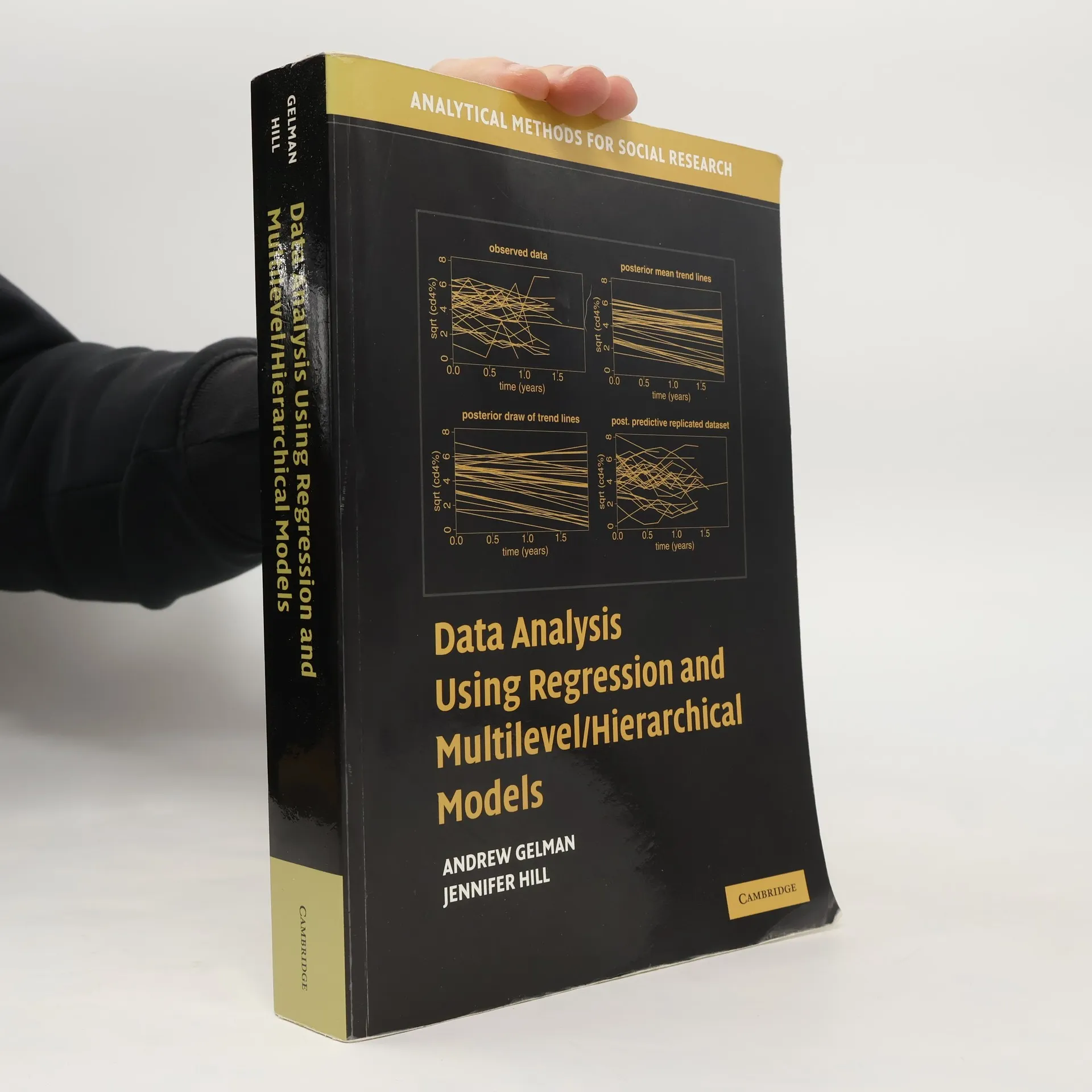
Data Analysis Using Regression and Multilevel/Hierarchical Models is a comprehensive manual for the applied researcher who wants to perform data analysis using linear and nonlinear regression and multilevel models. The book introduces a wide variety of models, whilst at the same time instructing the reader in how to fit these models using available software packages. The book illustrates the concepts by working through scores of real data examples that have arisen from the authors' own applied research, with programming codes provided for each one. Topics covered include causal inference, including regression, poststratification, matching, regression discontinuity, and instrumental variables, as well as multilevel logistic regression and missing-data imputation. Practical tips regarding building, fitting, and understanding are provided throughout.