
In the past two decades, Burma/Myanmar has become a front-page topic in newspapers across the world. This former British colony has one of the most secretive, corrupt, and repressive regimes on the planet, yet it houses a Nobel Peace Prize winner who is and in and out of house arrest. It hasan ancient civilization that is mostly unknown to Westerners, yet it was an important--and legendary--theater in World War II. A picturesque land with mountain jungles and monsoon plains, it is one of the world's largest producers of heroin. It has a restive Buddhist monk population that hascaptured the attention of the west when it faced off against the regime. And it recently experienced one of the worst natural disasters in modern times, one effect of which was to lay bare the manifold injustices and cruelties of the regime.Burma/ What Everyone Needs to Know® offers a concise synthesis of this forbidding yet fascinating country. David Steinberg, one of the world's eminent authorities on the region, explains the current situation in detail yet contextualizes it in a wide-ranging survey of Burmese history andculture. Authoritative and balanced, it will be standard work on Burma for the general reading public.'What Everyone Needs to Know' is a registered trademark of Oxford University Press.
Was jeder wissen muss Reihe
Diese Reihe befasst sich mit komplexen und drängenden Fragen der modernen Welt und bietet zugängliche, aber dennoch maßgebliche Einführungen in entscheidende Themen. Jeder Band behandelt Schlüsselthemen, die von internationaler Politik bis hin zu Wissenschaft und Religion reichen, und präsentiert sachliche Informationen in einem klaren Frage-und-Antwort-Format. Sie dient als wesentliche Ressource für Studenten, Fachleute und neugierige Köpfe, die ein grundlegendes Verständnis komplexer Materie suchen.





Ein allgemeines und leicht zugängliches Lesebuch über die gegenwärtige und zukünftige Bedeutung der Künstlichen Intelligenz und deren Auswirkungen auf unser Leben, die Wirtschaft und soziale Strukturen. Es diskutiert zentrale Fragen für die grundlegende Auseinandersetzung mit Künstlicher Intelligenz. Diese Technologie verändert unsere Lebensweise, Arbeit und Gesellschaft und definiert unseren Platz im Universum neu. Der Autor behandelt wesentliche gesellschaftliche, rechtliche und wirtschaftliche Aspekte und stellt grundlegende Fragen: Werden Maschinen eines Tages klüger sein als der Mensch? Wie beeinflussen lernende Roboter den Arbeitsmarkt? Kann man Maschinen für ihre Handlungen verantwortlich machen? Es wird deutlich, dass Fortschritte in den intellektuellen und physischen Fähigkeiten von Maschinen unsere Gesellschaft grundlegend verändern werden. Die kontinuierliche Weiterentwicklung von Maschinen wird eine immer wichtigere Rolle spielen und ist eng mit vielen Bereichen unseres täglichen Lebens verbunden. Dieses Buch bietet eine kompakte und leicht verständliche Einführung in das Thema und veranschaulicht mögliche künftige Auswirkungen, ohne sich auf technische Details zu konzentrieren. Es eignet sich hervorragend für die Auseinandersetzung mit den grundlegenden Fragen zur Künstlichen Intelligenz.
Al Qaeda, the Islamic State, and the Global Jihadist Movement
- 284 Seiten
- 10 Lesestunden
A sharp and concise overview of Al Qaeda, from its humble origins in the mountains of Afghanistan to the present, explaining its perseverance and adaptation since 9/11 and the limits of U.S. and allied counterterrorism efforts
Agricultural and Food Controversies
- 168 Seiten
- 6 Lesestunden
In Agricultural and Food Controversies: What Everyone Needs to Know, agricultural researchers present both sides of heavily debated agricultural and food issues. They answer questions and explain scholarly and scientific research on topics such as organic food, the safety of pesticides, livestock living conditions, the use of antibiotics in livestock intended for consumption, the effect of agriculture on the environment, and more.
Animal Rights
- 236 Seiten
- 9 Lesestunden
This resource offers a survey of the animal rights movement.
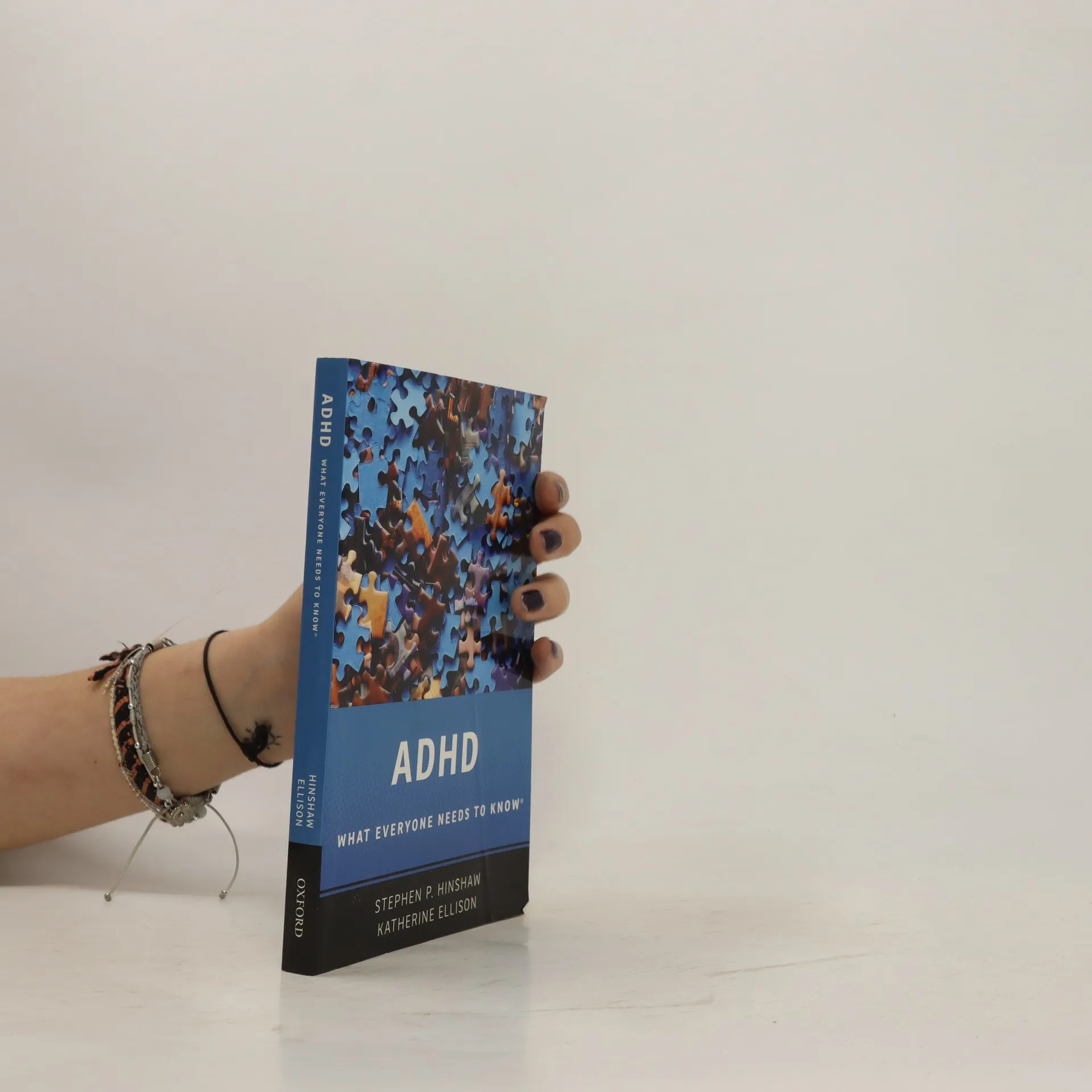
ADHD. what everyone needs to know
- 191 Seiten
- 7 Lesestunden
Researched and written by Stephen Hinshaw, an international expert on ADHD, and Katherine Ellison, a Pulitzer-Prize winning journalist and author, ADHD: What Everyone Needs to Know (R) is the go-to book for authoritative, current, accurate, and compelling information about the global ADHD epidemic.
Authoritarianism: What Everyone Needs to Know(r)
- 188 Seiten
- 7 Lesestunden
Despite the spread of democratization following the Cold War's end, all signs indicate that we are currently seeing a resurgence of authoritarianism. Around forty percent of the world's people live under some form of authoritarian rule, and authoritarian regimes govern about a third of the world's countries. In Authoritarianism: What Everyone Needs to Know, Erica Frantz guides us through today's authoritarian wave, explaining how it came to be and what its features are. She also looks at authoritarians themselves, focusing in particular on the techniques they use to take power, the strategies they use to survive, and how they fall. As she demonstrates, understanding how politics works in authoritarian regimes and recognizing the factors that either give rise to them or trigger their downfall, remains as important as ever. This book paves the ways for such an understanding. Authoritarianism is a clear and concise overview that provides readers with a context for making sense of one of the most important-and most worrying-developments in contemporary world politics
Atheism
- 304 Seiten
- 11 Lesestunden
Atheism: What Everyone Needs to Know provides a balanced look at the topic, considering atheism historically, philosophically, theologically, sociologically and psychologically.
Despite the spread of democratization following the Cold War's end, all signs indicate that we are currently seeing a resurgence of authoritarianism. Around forty percent of the world's people live under some form of authoritarian rule, and authoritarian regimes govern about a third of theworld's countries. In Authoritarianism: What Everyone Needs to KnowRG, Erica Frantz guides us through today's authoritarian wave, explaining how it came to be and what its features are. She also looks at authoritarians themselves, focusing in particular on the techniques they use to take power, thestrategies they use to survive, and how they fall. As she demonstrates, understanding how politics works in authoritarian regimes and recognizing the factors that either give rise to them or trigger their downfall, remains as important as ever. This book paves the ways for such an understanding.Authoritarianism is a clear and concise overview that provides readers with a context for making sense of one of the most important - and most worrying - developments in contemporary world politics.
Antiquities
- 264 Seiten
- 10 Lesestunden
[Maxwell L. Anderson] exudes expertise, writes with admirable clarity, and succinctly answers the series of questions that he has set... For once, the glowing puffs that adorn the back cover of the book are well deserved. Anyone with an interest in this topic should have a copy. Peter Jones, Classics for All
Terrorism
- 186 Seiten
- 7 Lesestunden
In this book, Todd Sandler educates and demystifies terrorism and its myriad aspects for educated readers, who want to gain an understanding of one of the main security problems confronting the world today. Based on a wealth past research, current thinking about terrorism and the practice of counterterrorism are elucidated.
The colonial and imperial past: obstacles or opportunities to create a modern Brazil? -- From the republic to the estado novo -- The experiment in democracy, 1945-64: why did it fail? -- The military in power: the final intervention? -- Failed transition? -- The Lula government: an assessment -- Dilma Rousseff: the right choice to succeed Lula in 2011? -- Public policy challenges for the 21st century -- Foreign affairs -- Brazilian culture and society -- Conclusion: some final reflections