

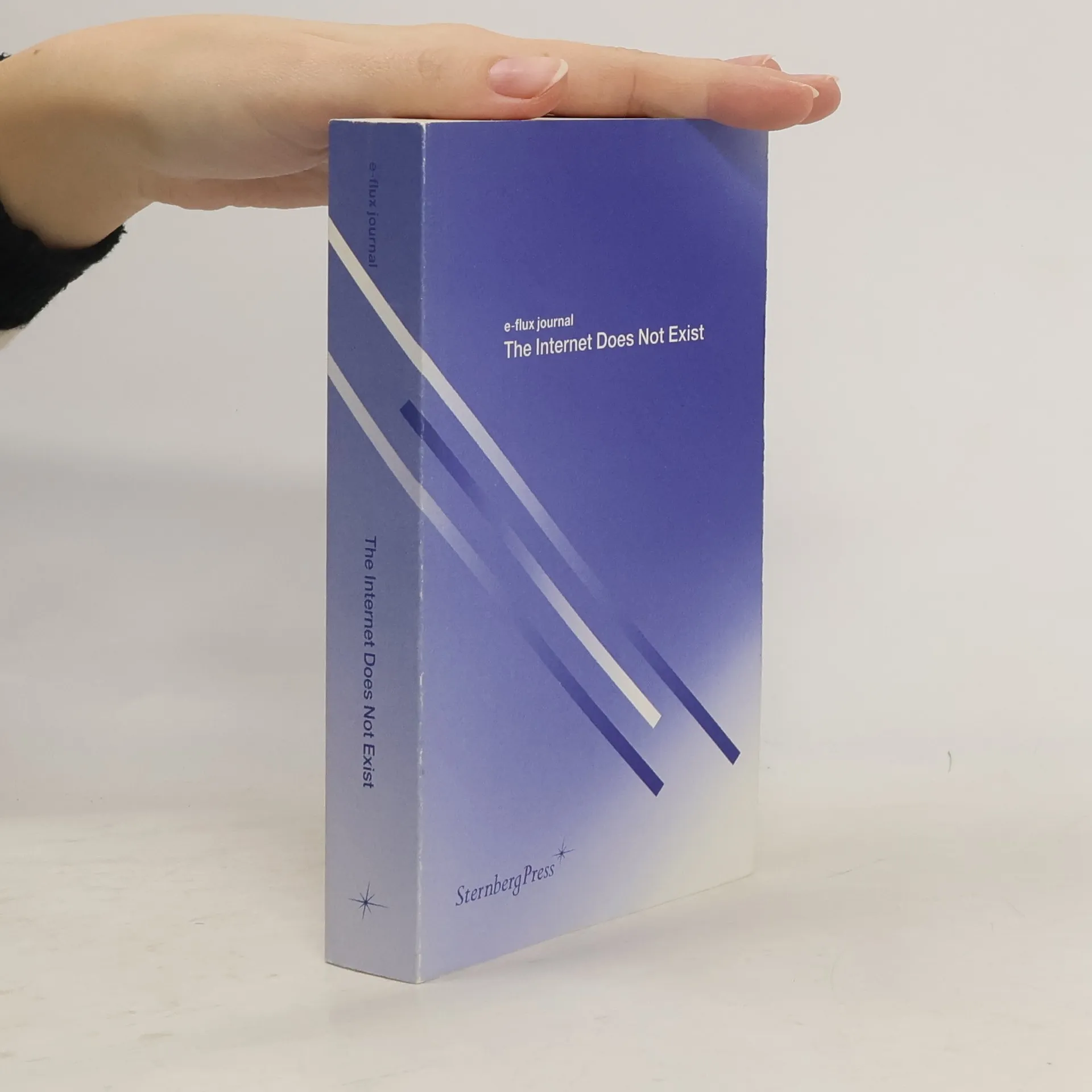
The internet does not exist. Maybe it did exist only a short time ago, but now it only remains as a blur, a cloud, a friend, a deadline, a redirect, or a 404. If it ever existed, we couldn't see it. Because it has no shape. It has no face, just this name that describes everything and nothing at the same time. Yet we are still trying to climb onboard, to get inside, to be part of the network, to get in on the language game, to show up on searches, to appear to exist. But we will never get inside of something that isn't there. All this time we've been bemoaning the death of any critical outside position, we should have taken a good look at information networks. Just try to get in. You can't. Networks are all edges, as Bruno Latour points out. We thought there were windows but actually they're mirrors. And in the meantime we are being faced with more and more—not just information, but the world itself.ContributorsJulian Assange, Franco “Bifo” Berardi, Benjamin Bratton, Diedrich Diederichsen, Keller Easterling, Rasmus Fleischer, Joana Hadjithomas and Khalil Joreige, Ursula K. Heise, Brian Kuan Wood, Bruno Latour, Geert Lovink, Patricia MacCormack, Metahaven, Gean Moreno, Hans Ulrich Obrist, Jon Rich, Hito Steyerle-flux journal Series edited by Julieta Aranda, Brian Kuan Wood, Anton Vidokle
Julieta Aranda Bücher
Julieta Aranda ist eine konzeptuelle Künstlerin, die sich mit der Schaffung und Manipulation von künstlerischem Austausch beschäftigt und traditionelle Vorstellungen von Handel durch Kunst in Frage stellt. Ihre Praxis, die Installation, Video und Druckmedien umfasst, untersucht kritisch die Ökonomien, die Arbeit und die Wertsysteme, die in der zeitgenössischen Kunst verankert sind. Arandas Ansatz ist oft durch eine spielerische, aber prägnante Untergrabung etablierter Systeme gekennzeichnet, die die Betrachter dazu anregt, ihre eigene Rolle und die Zirkulation von Kunst zu überdenken. Ihre Erkundungen offenbaren eine tiefe Auseinandersetzung mit den kulturellen und wirtschaftlichen Kräften, die künstlerische Produktion und Rezeption prägen.
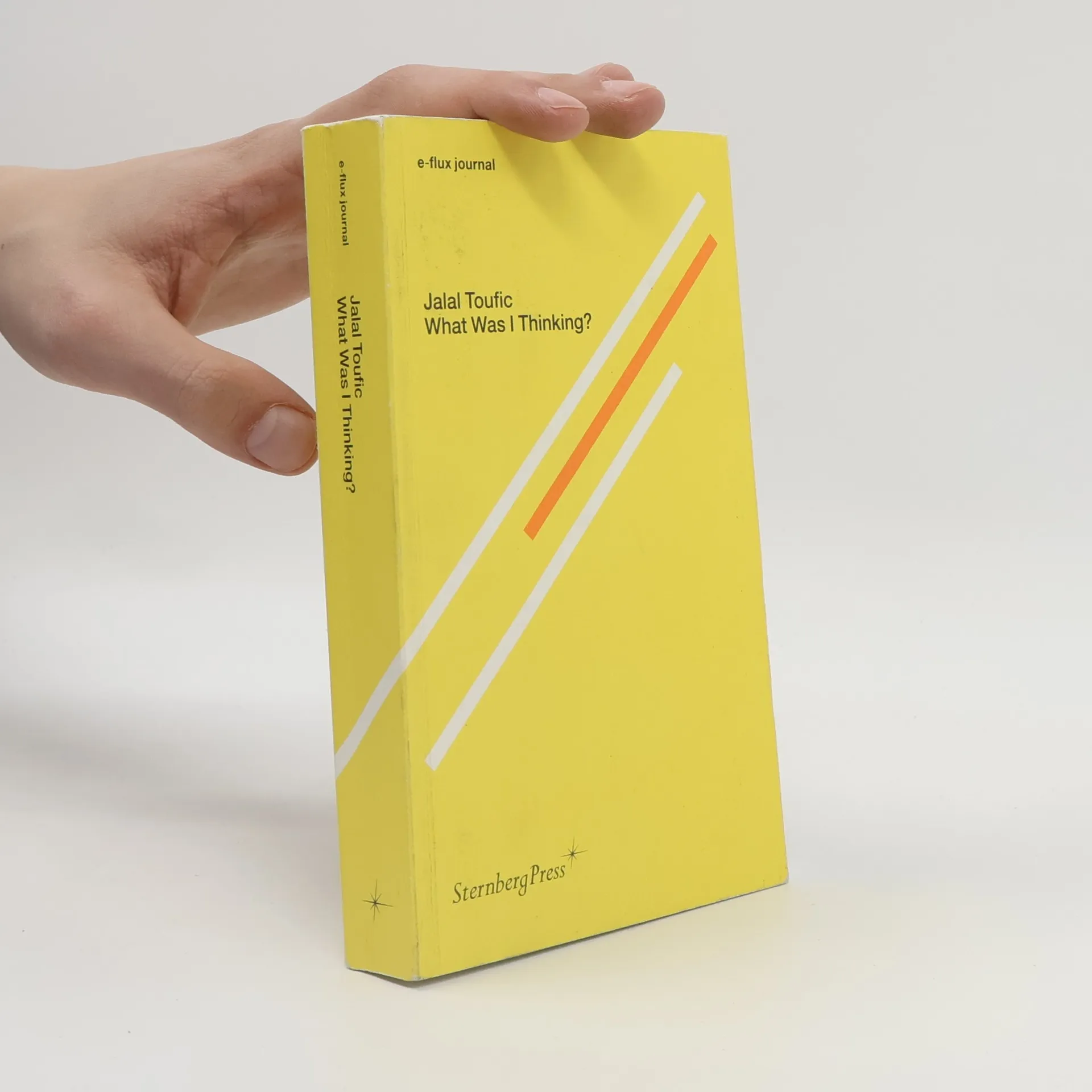
E-Flux Journal: What Was I Thinking?
- 280 Seiten
- 10 Lesestunden
What Was I Thinking? serves as an initiation into the realm of thought. Jalal Toufic, with his analytical mind, creates an open-ended "summa" that explores the arts as a privileged site for thinking, even amidst inevitable failures. He juxtaposes his insights with texts from traditional religions and mystics, achieving a serene detachment and joy in thinking reminiscent of Nietzsche's understanding. Toufic stands out as one of the most original thinkers today, embracing the challenge posed by Heidegger in What Is Called Thinking? His exploration ventures into uncharted artistic territories, delving into their layers, paradoxes, and inherent inaccessibility. This endeavor requires immense courage and unique freedom, allowing his mind to pursue unpredictable conclusions, ensuring his writing remains relevant. His work resonates with the spirit of Einstein's General Theory of Relativity and Nietzsche's breakthroughs, establishing Toufic as a significant intellectual force.
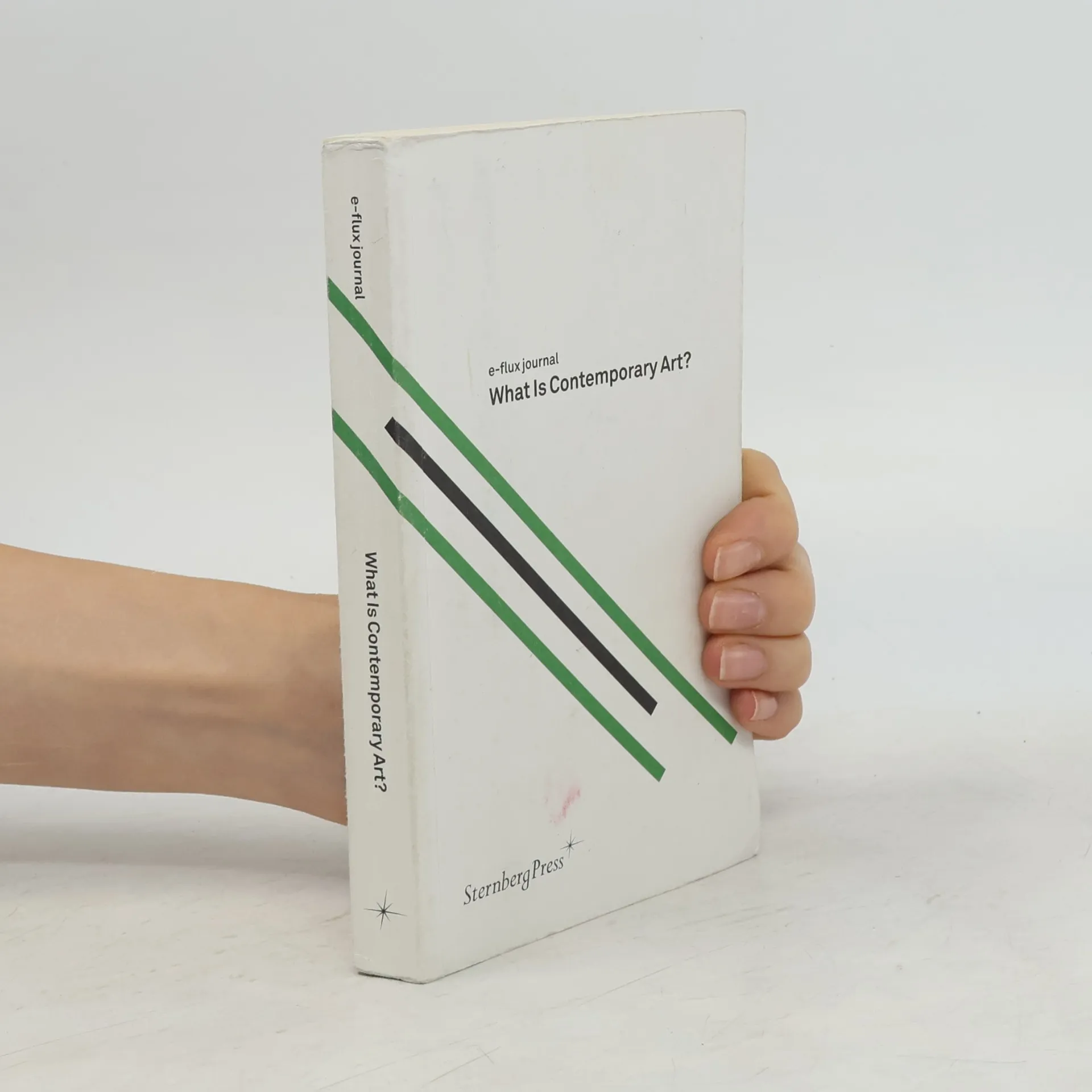
E-Flux Journal: What Is Contemporary Art?
- 216 Seiten
- 8 Lesestunden
This book originated from a two-part issue of e-flux journal exploring the question: What is contemporary art? It raises the critical issue of why this question is rarely asked, allowing it to linger in the background of discussions about twentieth-century artistic movements. The dominance of a single hegemonic “ism” has overshadowed distinct movements and narratives, prompting inquiry into what it means to operate within this singular framework. The term 'contemporary' is often taken for granted, making further demands for a definition seem unnecessary or outdated. However, this apparent self-evidence can obscure deeper issues, as such large, elusive questions lose their problematic nature and exert influence in subtle ways. The paradox of their unanswerability creates a unique condition where artistic work takes place. This volume challenges the simplicity of the term 'contemporary art,' inviting critics, curators, artists, and writers to reflect on the complexities of this broad category. Contributors include notable figures such as Julieta Aranda, Brian Kuan Wood, Anton Vidokle, and others, each offering insights that deepen the conversation around contemporary art and its implications. The series is edited by Aranda, Wood, and Vidokle, emphasizing collaborative exploration of this vital topic.