

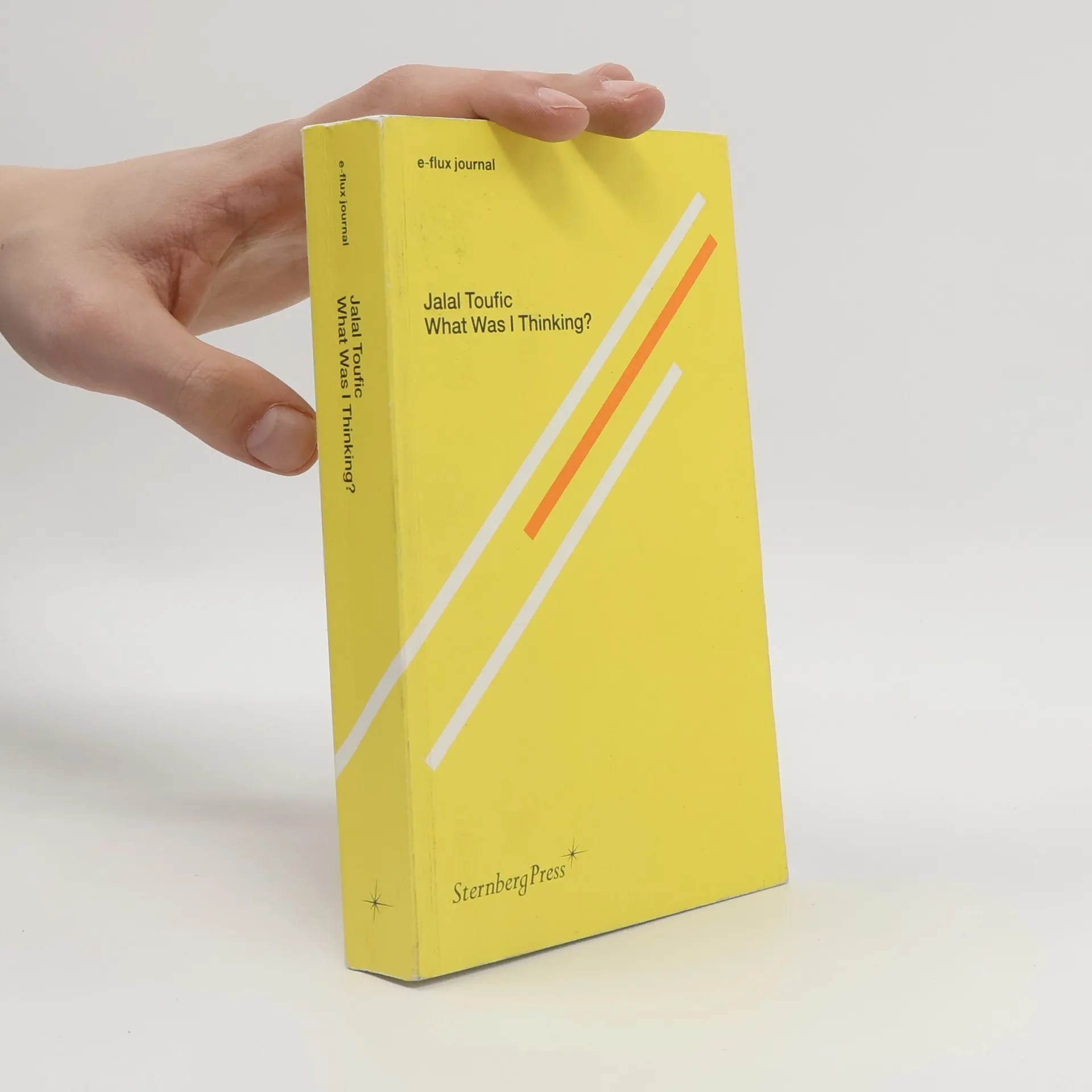


E-Flux Journal: What Was I Thinking?
Buchbewertung
Parameter
- 280 Seiten
- 10 Lesestunden
Mehr zum Buch
What Was I Thinking? serves as an initiation into the realm of thought. Jalal Toufic, with his analytical mind, creates an open-ended "summa" that explores the arts as a privileged site for thinking, even amidst inevitable failures. He juxtaposes his insights with texts from traditional religions and mystics, achieving a serene detachment and joy in thinking reminiscent of Nietzsche's understanding. Toufic stands out as one of the most original thinkers today, embracing the challenge posed by Heidegger in What Is Called Thinking? His exploration ventures into uncharted artistic territories, delving into their layers, paradoxes, and inherent inaccessibility. This endeavor requires immense courage and unique freedom, allowing his mind to pursue unpredictable conclusions, ensuring his writing remains relevant. His work resonates with the spirit of Einstein's General Theory of Relativity and Nietzsche's breakthroughs, establishing Toufic as a significant intellectual force.
Buchkauf
E-Flux Journal: What Was I Thinking?, Julieta Aranda, Jalal Toufic, Stephen Squibb, Brian Kuan Wood
- Sprache

- Erscheinungsdatum
- 2017
- Einband
- (Paperback)
Hier könnte deine Bewertung stehen.
- Titel
- E-Flux Journal: What Was I Thinking?
- Sprache
- Englisch
- Autor*innen
- Julieta Aranda, Jalal Toufic, Stephen Squibb, Brian Kuan Wood
- Verlag
- Sternberg Press
- Erscheinungsdatum
- 2017
- Einband
- Paperback
- Seitenzahl
- 280
- ISBN10
- 3956793587
- ISBN13
- 9783956793585
- Reihe
- Kategorien
- Schlagwörter
- Handel, Psychologische Thematik, Philosophisches Thema, Kunst, Architektur, Spiritualität, Bildung, Schule, Theologie, Filmthema, Kultur und Gesellschaft, Literarische Kritik, Schreiben, Kultur, Glück, Kreativität, 21. Jahrhundert, Beschäftigung, Ethik, Kritik, Künstler, Marxismus, Ästhetik, Bewusstsein, Kunsttheorie, Postmoderne Literatur, Kritische Theorie
- Bewertung
- 2,9 von 5 Sternen
- Beschreibung
- What Was I Thinking? serves as an initiation into the realm of thought. Jalal Toufic, with his analytical mind, creates an open-ended "summa" that explores the arts as a privileged site for thinking, even amidst inevitable failures. He juxtaposes his insights with texts from traditional religions and mystics, achieving a serene detachment and joy in thinking reminiscent of Nietzsche's understanding. Toufic stands out as one of the most original thinkers today, embracing the challenge posed by Heidegger in What Is Called Thinking? His exploration ventures into uncharted artistic territories, delving into their layers, paradoxes, and inherent inaccessibility. This endeavor requires immense courage and unique freedom, allowing his mind to pursue unpredictable conclusions, ensuring his writing remains relevant. His work resonates with the spirit of Einstein's General Theory of Relativity and Nietzsche's breakthroughs, establishing Toufic as a significant intellectual force.