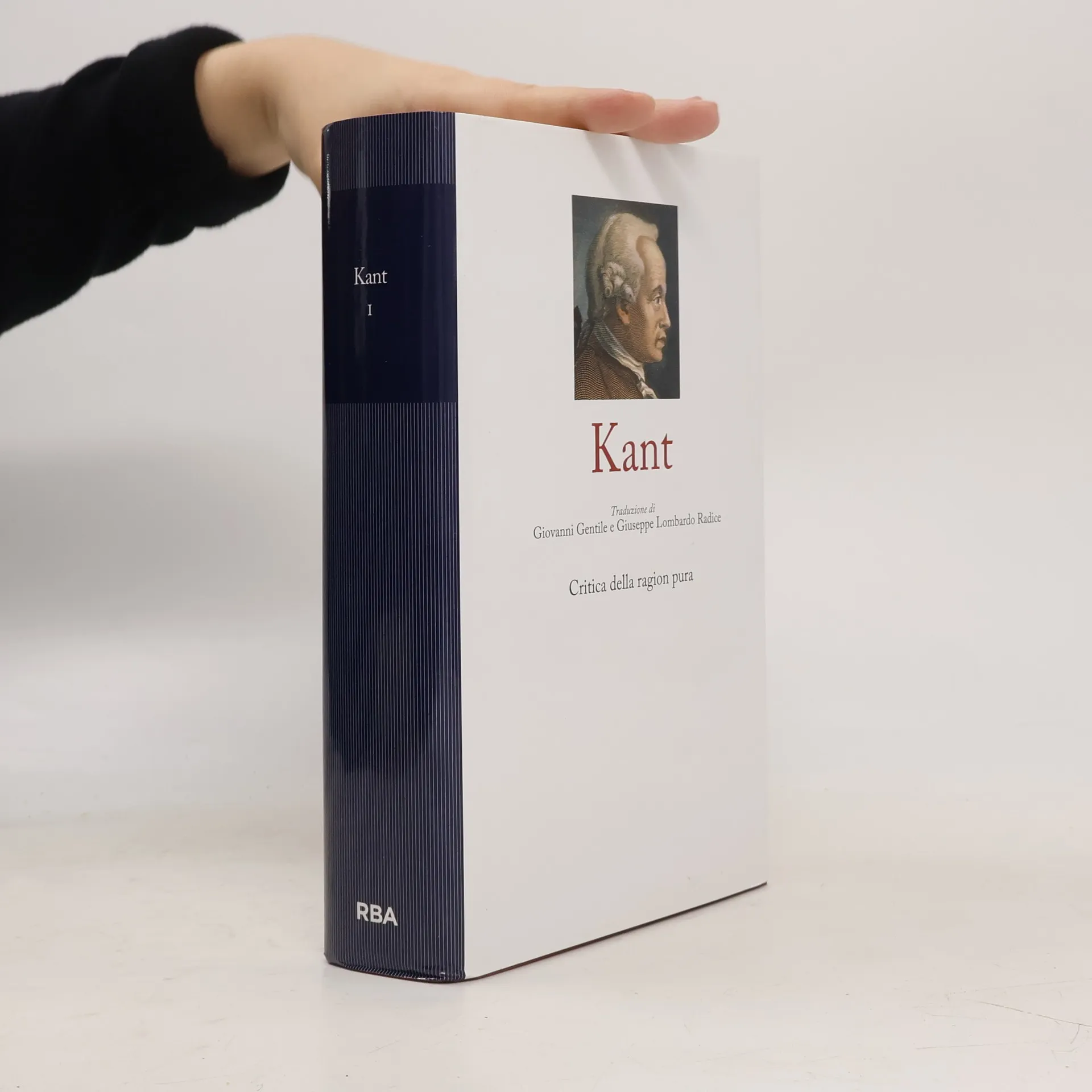
Giovanni Gentile war ein italienischer Philosoph und Politiker, eine Schlüsselfigur des neuhegelianischen Idealismus. Er bezeichnete sich selbst als 'den Philosophen des Faschismus' und prägte maßgeblich die intellektuellen Grundlagen dieser Ideologie. Gentile entwickelte sein eigenes philosophisches System, den Aktualen Idealismus, das Konzepte des reinen Akts und der subjektiven Realität erforschte. Sein Werk stellt einen bedeutenden, wenn auch umstrittenen, Beitrag zur modernen Philosophie und zum politischen Denken dar.
Grundlegung der Rechtsphilosophie. Zwei kritische Beiträge zur materialischen Geschichtsauffassung und zur praktischen Philosophie des Marxismus
368 Seiten
13 Lesestunden
Titel der Originalausgabe: I fondamenti della filosofia del diritto, con aggiunti due studi sulla filosofia di Marx, Opere complete di Giovanni Gentile, Bd. 9. G. C. Sansoni, Firenze, 3. A. 1937 (1. A. 1916).
Titel der Originalausgaben: Le origini della filosofia contemporanea in Italia I Neokantiani e gli Hegeliani [parte seconda], in: Opere complete, Bd. XXXIV. Sansoni, Firenze 1957; Der aktuale Idealismus, zwei Vorträge, in: Philosophie und Geschichte Eine Sammlung von Vorträgen und Schriften aus dem Gebiet der Philosophie und Geschichte, H. 35, Tübingen: J. C. B. Mohr {Paul Siebeck}, 1931.
Titel der Originalausgabe: Le origini della filosofia contemporanea in Italia I Neokantiani e gli Hegeliani [parte prima], in: Opere complete, Bd. XXXIII. Sansoni, Firenze 1957.
Die Originalausgabe "La riforma della dialettica hegeliana" bietet eine tiefgehende Analyse und Neubewertung der Hegelschen Dialektik. Der Autor untersucht die Prinzipien und deren Relevanz in der modernen Philosophie, was zu neuen Einsichten und Interpretationen führt. Ein wichtiges Werk für Philosophieinteressierte.
Die Originalausgabe "Sistema di logica come teoria della conoscenza, Bd. 1" behandelt die Grundlagen der Logik und deren Bedeutung für das Wissen. Der Autor untersucht die Prinzipien der Erkenntnistheorie und deren Anwendung in der Logik, um ein tieferes Verständnis des Denkens zu fördern.
Allgemeine Lehre vom menschlichen Geist als einem reinen Denkakt
332 Seiten
12 Lesestunden
Titel der Originalausgabe: Teoria generale dello spirito come atto puro, Opere complete di Giovanni Gentile, Bd. 3. G. C. Sansoni, Firenze, 5. A. 1938 (1. A. 1916).
Exploring the ideology of fascism, this collection features essays, articles, and interviews by Giovanni Gentile, a key figure in fascist philosophy. Compiled from various writings over several years, it offers insights into the principles and justifications of fascism as articulated by Gentile before its 1925 publication. The work serves as a significant historical document reflecting the political climate of early 20th-century Italy.
The book examines key writings from the period surrounding Fascism's rise in Italy, highlighting the ideological connections between the Risorgimento and Fascism. It delves into the historical and doctrinal continuities that influenced the political landscape before Fascism took hold, providing insights into the evolution of thought during this pivotal time in Italian history.
Shortly after Trieste became part of Italy, a series of lectures was organized for the city's school teachers to welcome them to their new roles as citizens and officials. Giovanni Gentile, a Professor of Philosophy at the University of Rome, was tasked with opening the series, and his lectures form the basis of this volume. At my request, Gentile has revised the first chapter to remove some local references, and Senatore Croce has generously contributed an insightful Introduction. This work transcends a mere treatise on education; it serves as both an introduction to the thought of one of the greatest contemporary philosophers and a gateway to the study of philosophy itself. If the teachers of Trieste could appreciate a philosophical discussion relevant to their work, why not teachers in England and America? The publisher, Forgotten Books, specializes in reproducing rare and classic texts, utilizing advanced technology to digitally reconstruct works while preserving the original format and addressing imperfections found in aged copies. While some flaws may remain, they are left intentionally to maintain the historical integrity of the text.
Questo libro è stato scritto a sollievo dell’animo in giorni angosciosi per ogni Italiano e per adempiere un dovere civile, poiché altro non ne vedevo innanzi a me pensando a quella Italia futura per cui ho lavorato tutta la vita. In esso il lettore troverà l’eco di molte cose esposte in precedenti volumi. Due trattazioni che erano ne’ miei Fondamenti delle Filosofia del diritto (ed. 1931, pp. 103-31) e nelle Memorie italiane (1936, pp. 271-94) sullo Stato, sulla Politica, sui rapporti dell’Economia con l’Etica, vi sono particolarmente riprese e approfondite. Ma ciò che non è nuovo se l’è tirato dietro il nuovo, che è nel quarto capitolo; e non era stato mai detto, né da me né da altri; e non mi pare privo di importanza. Nato, come tutti i miei concetti, nella scuola, esso compendia un gruppo di lezioni fatte nel passato anno (1942-43) nella Università di Roma sulla Dottrina trascendentale del volere e della società. Troghi (Firenze), 25 settembre 1943.