

1996 erschien dieses Buch erstmals in den USA und löste eine weltweite Diskussion aus. 2007 wurde es in deutscher Sprache veröffentlicht, ergänzt durch ein Kapitel, das zentrale Argumente dieser Diskussionen aufgreift. Der Autor, ein Biochemiker, beleuchtet, dass die Erkenntnisse der Biochemie noch jung sind und Darwin sowie Wissenschaftler bis zur Mitte des 20. Jahrhunderts die Probleme in den Bausteinen lebender Organismen nicht erkennen konnten. Diese neuen Erkenntnisse stellen wichtige Grundannahmen der Darwinschen Theorie in Frage, da ein stufenweiser Aufbau komplexer Systeme nicht vorstellbar ist: Entweder sind alle Teile von Anfang an vorhanden oder das System konnte nie existieren. Der Autor vergleicht dies mit einer Mausefalle, die nur funktionsfähig ist, wenn sie komplett ist. Das Buch ist verständlich geschrieben, sodass auch Nicht-Naturwissenschaftler gut folgen können. Leser können detaillierte Abschnitte überspringen, ohne den Gesamtzusammenhang zu verlieren. Es führt in die faszinierende Welt der kleinsten biologischen Bausteine ein und verdeutlicht, wie wichtige Bausteine unseres Körpers funktionieren. Der Autor stützt sich auf wissenschaftlich gesicherte Erkenntnisse, die dem Leser ermöglichen, eigene Rückschlüsse zu ziehen. So bietet das eloquent geschriebene Werk sowohl Fachleuten als auch Interessierten neue Einsichten. Prof. Michael J. Behe ist seit 1985 Professor für Biochemie an der Lehigh-Universität.
Michael Behe Bücher
Michael J. Behes Werk befasst sich mit den Feinheiten biologischer Systeme und untersucht die Implikationen von irreduzibler Komplexität für die Evolutionstheorie. Er untersucht kritisch, wie ausgeklügelte biochemische Maschinerie intelligente Designvorschläge macht, was eine Neubewertung rein naturalistischer Erklärungen für den Ursprung des Lebens anregt. Behes strenge wissenschaftliche Untersuchung und tiefgründigen Fragen zum Design in der Natur haben ihn zu einer zentralen Figur in zeitgenössischen Debatten über Evolution und die Natur wissenschaftlicher Beweise gemacht. Sein Ansatz fordert konventionelles Denken heraus und lädt die Leser ein, alternative Perspektiven auf biologische Komplexität zu erwägen.


Darwin Devolves: The New Science About DNA That Challenges Evolution
- 352 Seiten
- 13 Lesestunden
In his controversial bestseller, a biochemist challenges Darwin's theory of evolution, arguing that science supports intelligent design as a better explanation for the origin of life. Advancing his argument, he presents new research that reconsiders how Darwin's mechanism operates, further undermining the theory's validity. He explains that while evolution can alter appearances and behaviors through natural selection acting on random mutation, it does not create life organically. Instead, he argues that Darwinism functions through a process of devolution, damaging DNA to produce new forms at the lowest biological levels. This insight is crucial, as it suggests that the Darwinian process cannot account for the creation of life itself. He emphasizes that a mechanism capable of dismantling complex systems cannot be responsible for building them. Additionally, he critiques Darwinism's methodology and its conflict with the concept of creation, highlighting that Intelligent Design uniquely acknowledges causation. While evolution suggests organisms are descended with modifications from ancient ancestors, Intelligent Design probes deeper, questioning the reasons and mechanisms behind such profound changes. For him, this inquiry underscores the significance of Intelligent Design.
The Edge of Evolution: The Search for the Limits of Darwinism
- 336 Seiten
- 12 Lesestunden
The author of Darwin's Black Box draws on new findings in genetics to pose an argument for intelligent design that refutes Darwinian beliefs about evolution while offering alternative analyses of such factors as disease, random mutations, and the human struggle for survival. Reprint. 40,000 first printing.
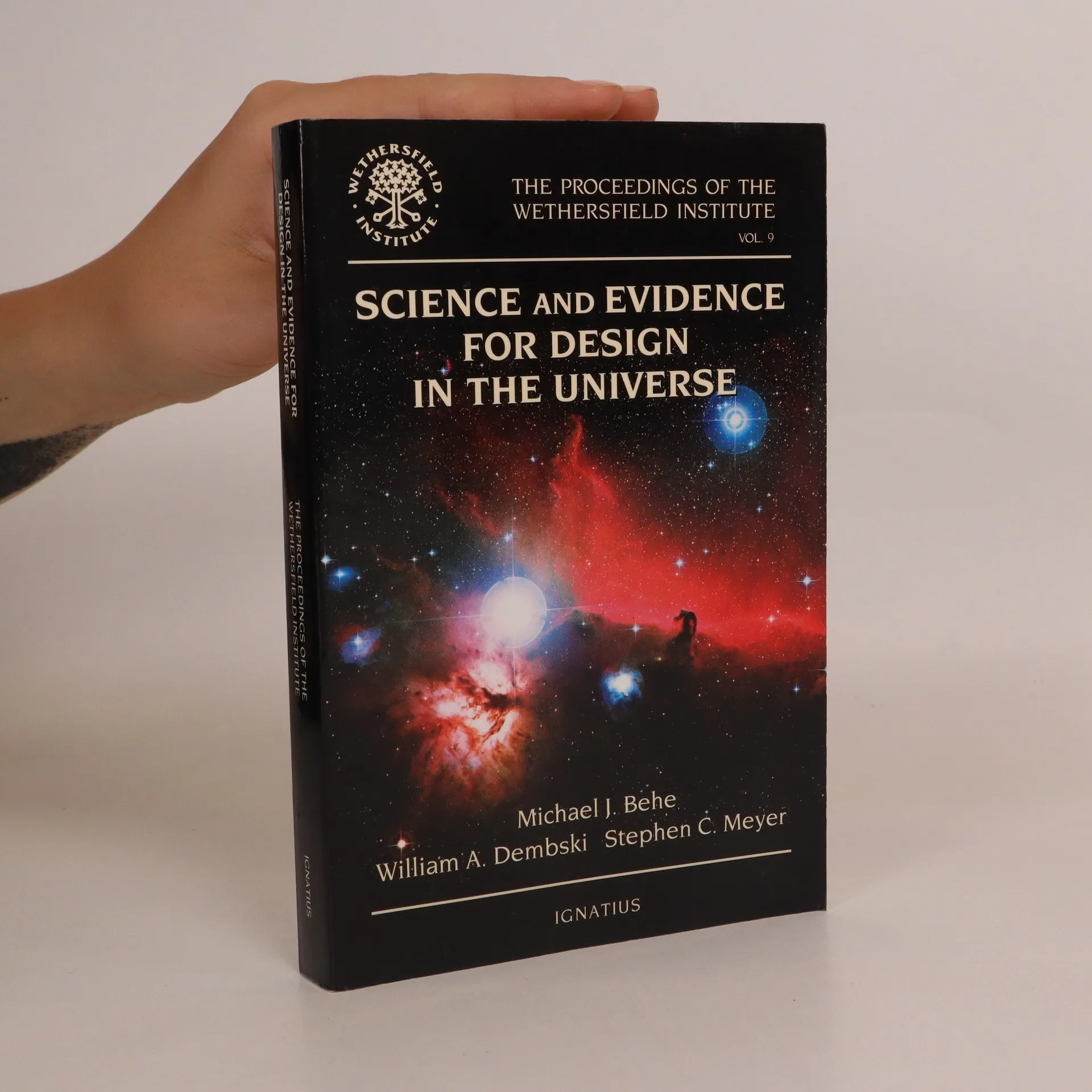
Science and Evidence for Design in the Universe
- 180 Seiten
- 7 Lesestunden
As progress in science continues to reveal unimagined complexities, three scientists revisit the difficult and compelling question of the origin of our universe. As mathematician, biochemist, and philosopher of science, they explore the possibility of developing a reliable method for detecting an intelligent cause and evidence for design at the origin of life. In the process, they present a strong case for opening and pursuing a fruitful exchange between science and theology. Mathematician William Dembski, author of The Design Inference , first argues that new developments in the information sciences make intelligent design objectively and scientifically detectable―he identifies the signs of design. Next, philosopher of science, Stephen Meyer, and biochemist Michael Behe, author of Darwin's Black Box , argue that these signs are now clearly evident in both the architecture of the universe and the features of living systems. Other essays by the authors defend the scientific status of the theory of intelligent design and show how that theory supports traditional religious belief without necessarily "proving" the existence of God. In a concluding essay, Michael Behe responds to critics of his best selling book, Darwin's Black Box , thus bringing readers up-to-date on the status of the contemporary design argument in biology.