



Reihen
Mehr zum Buch
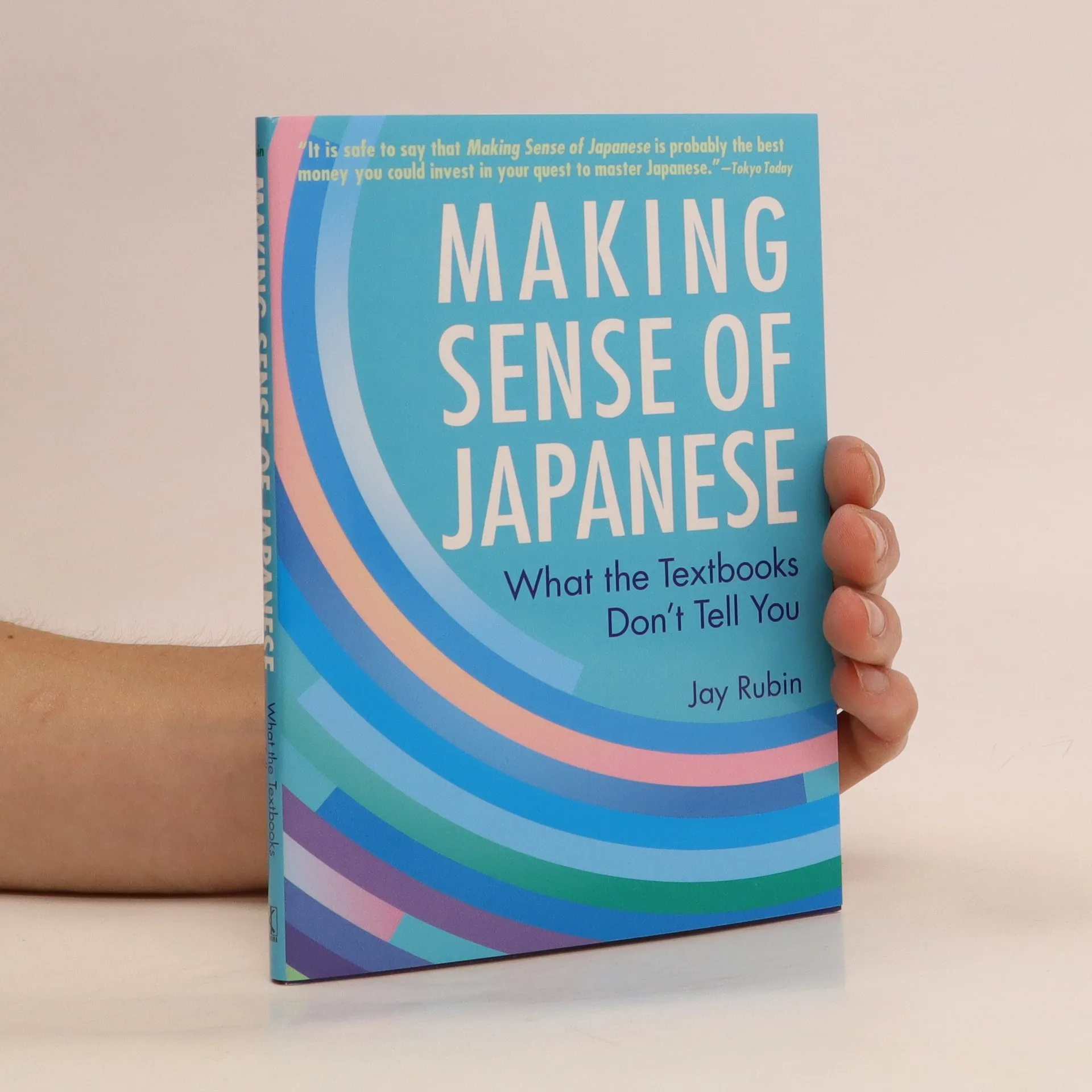
Making Sense of Japanese is the culmination of an American's thirty-year journey to learn and teach the complexities of the Japanese language. Rubin aims to demonstrate that the Japanese language is not vague, offering clear explanations of challenging grammatical forms using everyday English. From a recuperative center in Kyoto, he argues that Japanese is more straightforward than it may seem. The first part of the book closely examines the "subjectless sentence," providing tools to uncover hidden subjects and addressing the rest of the sentence. In the second part, Rubin tackles expressions that have perplexed students over the years, introducing his unique method of analyzing upside-down Japanese sentences in a more accessible manner. Quoting the renowned Japanese novelist Soseki Natsume, who noted that scholars often make the comprehensible incomprehensible, Rubin seems to have achieved the opposite. This book continues to be a valuable resource for those seeking clarity in the Japanese language.
Buchkauf
Making Sense of Japanese, Jay Rubin
- Sprache


- Erscheinungsdatum
- 2012
- Einband
- (Paperback)
Hier könnte deine Bewertung stehen.
- Titel
- Making Sense of Japanese
- Sprache
- Englisch, Japanisch
- Autor*innen
- Jay Rubin
- Verlag
- National Geographic
- Erscheinungsdatum
- 2012
- Einband
- Paperback
- Seitenzahl
- 144
- ISBN10
- 156836492x
- ISBN13
- 9781568364926
- Reihe
- Power Japanisch
- Schlagwörter
- Handbücher und Anleitungen, Linguistik, Japan, Japanische Literatur
- Bewertung
- 4,15 von 5 Sternen
- Beschreibung
- Making Sense of Japanese is the culmination of an American's thirty-year journey to learn and teach the complexities of the Japanese language. Rubin aims to demonstrate that the Japanese language is not vague, offering clear explanations of challenging grammatical forms using everyday English. From a recuperative center in Kyoto, he argues that Japanese is more straightforward than it may seem. The first part of the book closely examines the "subjectless sentence," providing tools to uncover hidden subjects and addressing the rest of the sentence. In the second part, Rubin tackles expressions that have perplexed students over the years, introducing his unique method of analyzing upside-down Japanese sentences in a more accessible manner. Quoting the renowned Japanese novelist Soseki Natsume, who noted that scholars often make the comprehensible incomprehensible, Rubin seems to have achieved the opposite. This book continues to be a valuable resource for those seeking clarity in the Japanese language.