

Ausverkauft, aber heiß begehrt!
Liegt es in deinem Regal?Verdiene zwischen 0 € und 0,41 € beim Verkauf dieses Buches.
Bücher verkaufenParameter
- 320 Seiten
- 12 Lesestunden
Mehr zum Buch
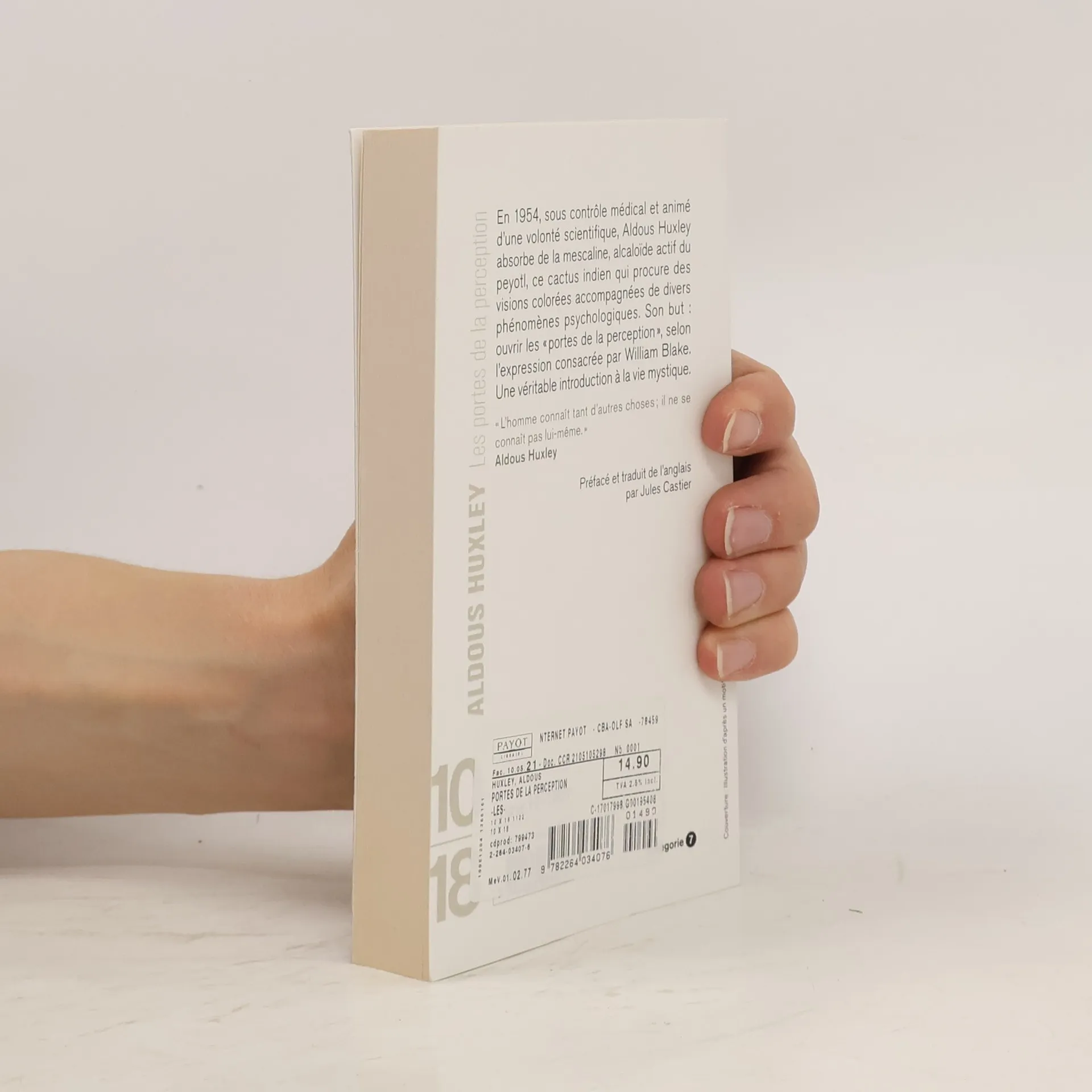
The Doors of Perception is a philosophical essay, released as a book, by Aldous Huxley. First published in 1954, it details his experiences when taking mescaline. The book takes the form of Huxley's recollection of a mescaline trip that took place over the course of an afternoon in May 1953. The book takes its title from a phrase in William Blake's 1793 poem 'The Marriage of Heaven and Hell'. Huxley recalls the insights he experienced, which range from the "purely aesthetic" to "sacramental vision". He also incorporates later reflections on the experience and its meaning for art and religion.


Buchkauf
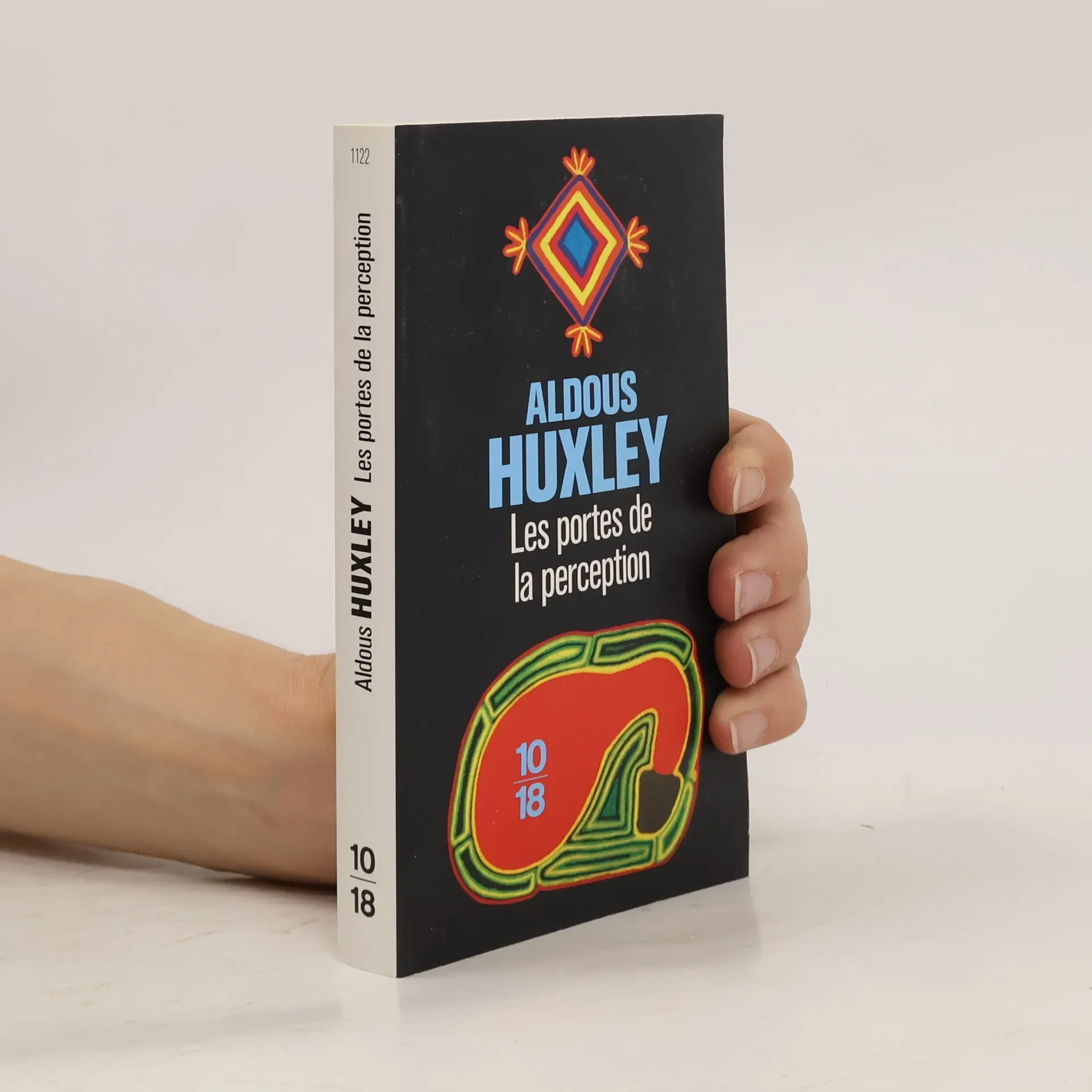
Les Portes de la perception, Aldous Huxley
- Sprache

- Erscheinungsdatum
- 2001
- Einband
- (Paperback)
Wir benachrichtigen dich per E-Mail.
4,0
Sehr gut
99+ Bewertung
Hier könnte deine Bewertung stehen.
- Titel
- Les Portes de la perception
- Sprache
- Französisch
- Autor*innen
- Aldous Huxley
- Verlag
- 10/18
- Erscheinungsdatum
- 2001
- Einband
- Paperback
- Seitenzahl
- 320
- ISBN10
- 2264034076
- ISBN13
- 9782264034076
- Reihe
- Schlagwörter
- Psychologische Thematik, Philosophisches Thema, Spiritualität, Wissenschaft, Drogen, Erlebnisse, Bewusstsein
- Erstveröffentlichung
- 1954
- Originaltitel
- The Doors of Perception
- Bewertung
- 3,95 von 5 Sternen
- Beschreibung
- The Doors of Perception is a philosophical essay, released as a book, by Aldous Huxley. First published in 1954, it details his experiences when taking mescaline. The book takes the form of Huxley's recollection of a mescaline trip that took place over the course of an afternoon in May 1953. The book takes its title from a phrase in William Blake's 1793 poem 'The Marriage of Heaven and Hell'. Huxley recalls the insights he experienced, which range from the "purely aesthetic" to "sacramental vision". He also incorporates later reflections on the experience and its meaning for art and religion.