

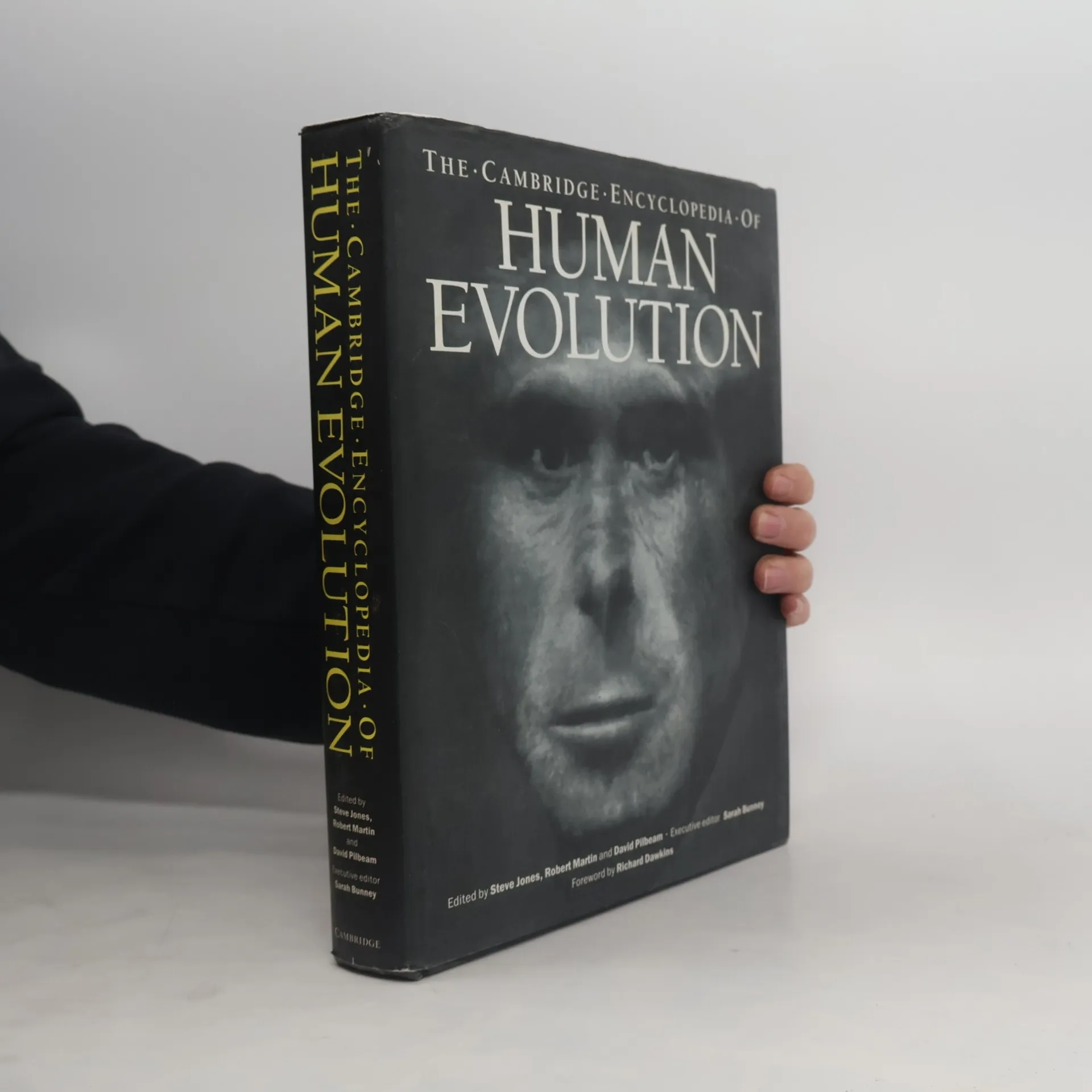
The Cambridge Encyclopedia of Human Evolution
Buchbewertung
Parameter
- 506 Seiten
- 18 Lesestunden
Mehr zum Buch
This is a new and refreshing introduction to the human species that places modern humans squarely in evolutionary perspective and treats evolution itself as a continuing genetic process in which every one of us is involved. Over seventy scholars worldwide have collaborated on the Encyclopedia, which is divided into ten main sections. Following a keynote introduction asking simply What makes us human?, the coverage ranges widely: from genetics, primatology and fossil origins to human biology and ecology, brain function and behavior, and demography and disease. Emphasis is placed throughout on the biological diversity of modern people and the increasing convergence of the fossil and genetic evidence for human evolution that has emerged in recent years. Because of the need to look at humankind in the context of our closest relatives, the
Buchkauf
The Cambridge Encyclopedia of Human Evolution, Richard Dawkins, Steve Jones, Robert D. Martin, David Pilbeam, Sarah Bunney
- Sprache

- Erscheinungsdatum
- 1992
- Einband
- (Hardcover)
Hier könnte deine Bewertung stehen.
- Titel
- The Cambridge Encyclopedia of Human Evolution
- Sprache
- Englisch
- Autor*innen
- Richard Dawkins, Steve Jones, Robert D. Martin, David Pilbeam, Sarah Bunney
- Erscheinungsdatum
- 1992
- Einband
- Hardcover
- Seitenzahl
- 506
- ISBN10
- 0521323703
- ISBN13
- 9780521323703
- Reihe
- Schlagwörter
- Naturwissenschaften, Handbücher und Anleitungen, Enzyklopädien, Wissenschaft, Evolution, Biologie des Menschen, Evolutionsbiologie
- Bewertung
- 5 von 5 Sternen
- Beschreibung
- This is a new and refreshing introduction to the human species that places modern humans squarely in evolutionary perspective and treats evolution itself as a continuing genetic process in which every one of us is involved. Over seventy scholars worldwide have collaborated on the Encyclopedia, which is divided into ten main sections. Following a keynote introduction asking simply What makes us human?, the coverage ranges widely: from genetics, primatology and fossil origins to human biology and ecology, brain function and behavior, and demography and disease. Emphasis is placed throughout on the biological diversity of modern people and the increasing convergence of the fossil and genetic evidence for human evolution that has emerged in recent years. Because of the need to look at humankind in the context of our closest relatives, the