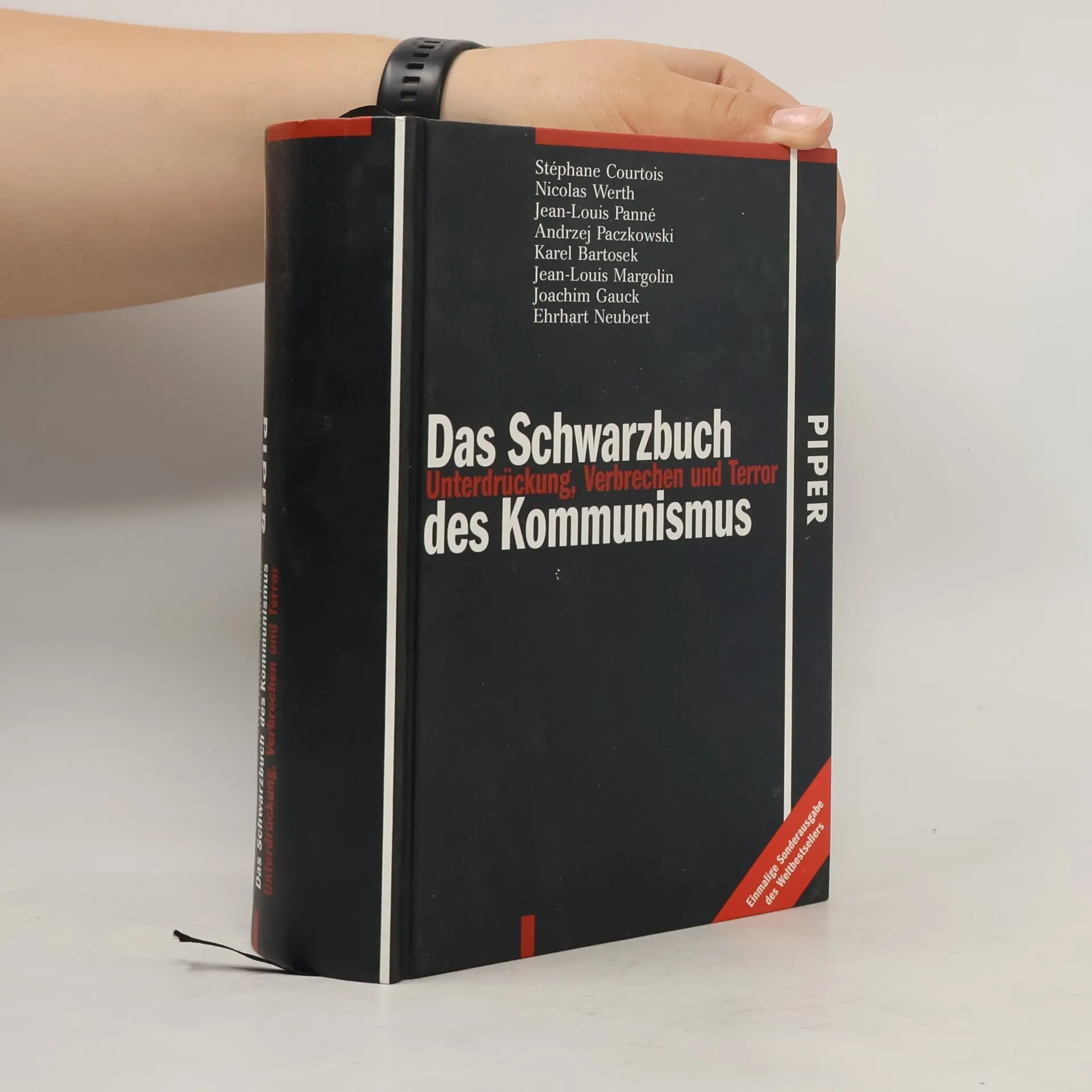
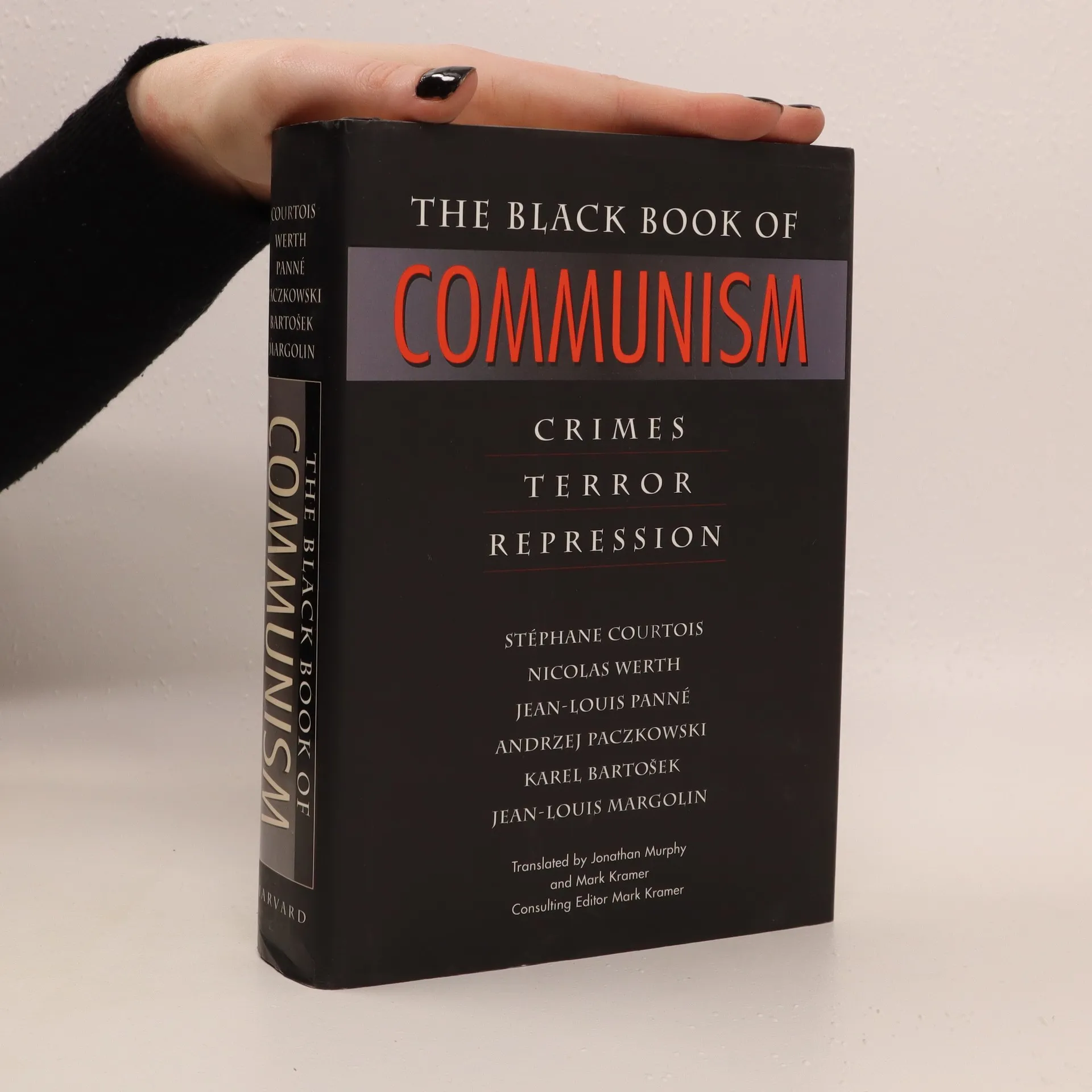
Diese umfassende Reihe taucht in die dunklen Kapitel des 20. Jahrhunderts ein und deckt die brutale Geschichte kommunistischer Regime weltweit auf. Sie untersucht die Opfer, die Unterdrückung und die ideologischen Motivationen, die unzählige Leben geprägt haben. Sie bietet einen erschütternden, aber notwendigen Einblick in politische Experimente, die immenses menschliches Leid verursacht haben. Es ist ein wichtiges Werk zum Verständnis der modernen Geschichte und der Folgen totalitärer Ideologien.
Aus dem Franz. von Irmela Arnsperger ... Sonderausgabe 1999 987, [32] S. : Ill. ; 23 cm gebundene Ausgabe, Hardcover, Lesebändchen, ohne OSU Buch sehr gut u. sauber, themenbezogener Zeitungsartikel beiliegend
Nowe wydanie bestsellerowego dzieła opracowanego przez wybitnych autor�w pod
redakcją St�phana Courtois. Wśr�d nich m.in. Nicolas Werth, Jean-Louis Pann�,
Andrzej Paczkowski, Karel Bartosek, Jean-Louis Margolin i inni. Książka
przedstawia bilans ofiar krwawych represji i prześladowań w krajach rządzonych
przez komunist�w - od rewolucji bolszewickiej 1917 r. po lata osiemdziesiąte
XX wieku.
When first published in France in 1997, this work ignited significant controversy that persists today. Some contributors distanced themselves from chief editor Stéphane Courtois's assertion that Communism, in all its forms, is morally equivalent to Nazism. Courtois argued that both totalitarian systems excelled at killing rather than governing. The book documents the extensive death toll attributed to Communism: 25 million in Russia during the Bolshevik and Stalinist periods, around 65 million in China under Mao Zedong, 2 million in Cambodia, and millions more across Africa, Eastern Europe, and Latin America—an astonishingly high number of victims. Courtois contends that this inclination toward violence is not accidental but a fundamental aspect of a philosophy aimed at eliminating class distinctions by erasing the classes themselves and the individuals within them. The contributors meticulously detail Communism's crimes, moving through various countries and revolutions, presenting figures that may ignite debate among scholars and ideologues alike. Courtois also provocatively suggests that those who view figures like Lenin, Trotsky, and Ho Chi Minh favorably are unwittingly endorsing a deadly ideology that, despite its global decline, still retains followers. This thought-provoking work of history and social criticism deserves widespread readership and discussion.
Das 'Schwarzbuch des Kommunismus' hat den Blick auf das 20. Jahrhundert tiefgreifend verändert. Von den Autoren minutiös recherchiert, zieht es die grausige Bilanz des Kommunismus, der prägenden Idee unserer Zeit. Mehr als 80 Millionen Tote, so rechnen die Autoren vor, hat die Vision der klassenlosen Gesellschaft gekostet – mehr als der Nationalsozialismus zu verantworten hat. Das Buch hat eine beispiellose Kontroverse ausgelöst, denn es beläßt es nicht bei einer Generalinventur des roten Terrors, es benennt auch Mitwisser und intellektuelle Mittäter im Westen: 'Das Schwarzbuch ist auch eine Unglücksgeschichte jener ›willigen Helfer‹ im Westen, die sich 90 Jahre lang blind und taub machten.' Frankfurter Allgemeine

This international bestseller plumbs recently opened archives in the former Soviet bloc to reveal the accomplishments of communism around the world. The book is the first attempt to catalogue and analyse the crimes of communism over 70 years.