

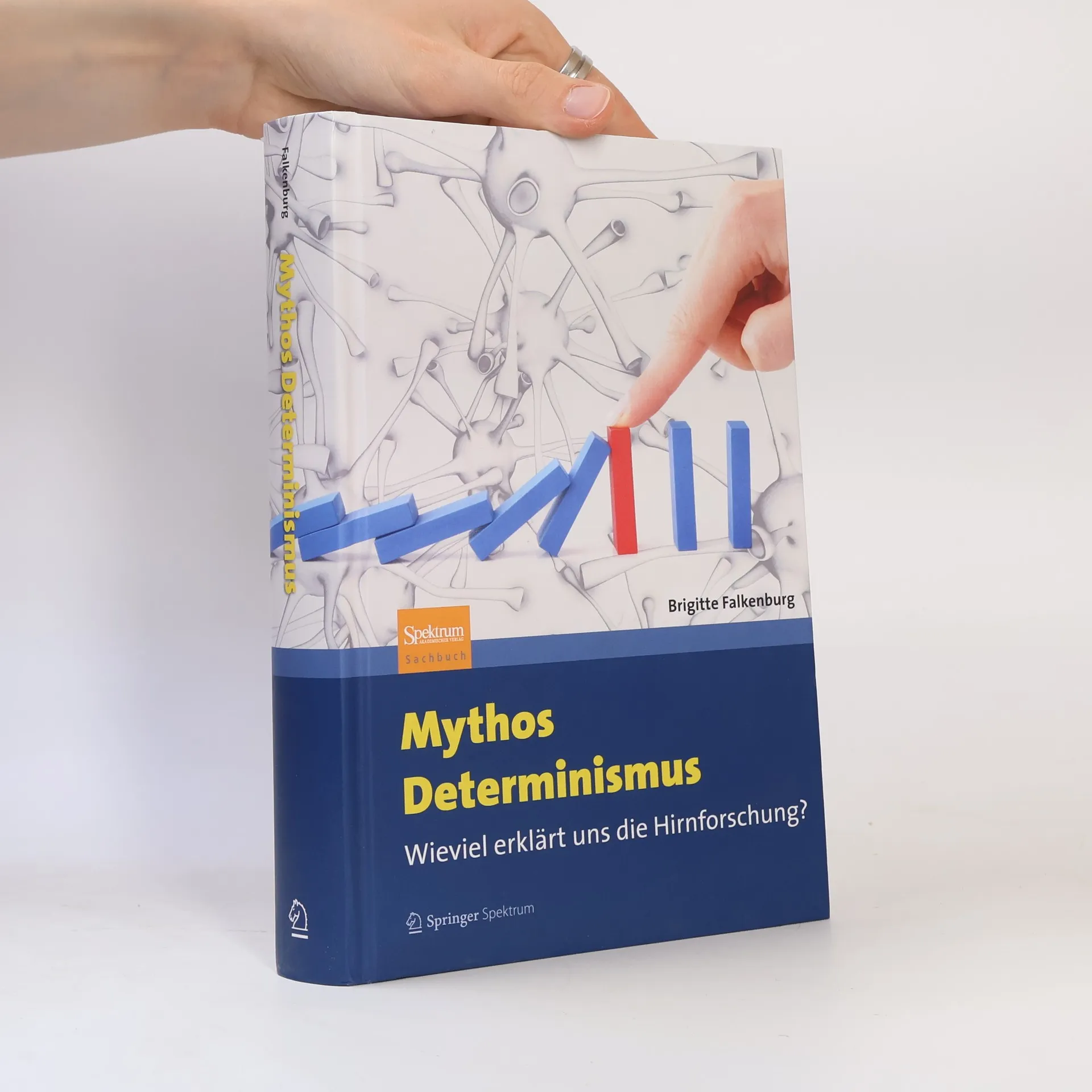
Aus der Sicht der Neurobiologie regiert im Kopf das neuronale Geschehen. Brigitte Falkenburg untersucht, was Hirnforscher über die Mechanismen des Hirngeschehens und deren Einfluss auf den menschlichen Geist wissen. Sie stellt die Frage, welche Erklärungen die Neurobiologie bietet und wo ihre Grenzen liegen. Ist es nur eine Frage der Zeit, bis die Entstehung des Geistes aus Materie vollständig verstanden wird? Oft wird behauptet, die Biologie habe die Physik als Leitwissenschaft abgelöst. Doch in der Hirnforschung sind physikalische Prinzipien unverzichtbar, da bildgebende Verfahren auf physikalischen Effekten basieren. Auch die Debatte um die Hirnforschung ist ohne physikalische Erklärungen und deren Mythen nicht zu verstehen. Mechanistisches Denken, das in der Physik überwunden wurde, beeinflusst nach wie vor die Hirnforschung. Die Anfänge der modernen Naturwissenschaft, geprägt durch Galileis experimentelle Methode, Descartes' Annahme von Lebewesen als Automaten und Newtons Suche nach den Ursachen der Naturerscheinungen, haben zu einem kausalen Denken geführt. Während die Physik sich vom mechanistischen Weltbild gelöst hat, bleiben in der Biologie veraltete mechanistische Vorstellungen wirksam. Falkenburgs Werk zielt darauf ab, die Debatte um Geist und Gehirn sowie freien Willen und Determinismus zu bereinigen und eröffnet einen differenzierteren Zugang zum Verständnis der Natur und des Menschen.
Brigitte Falkenburg Bücher

Focusing on Kant's intellectual evolution, the book traces his shift from an atomistic cosmology in the mid-1750s to the critical perspective outlined in the Critique of Pure Reason. It explores the internal challenges of his early theories and highlights the significance of the incongruent counterparts argument in his philosophical development. Additionally, it examines the emergence of the cosmological antinomy and its implications for transcendental idealism and the teleology of human reason, making it a valuable resource for scholars and students of Kant's philosophy.
Verursachung
- 160 Seiten
- 6 Lesestunden