
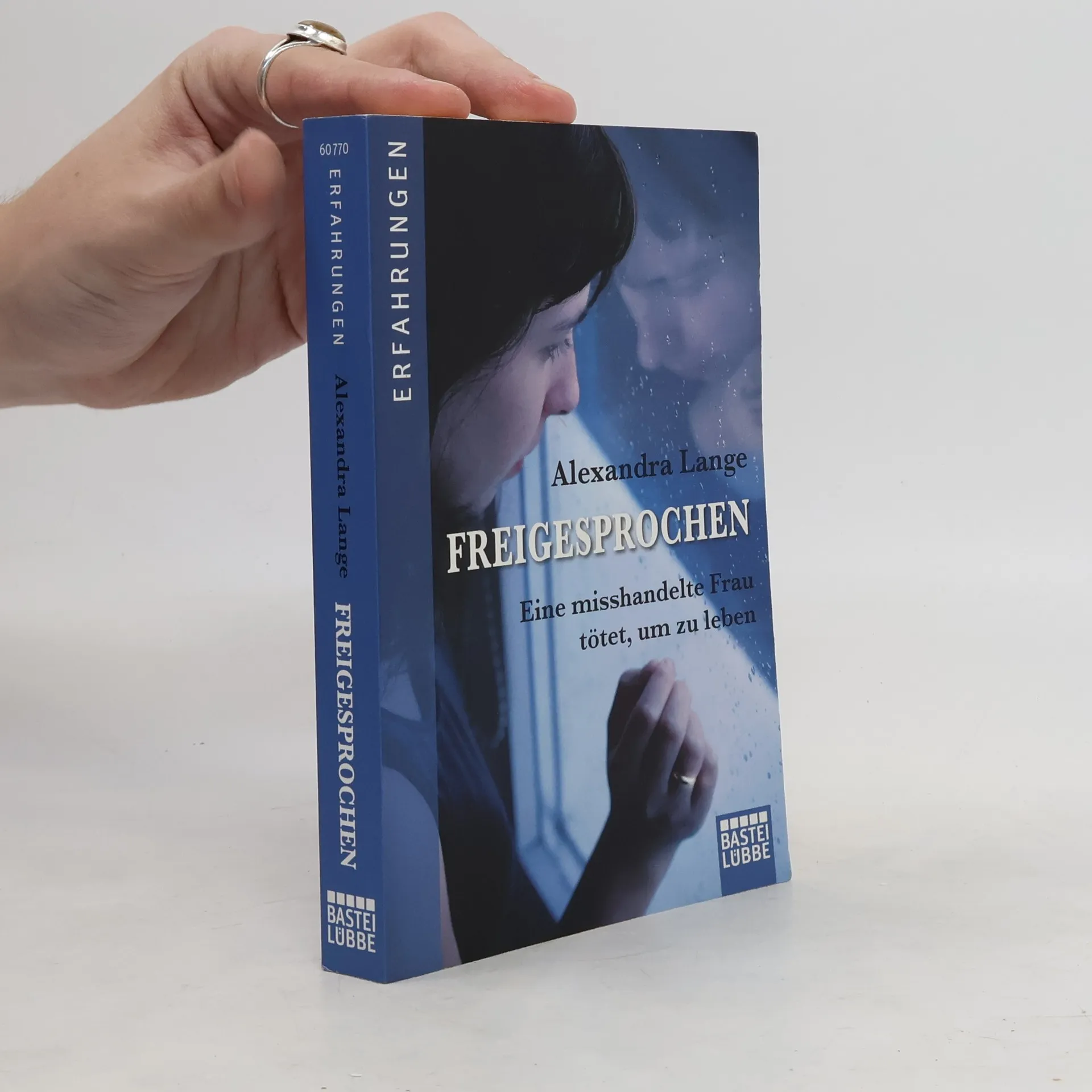
Als die achtzehnjährige Alexandra den gut aussehenden Marcellino trifft, ist es die berühmte Liebe auf den ersten Blick. Nur wenige Monate nach ihrer ersten Begegnung heiraten die beiden. Doch schon kurz nach der Hochzeit entpuppt sich der vermeintliche Traummann als brutaler Tyrann. Er schlägt Alexandra, er vergewaltigt sie, er hält sie wie eine Sklavin. Mehrfach flieht sie vor ihm, aber wegen der Kinder kehrt sie immer wieder zurück. Eines Tages schließlich eskaliert die Situation. Marcellino würgt Alexandra, die nun in Todesangst um ihr Leben kämpft ...
Alexandra Lange Bücher
Alexandra Lange ist eine angesehene Journalistin und Architekturhistorikerin, deren Arbeit tief in Architektur, Design und Städtebau eintaucht. Durch ihre Artikel für führende Publikationen erforscht sie die Schnittstellen von Raum, Gesellschaft und Kultur. Ihr analytischer Ansatz und die Betonung kritischen Denkens beleuchten die Komplexität der gebauten Umwelt und von Designpraktiken und bieten den Lesern ein tieferes Verständnis der Welt um sie herum.



The Design of Childhood
- 416 Seiten
- 15 Lesestunden
"From building blocks to city blocks, an eye-opening exploration of how children's playthings and physical surroundings affect their development. Parents obsess over their children's playdates, kindergarten curriculum, and every bump and bruise, but the toys, classrooms, playgrounds, and neighborhoods little ones engage with are just as important. These objects and spaces encode decades, even centuries of changing ideas about what makes for good child-rearing--and what does not. Do you choose wooden toys, or plastic, or, increasingly, digital? What do youngsters lose when seesaws are deemed too dangerous and slides are designed primarily for safety? How can the built environment help children cultivate self-reliance? In these debates, parents, educators, and kids themselves are often caught in the middle. Now, prominent design critic Alexandra Lange reveals the surprising histories behind the human-made elements of our children's pint-size landscape. Her fascinating investigation shows how the seemingly innocuous universe of stuff affects kids' behavior, values, and health, often in subtle ways. And she reveals how years of decisions by toymakers, architects, and urban planners have helped--and hindered--American youngsters' journeys toward independence. Seen through Lange's eyes, everything from the sandbox to the street becomes vibrant with buried meaning. Perfect for parents, educators, and anyone interested in design and architecture, [this book] will change the way you view the world--by showing it to you through children's eyes."--Hardcover jacket
Few places have been as nostalgized, or as maligned, as malls. Since their birth in the 1950s, they have loomed large as temples of commerce, the agora of the suburbs. In their prime, they proved a powerful draw for creative thinkers such as Joan Didion, Ray Bradbury, and George Romero, who understood the mall's appeal as both critics and consumers. Yet today, amid the aftershocks of financial crises and a global pandemic, as well as the rise of online retail, the dystopian husk of an abandoned shopping center has become one of our era's defining images. Conventional wisdom holds that the mall is dead. But what was the mall, really? And have rumors of its demise been greatly exaggerated?In her acclaimed The Design of Childhood, Alexandra Lange uncovered the histories of toys, classrooms, and playgrounds. She now turns her sharp eye to another subject we only think we know. She chronicles postwar architects' and merchants' invention of the mall, revealing how the design of these marketplaces played an integral role in their cultural ascent. In Lange's perceptive account, the mall becomes newly strange and rich with contradiction: Malls are environments of both freedom and exclusion--of consumerism, but also of community. Meet Me by the Fountain is a highly entertaining and evocative promenade through the mall's story of rise, fall, and ongoing reinvention, for readers of any generation.
Writing About Architecture
- 192 Seiten
- 7 Lesestunden
Extraordinary architecture addresses so much more than mere practical considerations. It inspires and provokes while creating a seamless experience of the physical world for its users. It is the rare writer that can frame the discussion of a building in a way that allows the reader to see it with new eyes. Writing About Architecture is a handbook on writing effectively and critically about buildings and cities. Each chapter opens with a reprint of a significant essay written by a renowned architecture critic, followed by a close reading and discussion of the writer's strategies. Lange offers her own analysis using contemporary examples as well as a checklist of questions at the end of each chapter to help guide the writer. This important addition to the Architecture Briefs series is based on the author's design writing courses at New York University and the School of Visual Arts. Lange also writes a popular online column for Design Observer and has written for Dwell, Metropolis, New York magazine, and The New York Times. Writing About Architecture includes analysis of critical writings by Ada Louise Huxtable, Lewis Mumford, Herbert Muschamp, Michael Sorkin, Charles Moore, Frederick Law Olmsted, and Jane Jacobs. Architects covered include Marcel Breuer, Diller Scofidio + Renfro, Field Operations, Norman Foster, Frank Gehry, Frederick Law Olmsted, SOM, Louis Sullivan, and Frank Lloyd Wright.