


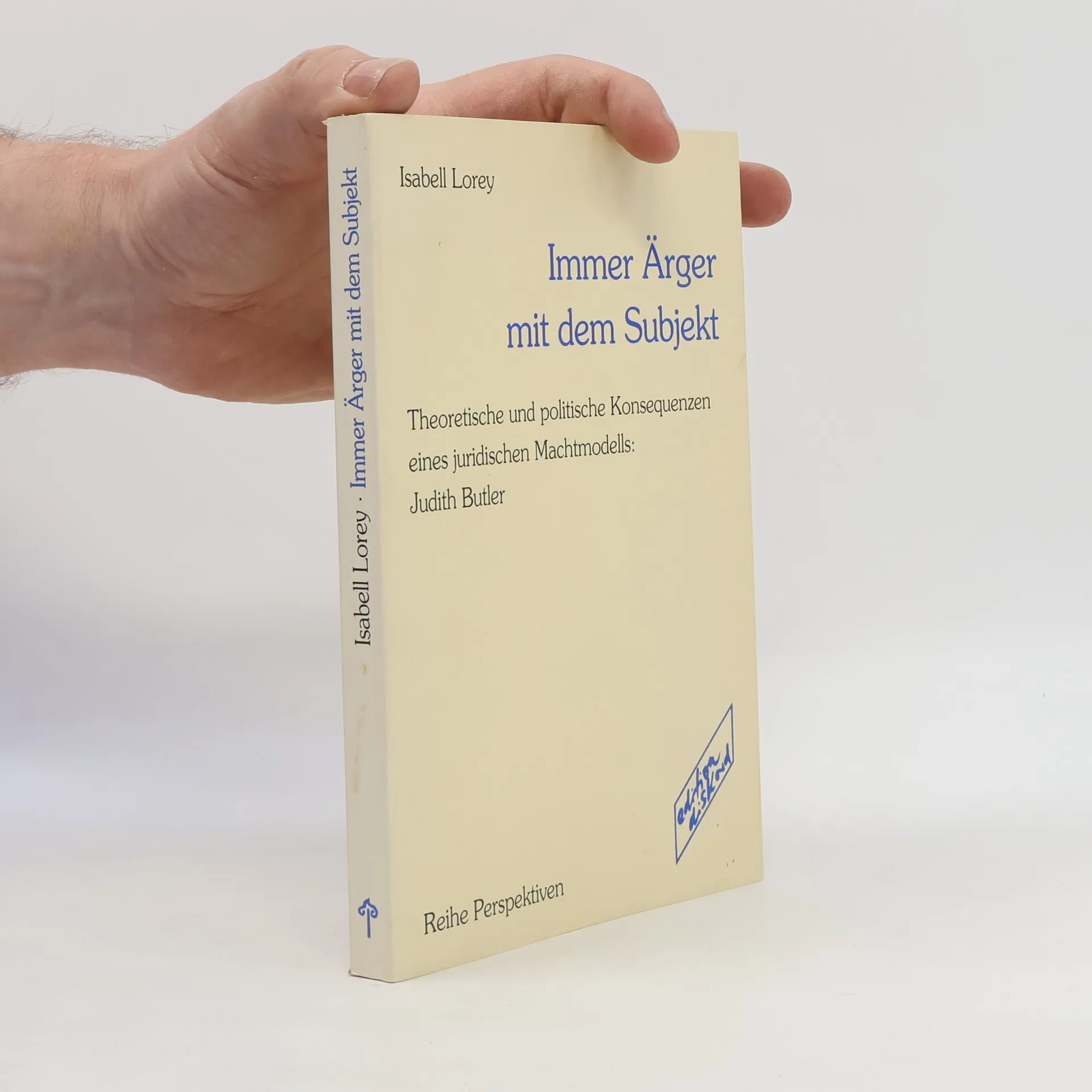
Immer Ärger mit dem Subjekt
- 169 Seiten
- 6 Lesestunden
Mit der Untersuchung von Isabell Lorey liegt die erste umfangreiche Analyse der zentralen Thesen Judith Butlers zur diskursiven Konstruiertheit von Subjekten vor. Diese ausführliche Auseinandersetzung mit der amerikanischen Philosophin, die die feministische Diskussion der letzten Jahre maßgeblich bestimmt und verändert hat, schließt eine Forschungslücke. Die Arbeit verbindet eine prägnante Darstellung des Butlerschen Ansatzes mit einer darüber hinausführenden Diskussion von gesellschaftlichen Veränderungsmöglichkeiten, von Kritik und Widerstand in bezug auf die Verhältnisse, durch die wir konstituiert sind. Die Autorin geht von der Frage aus, wie Butler die Konstitutionsprozesse geschlechtlicher Subjekte begreift. Sie skizziert das juridische Machtmodell Butlers, in dessen Mittelpunkt das Gesetz steht, und zeigt, wie mit Hilfe des linguistischen Konzepts der Performativität eine Antwort auf die Frage nach den Konstitutionsprozessen von Subjektivität gegeben wird. Wie Lorey überzeugend nachweist, reproduziert Butler dabei hegemoniale Normen wie das "cartesianische Subjekt", ohne deren Wirkungsmächtigkeit durchbrechen zu können. Möglichkeiten des Widerstandes bleiben sehr beschränkt. Mit einem über Sprache hinausgehenden Diskursbegriff bietet Lorey einen eigenen Vorschlag an, wie subjektkonstituierende Praktiken problematisiert und Widerstandsmöglichkeiten erweitert werden können.