Since its emergence in the 1980s and 90s, the Daros Collection in Zurich has accumulated about 280 works by 30 outstanding North American and European artists. It possesses one of the finest collections of early Warhol, and major works by Sigmar Polke, Barbara Kruger, Alfredo Jaar and Louise Bourgeois among many others. In 2000, when the strength and integrity of this collection had been established, the museum boldly struck off in a new direction, and the Daros Latin America Collection was founded. Already comprising roughly 1,000 works by around 100 artists including Carlos Amorales, José Bedia, Alfredo Jaar, Gego, Guillermo Kuitca, Vik Muniz, among others, it is now the largest collection of Latin American art in Europe--an exciting new resource that will doubtless have interesting long-term ramifications for contemporary European art. Face to Face is the first volume to bring the two Daros Collections together, thereby engaging these works--created in different media and of various cultural origin--in a dynamic dialogue that disrupts ordinary canon-oriented perspectives. Face to Face thus not only deepens our knowledge of the respective qualities of the two collections, but also explores the common characteristics of their cultural backgrounds.
Luis Camnitzer Bücher
6. November 1937
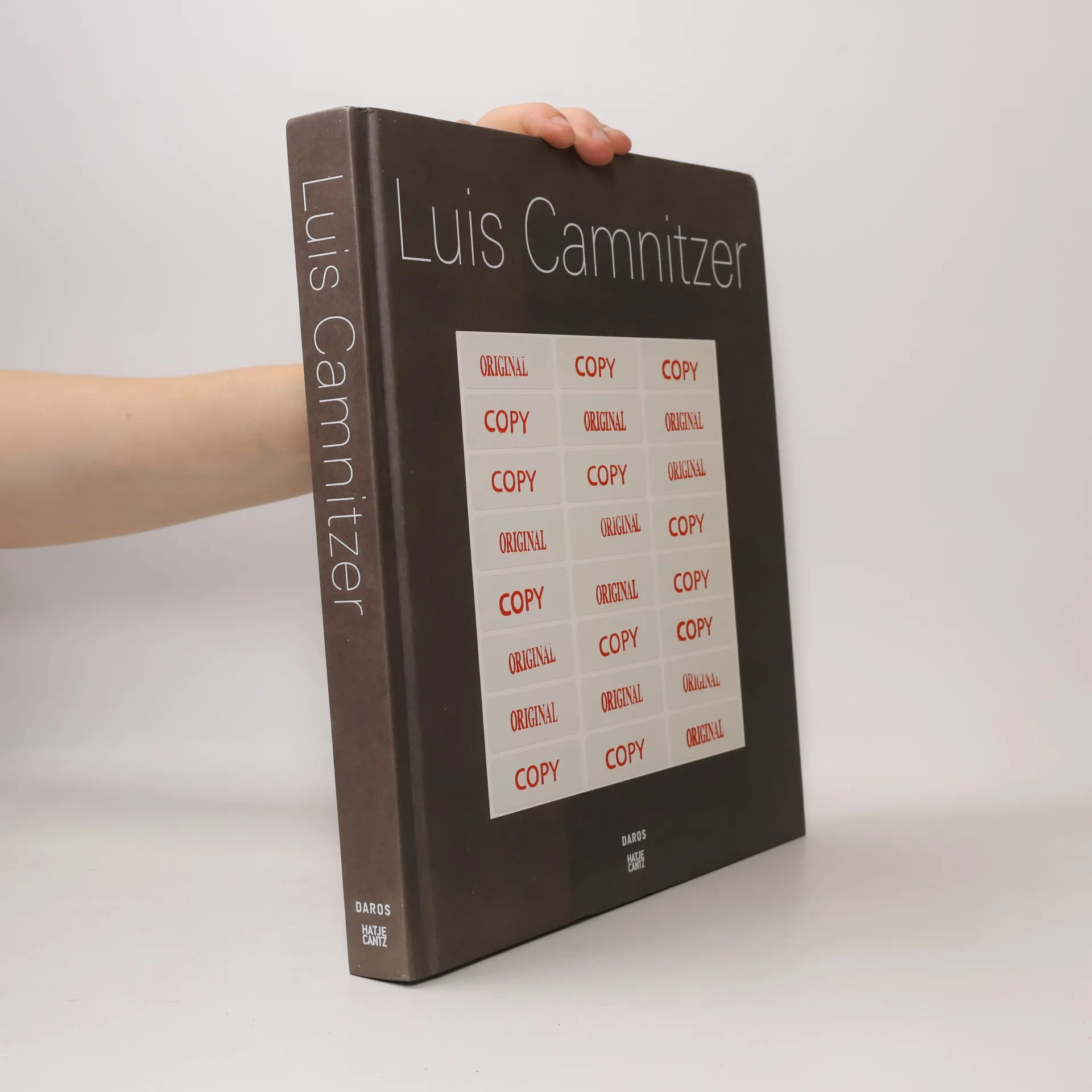
Luis Camnitzer, geboren in Deutschland und aufgewachsen in Uruguay, zählt zu den bedeutendsten konzeptuellen Künstlern Südamerikas der 1960er Jahre. Seine Übersiedlung nach New York im Jahr 1964 stellte ihn an die Spitze der Bewegung. Camnitzers Werk erforscht die Grenzen von Kunst und Sprache und befasst sich häufig mit politischen und sozialen Themen. Sein Ansatz zeichnet sich durch intellektuelle Tiefe und eine ironische Perspektive aus, die den Betrachter zum Nachdenken über die Realität und ihre Wahrnehmung anregt.