Gratisversand in ganz Deutschland!
Bookbot

Ronald T. Kneusel

    Numbers and Computers
    The Art of Randomness
    Strange Code
    How AI Works
    Math for Deep Learning
    • Math for Deep Learning

      • 344 Seiten
      • 13 Lesestunden
      4,5(28)Abgeben

      Math for Deep Learning provides the essential math you need to understand deep learning discussions, explore more complex implementations, and better use the deep learning toolkits.With Math for Deep Learning, you'll learn the essential mathematics used by and as a background for deep learning. You’ll work through Python examples to learn key deep learning related topics in probability, statistics, linear algebra, differential calculus, and matrix calculus as well as how to implement data flow in a neural network, backpropagation, and gradient descent. You’ll also use Python to work through the mathematics that underlies those algorithms and even build a fully-functional neural network.In addition you’ll find coverage of gradient descent including variations commonly used by the deep learning community: SGD, Adam, RMSprop, and Adagrad/Adadelta.

      Math for Deep Learning
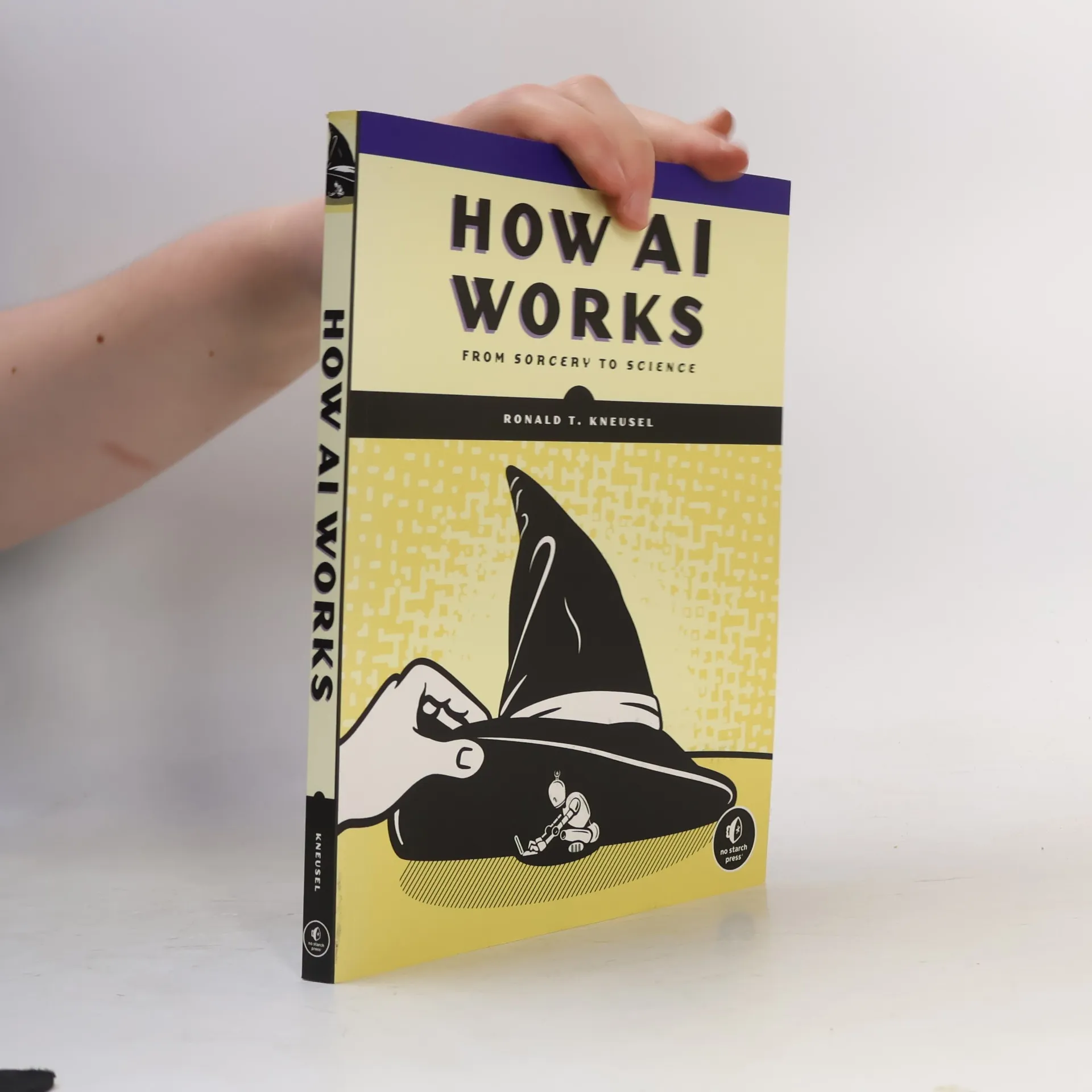
    • AI isn’t magic. How AI Works demystifies the explosion of artificial intelligence by explaining—without a single mathematical equation—what happened, when it happened, why it happened, how it happened, and what AI is actually doing "under the hood." Artificial intelligence is everywhere—from self-driving cars, to image generation from text, to the unexpected power of language systems like ChatGPT—yet few people seem to know how it all really works. How AI Works unravels the mysteries of artificial intelligence, without the complex math and unnecessary jargon. You’ll learn: The relationship between artificial intelligence, machine learning, and deep learning The history behind AI and why the artificial intelligence revolution is happening now How decades of work in symbolic AI failed and opened the door for the emergence of neural networks What neural networks are, how they are trained, and why all the wonder of modern AI boils down to a simple, repeated unit that knows how to multiply input numbers to produce an output number. The implications of large language models, like ChatGPT and Bard, on our society—nothing will be the same again AI isn’t magic. If you’ve ever wondered how it works, what it can do, or why there’s so much hype, How AI Works will teach you everything you want to know.

      How AI Works
    • Strengthen your overall coding skills by exploring the wonderful, wild, and often weird world of esoteric languages (esolangs). Strange Code starts with a dive into the underlying history of programming, covering the early computer-science concepts, like Turing machines and Turing completeness, that led to the languages we use today. It then explores the realm of “atypical” programming languages, introducing you to the out-of-the-box thinking that comes from these unusual approaches to coding. Later chapters address the even more unusual esolangs, nearly all of which are like nothing you’ve ever seen. Finally, author Ron Kneusel helps you develop and use two entirely new programming languages. You may not apply these languages in your day job, but this one-of-a-kind book will motivate you to think differently about what it means to express thought through code, while discovering the far-flung boundaries of programming. You’ll learn: How to program with pictures using Piet How to write two-dimensional programs in Befunge How to implement machine-learning algorithms using the text pattern matching language SNOBOL How to decipher Brainfuck code like [->-[>+”]>[[-+]+>+”]““]/liliHow to design and create two original programming languages Learning to think in these languages will make you a better, more confident programmer.

      Strange Code
    • Numbers and Computers

      • 381 Seiten
      • 14 Lesestunden

      Focusing on the diverse number formats utilized by computers, this textbook provides essential insights into the representation of numerical values, particularly emphasizing the limitations of floating-point numbers. It serves as a foundational resource for understanding the accuracy and precision of numerical representation in computing, making it invaluable for students and professionals in the field.

      Numbers and Computers