Anthony Giddens, Baron GiddensReihenfolge der Bücher (Chronologisch)
18. Januar 1938
Anthony Giddens ist ein britischer Soziologe, der für seine Strukturierungstheorie und seine ganzheitliche Betrachtung moderner Gesellschaften bekannt ist. Er hat die soziologische Theorie maßgeblich geprägt, indem er einen Rahmen entwickelte, der Makro- und Mikroebenen des sozialen Lebens verbindet. Seine Arbeit befasst sich mit zentralen Aspekten der Moderne, darunter Globalisierung, die Transformation von Intimität und Selbstidentität in der heutigen Zeit. Giddens bietet somit eine umfassende Perspektive zum Verständnis der Dynamik und Entwicklung moderner Gesellschaften.
The fourth edition features a comprehensive collection of readings that reflect contemporary sociological thought and practice. It has been meticulously revised and updated, making it an engaging resource for those looking to explore the diverse aspects of sociology. This edition aims to stimulate critical thinking and provide a broad understanding of the field, catering to both newcomers and those familiar with sociological concepts.
Winner of the 2014 European Book Prize. A "United States of Europe", Winston Churchill proposed in 1946, could "as if by a miracle transform" that "turbulent and mighty continent". "In this way only", he continued, "will hundreds of millions of toilers be able to regain the simple joys and hopes which make life worth living".
"Climate change differs from any other problem that, as collective humanity, we face today. If it goes unchecked, the consequences are likely to be catastrophic for human life on earth. Yet for most people, and for many policy-makers too, it tends to be a 'back of the mind' issue. ... [This book] argues controversially, we do not have a systematic politics of climate change. Politics-as-usual won't allow us to deal with the problems we face, while the recipes of the main challenger to orthodox politics, the green movement, are flawed at source." - cover.
Labour stands at a decisive point in its history. A change of leadership can help reinvigorate the party, but winning a fourth term of government will be impossible unless Labour's ideological position and policy outlook are thoroughly refurbished. What form should these innovations take?
Europe's social model, celebrated for promoting social cohesion and care for the vulnerable, is facing significant challenges, particularly with persistently high unemployment rates across many EU states. This strain has led to widespread dissatisfaction with the European project, exemplified by the rejection of the proposed new constitution. Urgent reform of the social model is necessary, aligning with efforts to stimulate economic growth. Weaker-performing nations can learn from those that have navigated these challenges more effectively. However, more radical changes must be considered in light of globalization, increasing cultural diversity, and shifting demographics. The author advocates for a rethinking of the traditional welfare state, emphasizing the need to integrate lifestyle changes into welfare concepts. Additionally, environmental issues should be linked to citizenship obligations. These innovations must coincide with efforts to enhance Europe's competitive position. This original and groundbreaking work is poised to join the ranks of influential texts that have reshaped social and political thought in recent decades.
Kniha reaguje na polemické názory, které Giddens rozpoutal svou předchozí knihou Třetí cesta, ve které hledá alternativní politickou cestu ke stávajícím sociálním modelům, která by adekvátněji reagovala na takové jevy, jakými jsou kupříkladu vzrůstající kriminalita, nezaměstnanost, ekologické problémy, postavení mužů a žen a pod.
Mit seinem Buch Der dritte Weg hat Anthony Giddens ein umfassendes Programm für politisches Handeln auf allen Ebenen in den Zeiten der Globalisierung vorgelegt. Dieses neue Denken und diese neue Praxis drängten sich auf, da vor allem auf wirtschaftlichem Gebiet weder die Konservativen noch die traditionellen Linken eine angemessene Antwort liefern. Giddens" Kritik an diesen Lagern führte in ganz Europa zu einer Debatte über Ziele und Mittel des dritten Wegs. In seinem neuen Buch antwortet Giddens seinen Kritikern und entfaltet im Detail seine Konzeption.Die neoliberalen Vertreter einer uneingeschränkten Herrschaft des Weltmarktes werfen Giddens vor, seine Vorstellungen von einem globalen Regieren schränkten das Wirtschaftswachstum ein und verstärkten die soziale Ungleichheit. Die traditionelle Linke hält ihm vor, seine Perspektive für den Umbau des Sozialstaates verleihe der Globalisierung zuviel Gewicht, schränke die Handlungsfähigkeit des Nationalstaats ein und führe in seiner Konse quenz zum Abbau der für die Demokratie notwendigen gesellschaftlichen Umverteilungsmechanismen. Giddens zeigt, dass weder ungezügeltes Wirtschaftswachstum noch Globalisierungspessimismus in der Lage sind, die soziale Demokratie zu erneuern. Allein der dritte Weg, der die neuen Faktoren Globalisierung, Individualisierung und ökolologische Notwendigkeiten berücksichtigt, erlaubt, auf neue Anforderungen neue Antworten zu geben.
Sociální teoretik světového významu a nejoblíbenější intelektuál Tonyho Blaira je přesvědčen, že je třeba najít třetí cestu mezi konzervatismem a liberalismem. Ten první již neodpovídá dynamickému a stále se měnícímu kapitalismu svobodného trhu, druhý neuspěl v pokusu dosáhnout sociální rovnosti pomocí státu blahobytu. Je tedy třeba vytvořit „třetí cestu“, novou vizi liberalismu, která přesahuje tradiční politické kategorie kombinací ekonomické moudrosti pravice a sociálního soucítění typického pro levici. ...
Paperback. Pub 2011 05 320 Traditional Chinese Business Weekly Publishing U.S. President Bill Clinton Everyone should read this important book. Giddens told! Nobel Prize winner. former Dean of the Academia Sinica Lee Yuan-tse Academia Sinica researcher at the Institute of European and American Studies Huang Ruiqi Taiwan University of Geography Professor Wang Xin recommended that the climate issue is so urgent. why few people seriously face? Why do most countries indifferent to the leader? Why is it that when future life crumbling. we passively over day to day? On climate change. green policies and national development. we need a new political attitude! Following the third way. Sociology Masters Giddens told. brought up again in the new political ways and thinking! For human survival crisis caused by global climate change. if we do not ...
The idea of finding a a third waya in politics has become a focus of discussion across the world. Political leaders, in the US, Europe, Asia and Latin America claim to be following its principles. Yet the notion has also attracted much criticism. Some say it is an empty concept without any real content. schovat popis
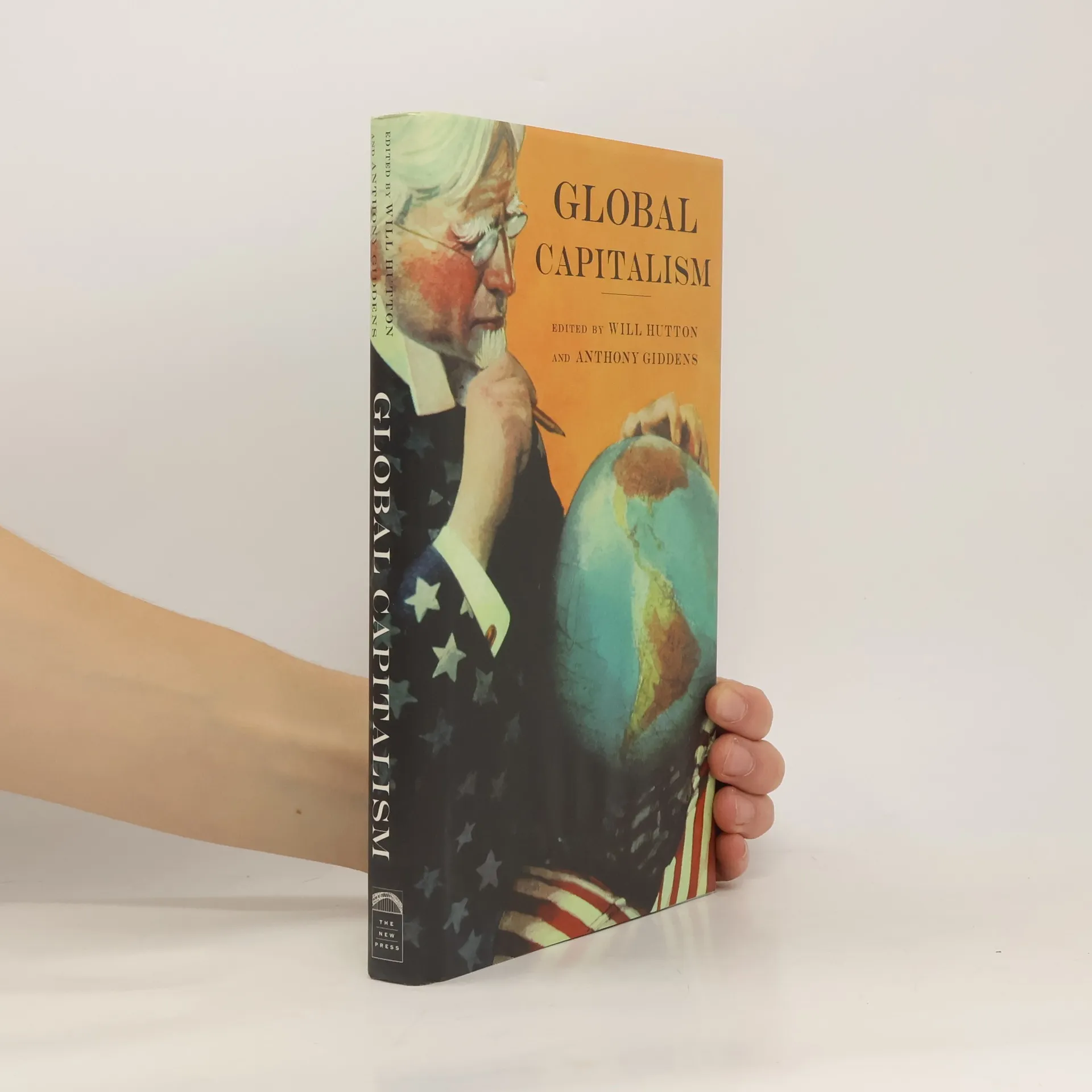
This "glorious and frightening read" (MT Magazine) examines capitalism's place as the universal social and economic order of our time. Now truly global, twenty-first century capitalism -- aided by extraordinary advances in technology and communication and by unfettered global financial markets -- has a speed, inevitability, and force that it has not had before. In Global Capitalism, now available in paperback, leading political and economic analysts have gathered to dissect this dangerous new world.Hailed as a "must read" by Internet Business London, Global Capitalism analyzes the current role of the business firm, considers whether the new capitalism is compatible with social cohesion and social justice, and addresses topics ranging from the degradation of the environment to the concentrated control of the media by transnational corporations. The contributors discuss capitalism as a form of culture and way of life, and ask whether it has any viable political rivals.
Relata sobre as mudanças pelos quais passaram culturas tradicionais, o choque entre a busca de integração e o fundamentalismo, as intolerâncias religiosas e as identidades étnicas e nacionais, as incertezas criadas pelo processo de unificação em escala planetária. Também discute sobre sexualidade, casamento e família.
Anthony Giddens hielt im Jahre 1999 die Reith Lectures - von der BBC gesendet und sich folglich an ein großes Publikum wendend. Er sprach über sein Thema , die Globalisierung. In ihrem Zuge hat sich unsere Welt entfesselt. Alle, an jedem Platz der Erde, gleichgültig, ob arm oder reich, sind ihren Folgen ausgesetzt. Die Risiken, die sie für den Einzelnen birgt, nehmen in unbekanntem Ausmaß zu. Die Globalisierung erfordert Veränderungen in unserem Demokratieverständnis, stellt neue Anforderungen an die Familien und verlangt, so Giddens, eine kosmopolitische Einstellung, damit die Welt nicht im Chaos des Fundamentalismus unter, schiedlichster Spielart versinkt.
Die Idee, einen "dritten Weg" in der Politik zu finden, wird seit einigen Monaten intensiv diskutiert – nicht nur im Vereinigten Königreich, sondern auch in den USA, Kontinentaleuropa und Lateinamerika. Doch was ist der dritte Weg? Befürworter dieses Konzepts konnten sich nicht auf eine einheitliche Definition einigen, während Kritiker die Möglichkeit eines solchen Weges gänzlich in Frage stellen. Anthony Giddens zeigt, dass die Entwicklung eines dritten Weges nicht nur eine Möglichkeit, sondern eine Notwendigkeit in der modernen Politik ist.
In diesem Buch skizziert Anthony Giddens eine radikal-kritische Politik jenseits aller eingefahrenen Denkmuster: Ausgehend von den Begriffen Globalisierung, Enttraditionalisierung und Ungewißheit beleuchtet er die sozialen Revolutionen unserer Zeit, zeigt die Widersprüche konservativer Politik, stellt zwei Theorien der Demokratisierung einander gegenüber und eintwirft ein Programm radikaler Demokratie
Every chapter in this new edition has been revised and the empirical content brought up to date using government statistics, academic journals and weeklies. There are also a number of new sections. These include an extended analysis of the 1989 revolutions in Eastern Europe and Russia, the upsurge in new forms of nationalism, the debate of the end of history, how green issues affect us and the impact of the men's movement and the backlash against feminism.
This major study develops a new account of modernity and its relation to the self. Building upon the ideas set out in The Consequences of Modernity, Giddens argues that 'high' or 'late' modernity is a post traditional order characterised by a developed institutional reflexivity.
In der heutigen Zeit haben tiefgreifende Veränderungen die affektiven Beziehungen über den privaten Bereich hinaus beeinflusst, und die Sexualität wird als potenzieller Raum der Freiheit betrachtet, fernab der Einschränkungen der zeitgenössischen Zivilisation. Wo steht heute die "sexuelle Revolution"? Um die Transformationen der Intimität in modernen Gesellschaften zu erkunden, zu denen Frauen maßgeblich beigetragen haben, muss man bis zur Entstehung der romantischen Liebe Ende des 18. Jahrhunderts zurückblicken. Während das romantische Ethos eine starke Asymmetrie in der Beziehung und eine häusliche Unterordnung der Frauen voraussetzte, zeichnet sich heute die Möglichkeit einer "reinen Beziehung" ab, die auf sexueller, emotionaler und sentimentaler Gleichheit basiert. Eine Umstrukturierung des intimen Bereichs, in dem das, was Giddens als "flexible Sexualität" definiert, zentral ist, das heißt exzentrisch, frei von den Zwängen der Reproduktion, von Phallokratie und Geschlechterstereotypen, gegründet auf der Autonomie des Individuums und nicht notwendigerweise auf Monogamie und Stabilität ausgerichtet. Als Verhandlung interpersoneller Bindungen unter Gleichen wird Intimität somit zu einer wahren Erfahrung von Demokratie, die auch einen "subversiven" Einfluss auf das soziale System haben kann.
Anthony Giddens präsentiert in seinem Hauptwerk die ausgereifteste Fassung seiner „Theorie der Strukturierung“. Er entwickelt diese Konzeption von handlungstheoretischen und mikrosoziologischen Überlegungen über eine Zeittheorie bis hin zum Grundriss einer nicht-funktionalistischen und nicht-evolutionistischen Makrosoziologie. Kritische Exkurse etwa zu Freud, Foucault, dem methodologischen Individualismus und Parsons' Evolutionstheorie schließen einzelne Kapitel des Buches ab.
Die von Anthony Giddens nahegelegte Blickrichtung auf die Unterschiede zwischen modernen und vormodernen Gesellschaften läßt erkennen, daß die Moderne eine Dynamik aufweist, die vor dem 17. Jahrhundert in vergleichbarer Form nicht existiert hat. Diese Dynamik sieht Giddens als Folge dreier Hauptfaktoren. Der erste Faktor ist das Auseinandertreten von Raum und Zeit: In engem Zusammenhang damit steht der zweite Faktor: die Entwicklung sozialer Mechanismen, durch die bestimmte gesellschaftliche Tätigkeiten aus dem früher ortsgebundenen »Bett« ihres Geschehens herausgehoben und über große raum-zeitliche Distanzen hinweg neu strukturiert werden. Der dritte Faktor: die reflexive Aneignung von Wissen über die Gesellschaft in den Sozialwissenschaften. Giddens zeigt an Beispielen auf, zu welchen Extremen die Dynamik der Moderne führt.
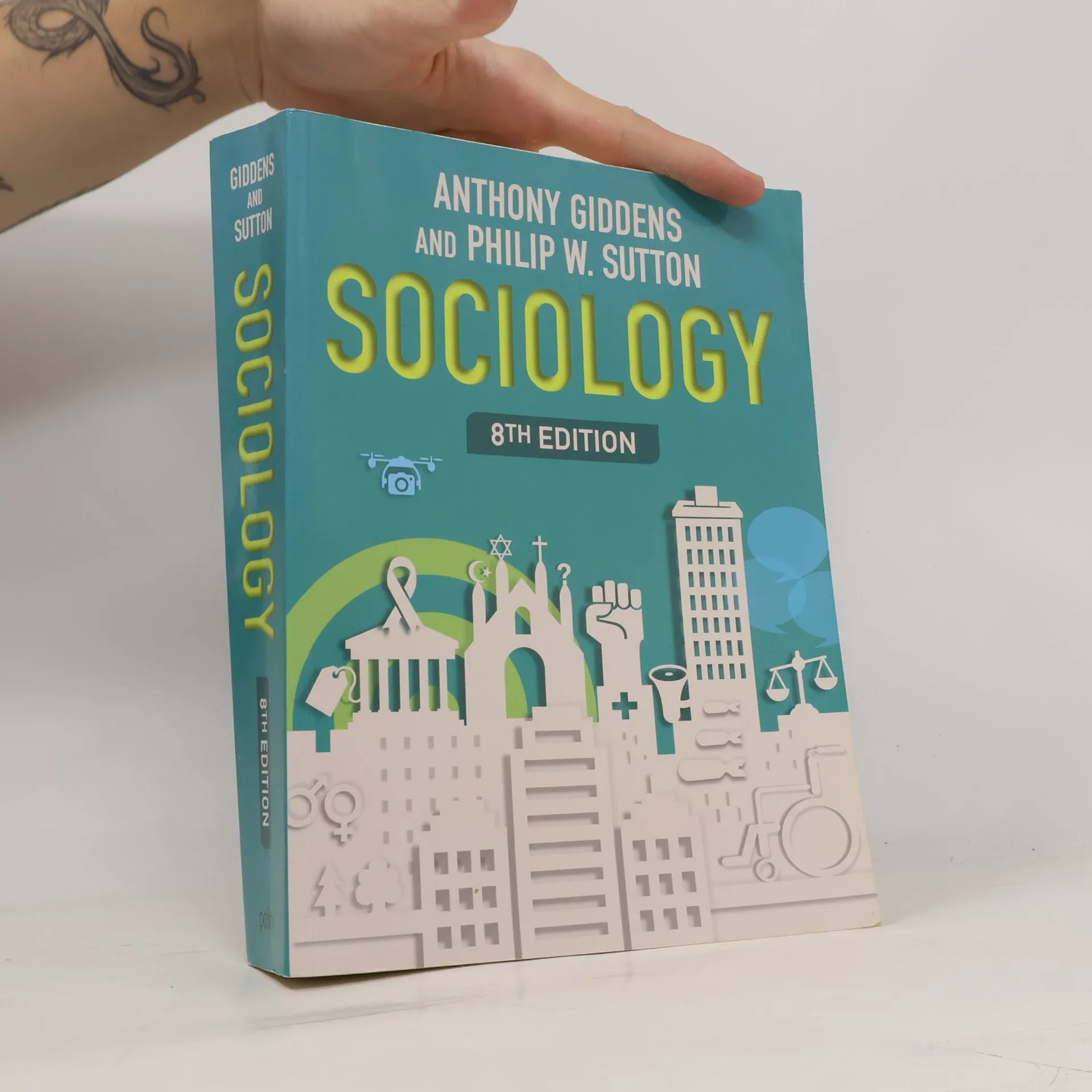
Anthony Giddens Soziologie gilt weltweit als das Einführungswerk in das gleichnamige Fach. Gekennzeichnet durch hohe Lesbarkeit und eine für Lehrbücher ungemeine Aktualität und Zeitbezogenheit, hat es diesen Ruf auch zu Recht: Man wird förmlich in das Werk hineingezogen; der Autor führt einen Dialog mit der LeserIn Waren Sie schon einmal verliebt?, in dem zuerst einmal in groben Zügen die Geschichte der Soziologie präsentiert wird. Danach wird es immer spezifischer: Über Kultur, Gesellschaft und Individuum und Gesellschaftstypen führt der Dialog weiter zu Geschlecht und Sexualität, Körper und Familie, um schließlich Moderne Organisationen, Massenmedien, Arbeit und Wirtschaftsleben oder den Globalen Wandel und die Umweltkrise zu diskutieren. Immer wird dabei mit plastischen Bildern gearbeitet, und immer hat man als LeserIn den Eindruck, mittendrin und dabei zu sein was die Lektüre des Buches zu einem beeindruckenden Gespräch über Soziologie macht und den Lerneffekt garantiert.
In this new and brilliantly original book of essays, Anthony Giddens discusses three main theoretical traditions in social science that cut across the division between Marxist and non-Marxist sociology: interpretive sociology, functionalism, and structuralism.
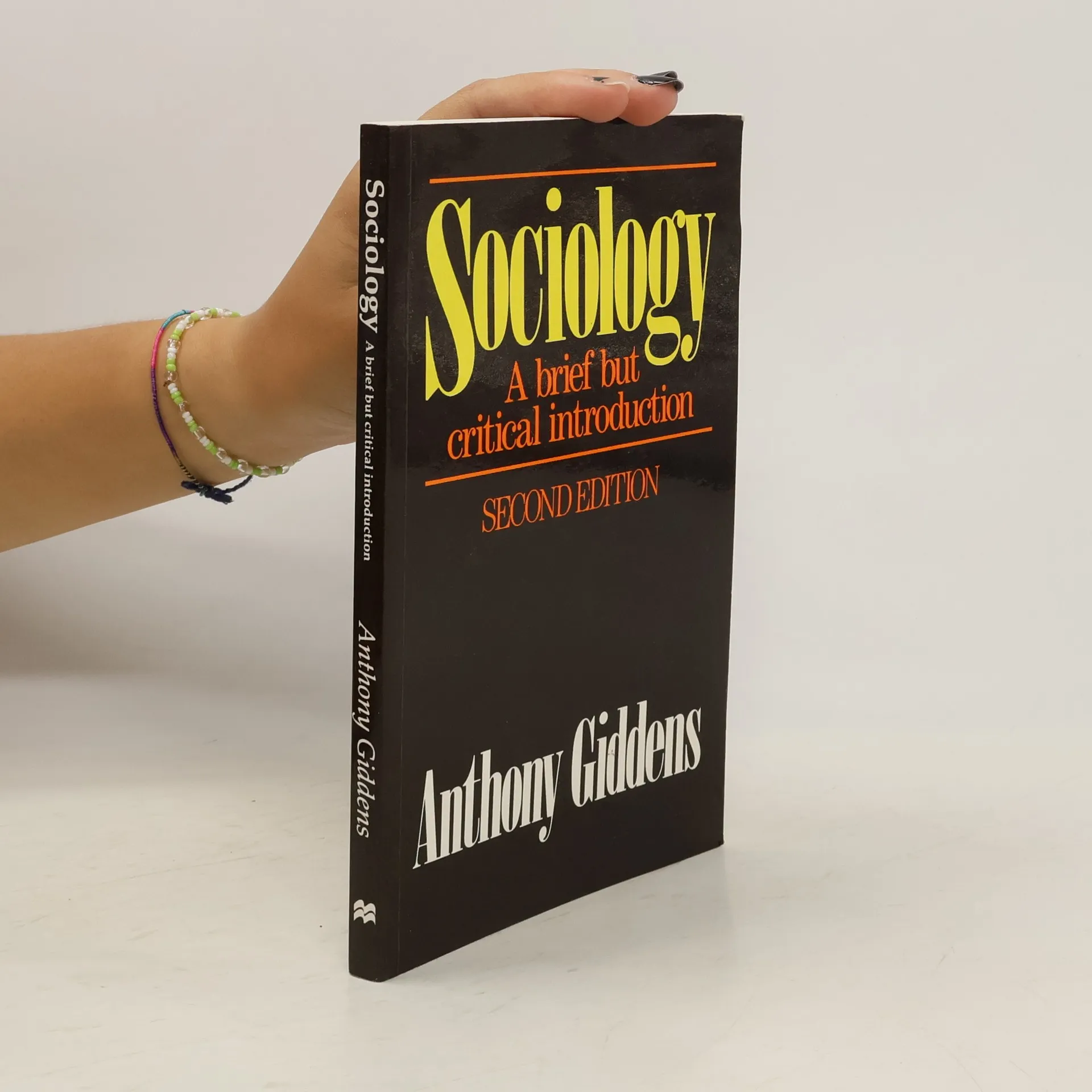
Sociology: A Brief but Critical Introduction offers a lively, discursive and jargon-free introduction to sociology, accessible to the lay reader as well as to the student. It incorporates discussion of recent developments in both social theory and empirical social research - developments to which Giddens has directly contributed.
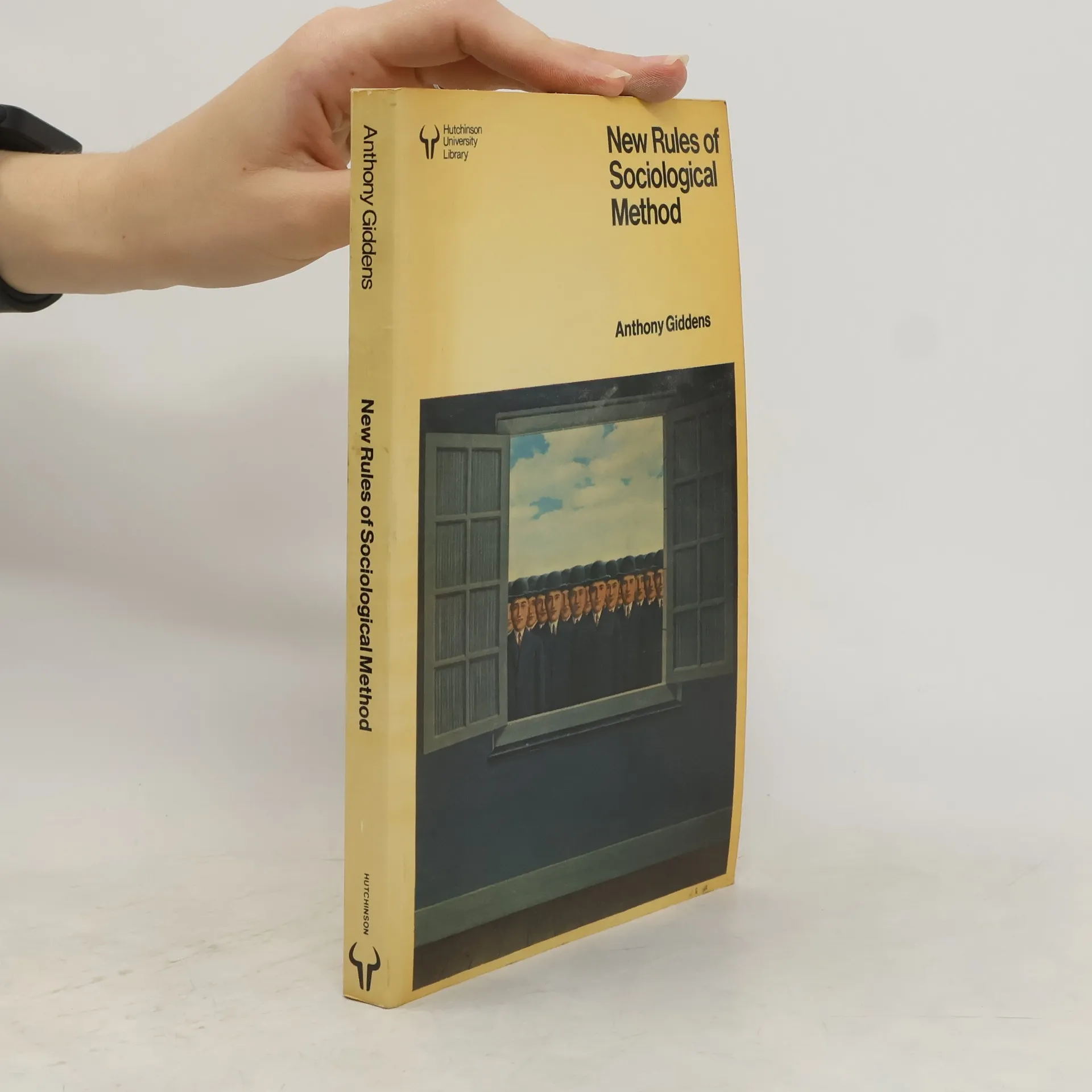
Sociology is concerned not with a "given" universe of objects, but rather with a universe constructed or produced through the active actions of subjects. While people transform and humanize nature socially, they do not produce the natural world, which is shaped independently of their existence. The reason people create history while transforming the world, and thus live within history, is that the production and reproduction of society is not "biologically programmed," unlike lower-level animal communities. Although the theories they produce can have an effect on nature through technological applications, people cannot shape the characteristics of the natural world in the same way they shape the characteristics of the social world.
Therefore, the production and reproduction of society must be understood not merely as a series of mechanical processes, but as a skilled execution by its members. However, emphasizing this does not imply that individuals are fully aware of what these skills are or how to use them, nor that social lifestyles can be seen as the intended outcomes of action in the most appropriate form.
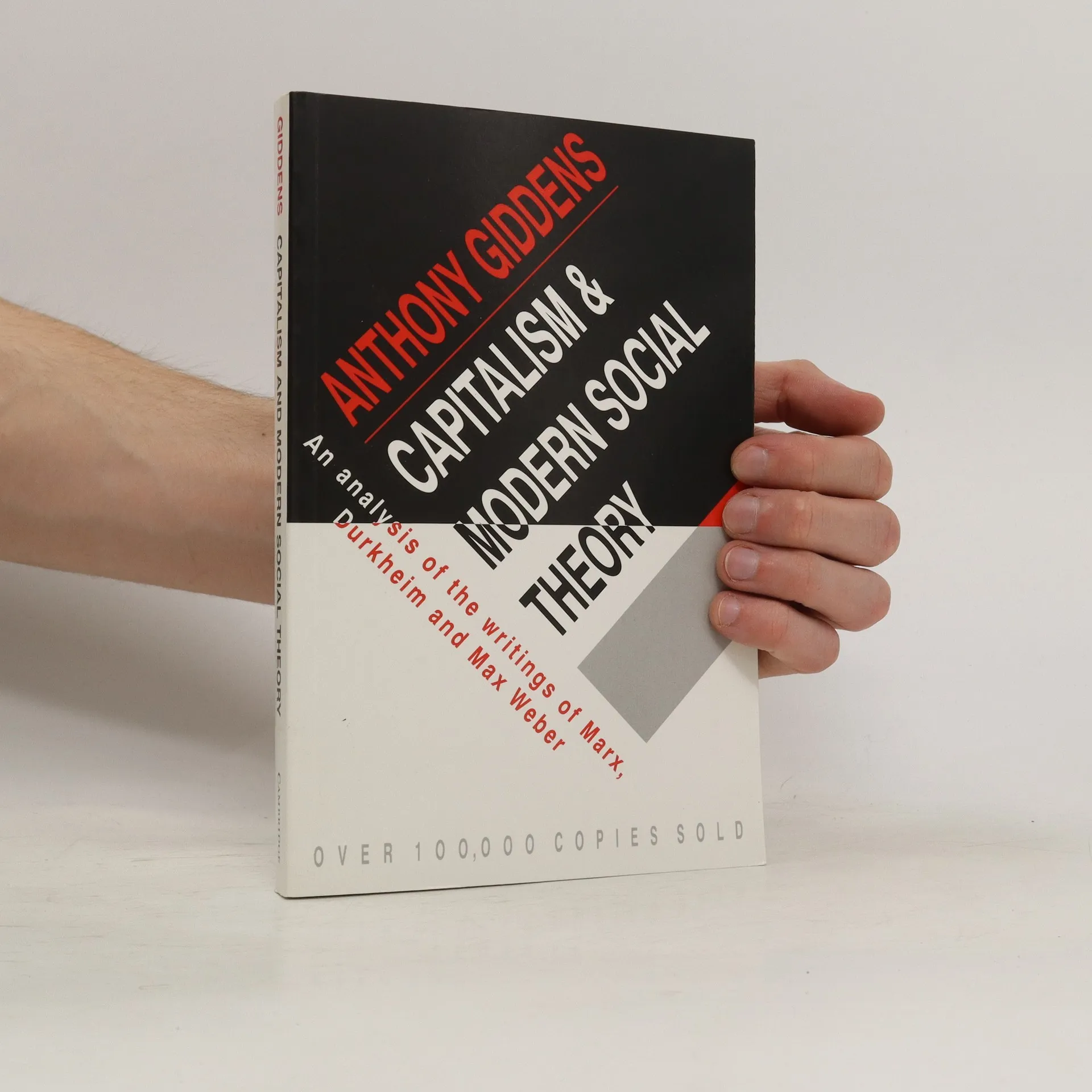
Giddens's analysis of the writings of Marx, Durkheim and Weber has become the classic text for any student seeking to understand the three thinkers who established the basic framework of contemporary sociology. The first three sections of the book, based on close textual examination of the original sources, contain separate treatments of each writer. The author demonstrates the internal coherence of their respective contributions to social theory. The concluding section discusses the principal ways in which Marx can be compared with the other two authors, and discusses misconceptions of some conventional views on the subject.
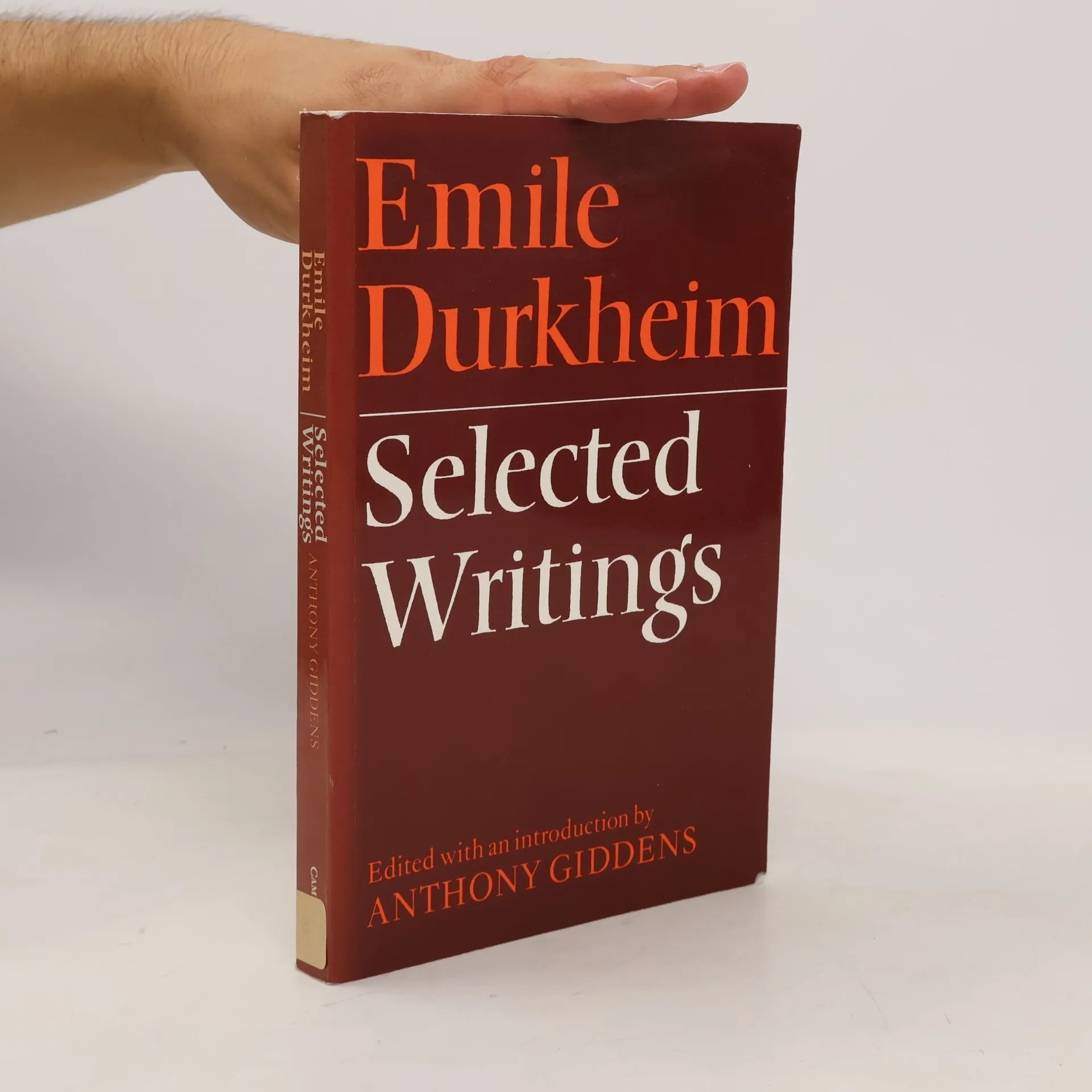
This 1972 book is a collection of Durkheim's writings drawing upon the whole body of his work. Dr Giddens takes his selections from a wide variety of sources and includes a number of items from untranslated writings in the Revue Philosophique, Annee Sociologique and from L'evolution pedagogue en France. Selections from previously translated writings have been checked against the originals and amended or re-translated where necessary. Dr Giddens arranges his selections thematically rather than chronologically. However, extracts from all phases of Durkheim's intellectual career are represented, giving the date of their first publication, which makes the evolution of his thought easily traceable. In his introduction Dr Giddens discusses phases in the interpretation of Durkheim's thought, as well as the main themes in his work, with an analysis of the effects of his thinking on modern sociology. The book is for students at any level taking courses in sociology, social anthropology and social theory in which Durkheim is one of the major writers studied.