Dem Buddhismus gelang es, sich den jeweiligen lokalen Kulturen anzupassen und mit ihnen zu verschmelzen ..
Bernard Faure Bücher
1. Januar 1948





Der Tod in den asiatischen Religionen
- 126 Seiten
- 5 Lesestunden
Gods of Medieval Japan - 2: Protectors and Predators
- 512 Seiten
- 18 Lesestunden
Written by a leading scholar of Japanese religion, this work is the second in a multivolume project that significantly enhances our understanding of the mythico-ritual system of esoteric Buddhism, focusing on the roles of deities in medieval Japan and beyond. The author introduces readers to the centrality of gods in medieval Japanese religiosity, employing theoretical insights from structuralism, post-structuralism, and Actor-Network Theory to explore the "implicit pantheon" of esoteric Japanese Buddhism (Mikkyō). This study emphasizes the multiple and shifting representations of deities, rather than individual characters and functions. The author argues that the "wild" gods of Japan were pivotal in the medieval religious landscape, forming complex associations that defy simple categorization into "Buddhist," "indigenous," or "Shinto." Notably, some significant gods have roots in Hinduism, Daoism, and Yin-Yang thought. With vast knowledge and theoretical sophistication, the author presents largely unstudied material, highlighting the importance of iconography alongside the textual record. A rich collection of over 170 images underscores the critical relationship between iconography and medieval Japanese beliefs, offering a corrective to traditional divisions in the field. This work challenges reductionist views of medieval Japanese religion, revealing a complex and fascinating landscape beyond simplistic categorizations.
Gods of Medieval Japan - 1: The Fluid Pantheon
- 496 Seiten
- 18 Lesestunden
Written by a leading scholar of Japanese religion, this work is the first volume of a multivolume project that aims to significantly enhance our understanding of the mythico-ritual system of esoteric Buddhism, particularly the roles of deities in medieval Japan and beyond. The author introduces readers to medieval Japanese religiosity, emphasizing the centrality of gods in religious discourse and ritual, while moving away from conventional textual, historical, and sociological methods in religious studies. He treats gods (including buddhas and demons) as meaningful interlocutors rather than mere reflections of social groups or human psychology. Utilizing insights from structuralism, post-structuralism, and Actor-network theory, he explores the “implicit pantheon” of esoteric Japanese Buddhism (Mikkyō). Through various case studies, he analyzes the rich mythological and ritual developments of the medieval period, extending beyond the religious realm into political, artistic, and literary contexts. His extensive knowledge is evident as he presents largely unstudied material with theoretical depth, integrating a significant iconographic record with over 180 images. This focus on iconography is essential for a comprehensive understanding of medieval Japanese beliefs and practices, challenging the traditional separation of religious studies and art history. Ultimately, this volume argues for the centrality of gods in medieval Japan
Chan Insights and Oversights
An Epistemological Critique of the Chan Tradition
- 336 Seiten
- 12 Lesestunden
Examining Chan/Zen from a postmodern perspective, Bernard Faure critiques traditional Orientalist views that either caricature or idealize Eastern thought, revealing overlooked complexities in Chan traditions. He explores how both Western and Eastern assumptions, including those of D. T. Suzuki, have distorted the understanding of Chan. The book discusses the historical influence of Jesuit missionaries, the interplay between Chan and local religions, and key concepts like temporality and self. It serves as a critical introduction to both Buddhist traditions and contemporary human sciences.
The Thousand and One Lives of the Buddha
- 324 Seiten
- 12 Lesestunden
Many biographies of the Buddha claim to present the authentic life of the historical figure, but this book challenges that notion, suggesting we lack the necessary archival and archaeological materials for such a biography. Instead of facts, we have narratives that often overlook the literary, mythological, and ritual aspects of the Buddha's life. The author, a prominent scholar of Buddhism and Japanese religion, seeks to illuminate a Buddha who, while not historical, has served as a paradigm of practice and an object of faith for 2,500 years. The work begins with a critique of prevalent historicism and explores the mythological elements of the Buddha's life, free from an artificial biographical framework. By abandoning the quest for the "historical Buddha," the narrative expands beyond early Indian stories to encompass the creative imaginations of Buddhists throughout history. The focus shifts to East Asia, particularly Japan, and examines the evolution of the Buddha's life in both Asia and the modern West, including overlooked literary genres like science fiction. This approach reveals a richer, more diverse understanding of the Buddha's significance across cultures and eras.
Exploring Buddhism's complex relationship with sexuality, this study examines the paradoxes within its teachings from the time of its founder, Xvkyamuni, through to the premodern era. Bernard Faure employs an anthropological lens to highlight the discrepancies between the religion's normative doctrines and the actual practices of its followers, providing a comprehensive overview of this often overlooked aspect of Buddhist discourse.
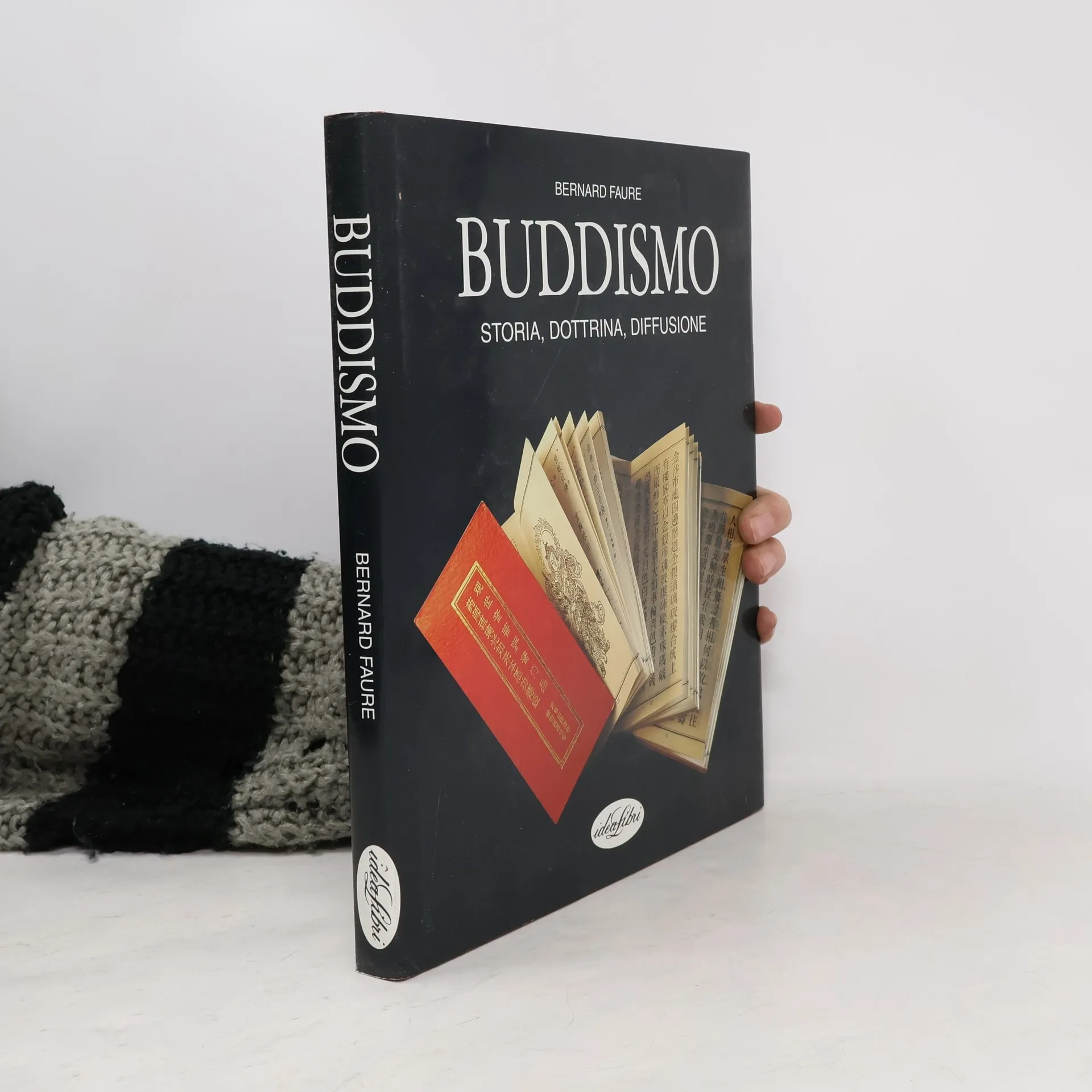
Le grandi religioni: Buddismo. Storia, dottrina, diffusione. Ediz. illustrata
- 144 Seiten
- 6 Lesestunden