
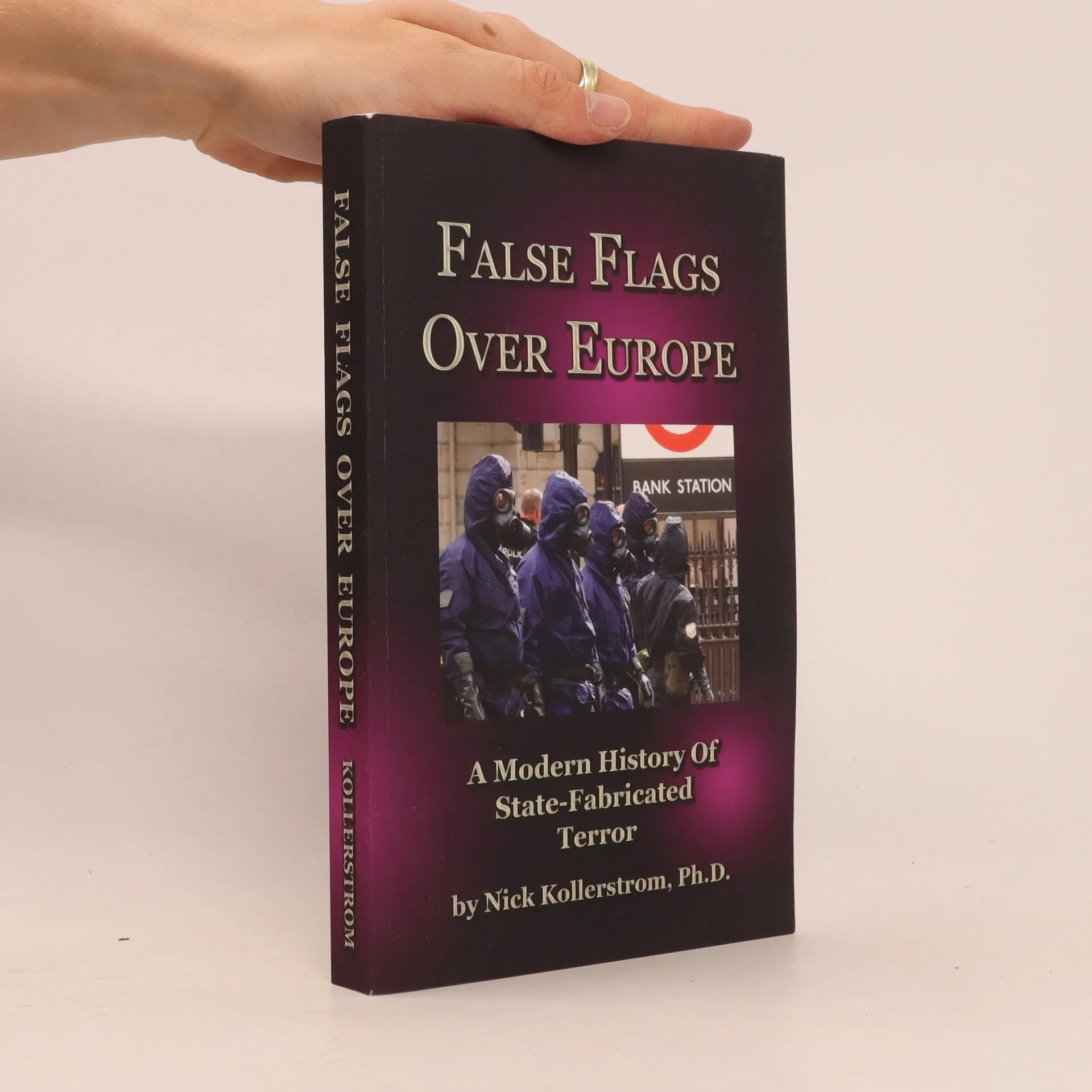
Reviews modern 'synthetic terror' events mainly in Europe and mainly in the 21st century. With color illustrations It argues that Muslims have not been doing these events, but that actors 'behind the scenes' manage them.Follows on tfrom the Author's earlier book, 'Terror on the tube, Behind the veil of 7/7' It covers 'Gladio' in the last century in Europe, and ends with the Westminster Bridge event of 2017.
Nicholas Kollerstrom Bücher
Dieser Autor, der auch unter dem Namen Nicholas Kollerstrom schreibt, konzentriert sich in seiner Arbeit auf die Erforschung alternativer Perspektiven in Wissenschaft und Geschichte. Sein Schreiben ist geprägt von einem tiefen Interesse an obskuren Themen und einer kritischen Auseinandersetzung mit etablierten Narrativen. Er fesselt die Leser mit seinem unkonventionellen Ansatz und seiner Fähigkeit, allgemein akzeptierte Wahrheiten zu hinterfragen. Seine Werke laden zum Nachdenken ein und bieten neue Blickwinkel auf bekannte Ereignisse.


The Great British Coronavirus Hoax
- 174 Seiten
- 7 Lesestunden
The book critically examines the decisions surrounding the British Lockdown of 2020, questioning whether they prioritized citizens' health or were influenced by a globalist agenda. It explores themes of digital identity and mandatory vaccination, suggesting that the perceived threat of COVID-19 may not be significantly worse than a typical flu. Additionally, it raises concerns about the potential negative impacts of the lockdown itself on public health, implying that many deaths may be attributed to the lockdown measures rather than the virus.
The Bard and the Gunpowder Plot
- 152 Seiten
- 6 Lesestunden
Exploring the 400th anniversary of the 1623 deception surrounding Shakespeare's authorship, this book delves into the intriguing narrative of a genius overshadowed by a man who allegedly couldn't read or write. It also reexamines the Gunpowder Plot of 1605, revealing its true implications for English Catholics. By focusing on the theme of theatricality and the disparity between appearance and reality, the author invites readers to reconsider these pivotal events in English history and their lasting impact.