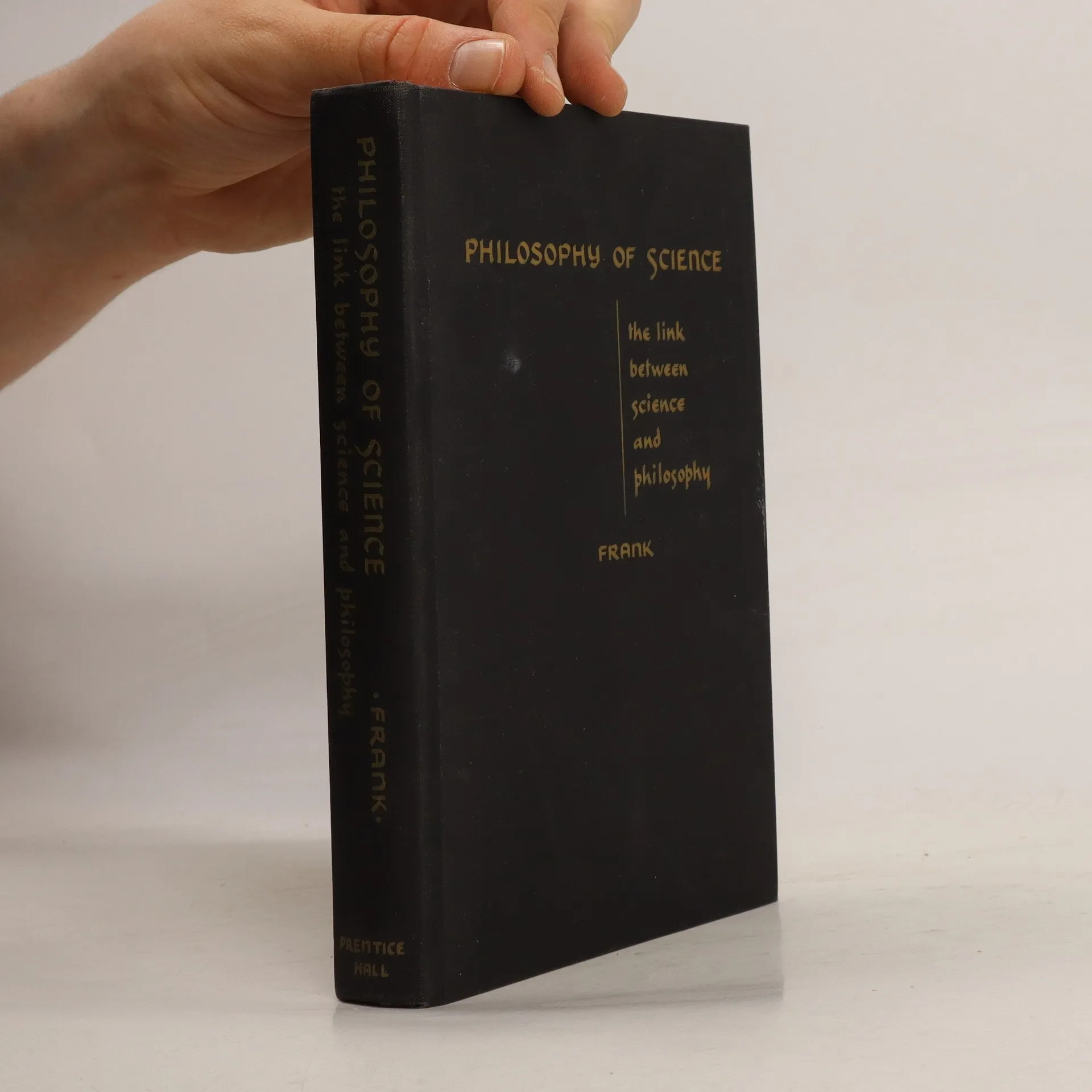
This introduction to the philosophy of science, authored by Philipp Frank, a prominent figure in the Vienna Circle and biographer of Albert Einstein, offers insights into scientific thought and its evolution. Frank's work, now rediscovered, explores key philosophical concepts and the relationship between science and reality, providing a valuable perspective on the foundations of scientific inquiry.
Texte zur wissenschaftlichen Weltauffassung von Rudolf Carnap, Otto Neurath, Moritz Schlick, Philipp Frank, Hans Hahn, Karl Menger, Edgar Zilsel und Gustav Bergmann
803 Seiten
29 Lesestunden
Am Wiener Kreis scheiden sich die Geister, trat er doch mit dem dezidierten Anspruch auf, mit den Mitteln der modernen Logik den metaphysischen Schutt von Jahrtausenden aus dem Weg zu räumen. Statt einer homogenen Bewegung, die sich empiristischen Dogmen verschrieb, erscheint der Wiener Kreis in der philosophischen Forschung jedoch heute als eine heterogene Gruppe von eigenständigen Denkern, die gemeinsam die Grundlagen der modernen Wissenschaftstheorie legten. In jeweils spezifischer Weise setzten sie sich von der philosophischen Tradition ab oder versuchten, einzelne Teile davon in die wissenschaftliche Weltauffassung zu integrieren.Der Band enthält eine repräsentative Auswahl von Aufsätzen der Mitglieder des Wiener Kreises. Sie beschränkt sich mit Ausnahme dreier Frühschriften der Gründer bewußt auf die Jahre des historischen Kreises vom Beginn der Treffen 1924 bis zur Ermordung Schlicks 1936, obwohl einige der Hauptideen erst in den USA ihre volle Wirkung entfalteten und von dort Ende der sechziger Jahre wieder in die deutschsprachige Philosophie zurückwirkten.In ihrer Einleitung skizzieren die Herausgeber die historische Entwicklung des Kreises und erläutern die zentralen thematischen Fragestellungen. Die Anmerkungen identifizieren die internen wie externen Opponenten und erklären den Kontext der zeitgenössischen Wissenschaft.
Das Manuskript zu diesem Buch ist unter merkwurdigen Um standen entstanden. Ich begann die Niederschrift 1939 in New York, setzte sie 1940 in Chicago fort und beendete den grossten Teil 1941 in Boston. Das Manuskript war in deutscher Sprache geschrieben, aber begreiflicherweise unter der damaligen Reichs regierung nicht fur eine Veroffentlichung in deutscher Sprache bestimmt; 'es sollte ins Englische ubersetzt und in Amerika ver offentlicht werden. Bevor die ubersetzung beendet war, wurde die Einsteinsche Relativitatstheorie, die oft als eine spekulative Hypothese an gesehen und unterschatzt wurde, die Grundlage einer ganz neuen Wendung in der technischen Entwicklung der Menschheit: Die Kernenergie des Atoms wurde die Energiequelle der Zukunft, und all die truben Prophezeiungen uber ein Versagen der Energie quellen konnten zum alten Gerumpel geworfen werden. Jm Jahre 1945 fugte ich eine Darstellung dieser Wendung in englischer Sprache hinzu, und dieser Teil ist der einzige im Buch, der aus dem Englischen ubersetzt ist. Die amerikanische Ausgabe erschien 1947; grosse Teile der deutschen Fassung wurden nicht aufgenom men. Daher ist das vorliegende Buch die erste vollstandige Wieder gabe meines Manuskripte