

Gratisversand in ganz Deutschland!
Bookbot

Hugh Aldersey-Williams

    1. Januar 1959

    Dieser Autor erforscht die faszinierende Schnittmenge von Wissenschaft, Design und nationaler Identität. Gestützt auf einen Hintergrund in Naturwissenschaften, gepaart mit einem tiefen Interesse an Kunst, tauchen seine Werke in die Komplexität der modernen Welt ein. Durch Bücher und Ausstellungen zielt er darauf ab, die Lücke zwischen scheinbar unterschiedlichen Bereichen zu schließen und den Lesern eine einzigartige Perspektive auf die Kräfte zu bieten, die uns prägen.

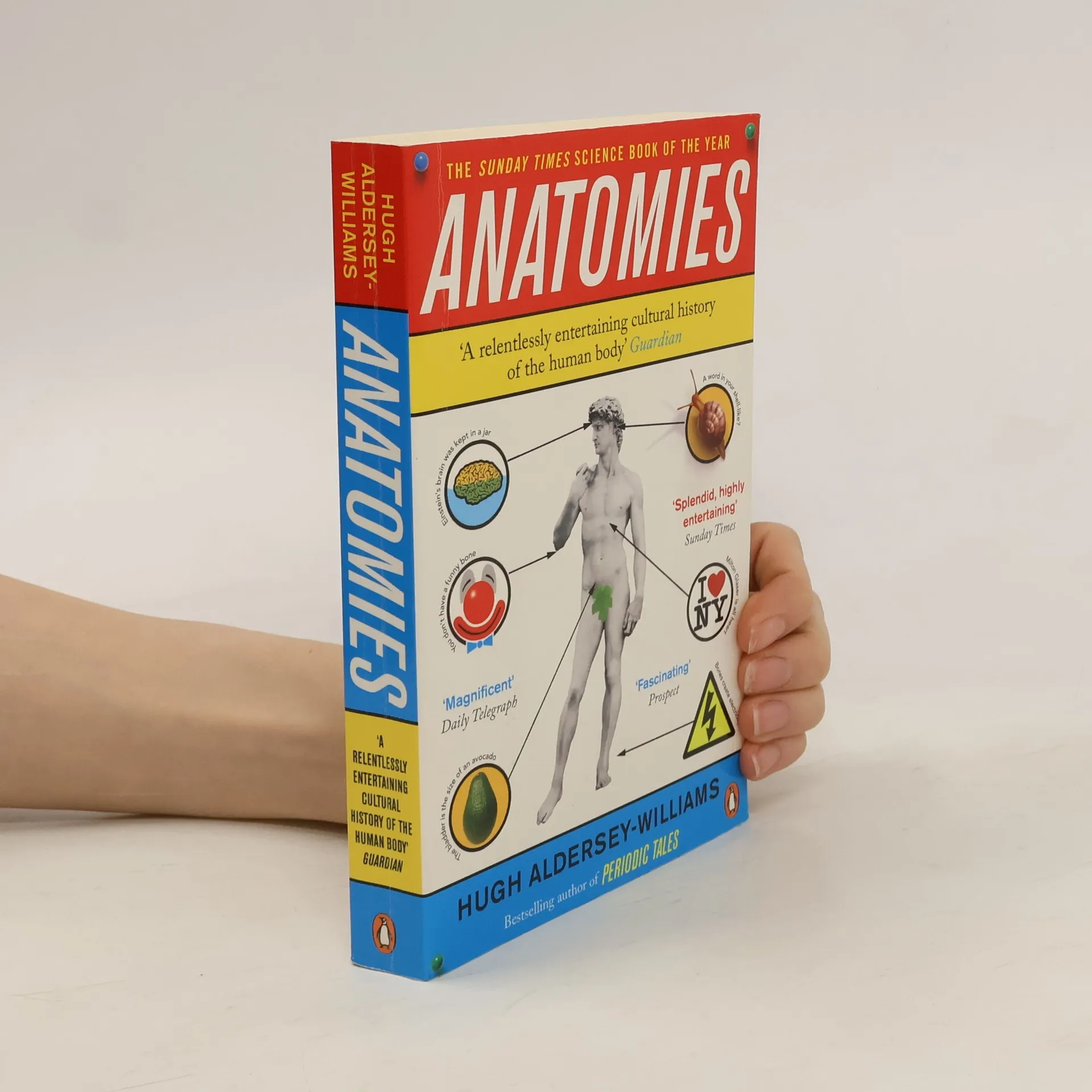
    Anatomies: The Human Body, Its Parts and The Stories They Tell
    The Tide: The Science and Stories Behind the Greatest Force on Earth
    Tide
    Dutch Light
    How to Run a Limited Company
    Die Wellen des Lichts
    • 2021

      "Despite government assurances, many thousands of medical specialists have spoken out against the way that the Covid Crisis has been managed. Instead of being thanked for their concerns, these dissenting voices have been ignored by both government and media with some even losing their livelihoods for their audacity in speaking out. Thus their important messages have been suppressed and many are no longer available for public scrutiny. This book has been written solely so that some of these important messages are kept alive and circulating. The author tries to present the alternative view to the Covid Crisis by asking 101 questions that the authorities have, so far, deliberately failed to answer."--From publisher

      Covid Crisis - 101 Unanswered Questions
    • 2021

      Die Wellen des Lichts

      Christiaan Huygens und die Erfindung der modernen Naturwissenschaft

      3,0(1)Abgeben

      Die Wiederentdeckung eines vergessenen Genies: Wie der Niederländer Christian Huygens die Grundlagen der modernen Naturwissenschaft legte Das 17. Jahrhundert war das Goldene Zeitalter für die Niederlande. Es zog Künstler und Geschäftsleute ebenso an wie Gelehrte und Naturforscher. Im Zentrum dieser intellektuellen Blüte stand ein Mann, dessen Schaffen sämtliche Zeitgenossen in den Schatten stellte – und der doch in Vergessenheit geraten ist: Christiaan Huygens, Erfinder von Teleskopen und der mechanischen Uhr, Entdecker des Saturnrings, Vater der Wellentheorie des Lichts, Bekannter von Descartes, Newton und Spinoza, Lehrer von Leibniz und Erbe einer in ganz Europa bestens vernetzten Dynastie. Hugh Aldersey-Williams zeichnet ein schillerndes Porträt eines außerordentlichen Mannes und einer bewegten Epoche, ohne die die Welt heute eine andere wäre. Eine packende Geschichte über die vergessenen Wurzeln der modernen Naturwissenschaft.

      Die Wellen des Lichts
    • 2020

      If you run a limited company, there is a whole range of legal duties and formalities that you must follow. For the time-pressed company manager this can be a fraught process, as there are severe financial penalties for not complying with the regulations. This is where this book can help. It is ideal for anyone who has taken on the role of company secretary. It provides clear advice on the procedures to follow and paperwork to complete on key issues. Whether it's appointing a director, issuing shares or declaring a dividend, How to Run a Limited Company shows you how to comply with the requirements of Companies House, simply and effectively. Complies with current companies legislation and Company formation, Directors, Company secretary, Registered office, Confirmation Statement, Statutory books, Shares and share capital, Shareholders meetings, Board meetings, Company accounts, Auditors, Business stationery, Mortgages and charges, Dividends, Procedures and template documents. 'Quick cribs' for fast answers on action to take.

      How to Run a Limited Company
    • 2020

      Hugh Aldersey-Williams brilliantly reveals the untold story of the Huygens family, movers and shakers of the Dutch Golden Age. Christiaan Huygens was an inventor, observer and thinker. The first person to use mathematical theory to solve scientific problems, he paved the way for modern science methodology. He invented the telescope that discovered Saturn's ring, the clock mechanism that we still use today and actively encouraged the international sharing of these ideas in an age when scientists kept their discoveries close. Christiaan came from a family of multi-talented individuals whose circle included not only leading figures of Dutch society, but artists and philosophers too, such as Rembrandt and Descartes. They lived in a period where science was equal to art and where both those disciplines sought to understand light. Dutch artists used scientific perspective to give their paintings a depth hitherto not seen, Dutch engineers ground lenses into optical devices to aid vision, and the Huygens were a family determined to master, not just practice, these skills. Dutch Light is a beautifully written, narrative portrait of a place and time in science, a period that saw an unprecedented expansion of ideas that changed our understanding of the world. Hugh Aldersey-Williams vividly weaves together the contributions of a number of personalities, connected by family as much as by scientific sympathies.

      Dutch Light
    • 2016

      Exploring the enigmatic nature of tides, Hugh Aldersey-Williams combines scientific insights with literary and folkloric references to illuminate their significance. He delves into the history of scientific thought surrounding tidal movements, revealing how this natural phenomenon shapes coastal life. The book offers a captivating journey through the cultural and scientific understanding of tides, making the complex mechanics accessible and engaging for readers.

      The Tide: The Science and Stories Behind the Greatest Force on Earth
    • 2016

      Tide

      • 464 Seiten
      • 17 Lesestunden
      3,7(54)Abgeben

      "From Cnut to D-Day: the history and science of the ever-powerful tide explored for the first time. Half of the world's population today lives in coastal regions lapped by tidal waters. On our little island, we live surrounded by water and love to be beside the seaside. But it rises and falls according to rules that are a mystery to almost all of us. To fully grasp the influence of the tide, we must bring together centuries of science but also the literary history and folklore it has inspired: mistaken by Caesar, captured in the art of Turner and now puzzled over by the world's leading researchers. With Aldersey-Williams as our guide, chasing the most feared and celebrated tides around the world, from the original maelstrom in Scandinavia and today's danger-zone in Venice to the 15-metre beasts in Canada, for the first time its effects on our civilization become startlingly clear."--Jacket.

      Tide
    • 2014

      Including facts, stories and information drawn from across history, science, art and literature - from finger-prints to angel physiology, from Isaac Newton's death-mask to the afterlife of Einstein's brain, this title explores our relationship with our bodies and investigates our changing attitudes to the extraordinary physical shell we inhabit.

      Anatomies: The Human Body, Its Parts and The Stories They Tell
    • 2003

      Zoomorphic

      New Animal Architecture

      • 176 Seiten
      • 7 Lesestunden

      A quirky trend of building designs inspired by bizarre animals has emerged in the last few years. Why and how has this happened? Is it because of new technical possibilities in materials and structural engineering? Or is the answer to be found in new social preoccupations in science? After a brief look at the historical precedents, the book focuses on contemporary examples from around the world and shows the various ways in which the organic/animal forms inform the architectural ones. Featured architects include Frank Gehry, Michael Sorkin, and Greg Lynn.

      Zoomorphic