Anleitungen zum Mahayana-Geistestraining Das Geistestraining (Lojong) ist eine umfassende, buddhistische Praxis und beinhaltet den gesamten Weg des Mahayana. Bis heute nimmt es in allen Schulen des tibetischen Buddhismus einen wesentlichen Stellenwert ein. Die Praxis des Geistestrainings nährt und fördert die Entwicklung der uns innewohnenden Buddha-Natur - jener reine Same des Erwachtseins, der das eigentliche Herz eines jeden Lebewesens ausmacht. Shamar Rinpoche gibt in diesem Buch detailliert Kommentare zu Ja Chekawa Yeshe Dorjes Wurzeltext Geistestraining in Sieben Punkten sowie einführende Erklärungen zu Philosophie und Meditation, die den Lojong-Lehren zugrunde liegen.
Shamar Rinpoche Bücher
Shamar Rinpoche, anerkannt als Reinkarnation innerhalb der Shamarpa-Linie – der zweitältesten im tibetischen Buddhismus seit dem 13. Jahrhundert –, bietet tiefe Einblicke in die buddhistische Philosophie. Seit seinem 29. Lebensjahr teilt er seine Lehren weltweit. Über seine spirituelle Rolle hinaus engagiert er sich aktiv für wohltätige Zwecke und gründete gemeinnützige Organisationen, die sich der Bildung benachteiligter Kinder und dem Tierschutz widmen. Seine Arbeit betont Mitgefühl und die Verbundenheit aller Wesen.





Im Dezember 2009 gab Künzig Shamar Rinpoche in Bodhgaya/Indien Unterweisungen zum Sangchö Mönlam, dem „König unter den Wegen des Strebens nach dem Vollendeten Wirken der Edlen“, auch bekannt als das „Wunschgebet Samantabhadras“. Auf der Basis dieser Unterweisungen entstand dieses Buch.Der große Bodhisattva Samantabhadra ist ein Symbol für das letztendliche Resultat aller Bemühungen auf dem Bodhisattva Weg. Buddha Shakyamuni gab die Erklärungen zum Wunschgebet Samantabhadras, um Praktizierende zu motiivieren, sich den großen Bodhisattva Samantabhadra als Vorbild zu nehmen und es ihm gleich zu tun, sodass all ihre Wünsche, all ihre Bestrebungen, in Erfüllung gehen.
Buddha-Natur - unser Potential für Weisheit, Mitgefühl und Freude
Mit dem zugrundeliegenden Werk "Das Aufzeigen der Buddha-Natur" vom Dritten Karmapa Rangjung Dorje
This book presents teachings that Shamar Rinpoche gave on buddha nature in Dhagpo Kagyu Ling, France. In a very inspiring way, the author clearly points out what really the heart of awakening is nothing other than our true nature, and therefore all of us, in fact every sentient being, can awaken to their buddha qualities. Shamar Rinpoche bases his explanations on the text "Revealing Buddha Nature" by the 3rd Karmapa, Rangjung Dorje (1284-1339). A translation by the book's translator of the underlying text is also included.
It is generally believed that democracy, though not perfect, is yet the best form of government created by man. However, with all its merits, democracy leaves scope for betterment. The present book is an attempt to point out and remove the defects of democracy. Political power and authority, to be effective, must be decentralised. Decentralisation is necessary for social justice and people's participation in decision making. People must be provided political literacy. It is unrealistic to expect illiterate and ill-informed people to understand political literacy. It is unrealistic to expect illiterate and ill-informed people to understand political and economic issues rationally and comprehensively. Further, democracy without accountability means little. As such all those who exercise political power, must be accountable for their decisions. Among freedoms, the freedom of expression is of fundamental importance.
Bringing Mind Training to Life
Exploring a Concise Lojong Manual by the 5th Shamarpa
- 148 Seiten
- 6 Lesestunden
"Transforming adverse circumstances into the path of awakening."
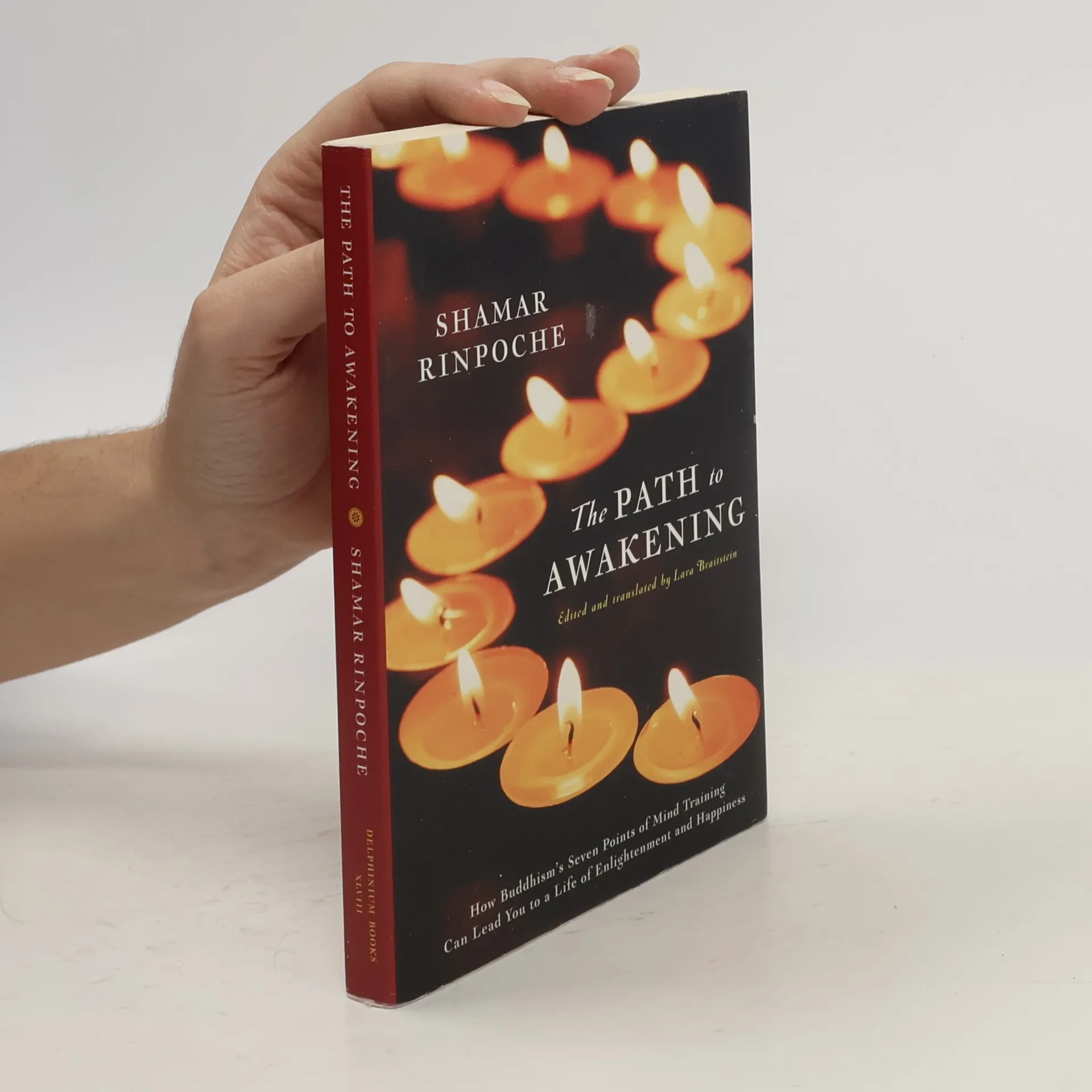
Path to Awakening
- 176 Seiten
- 7 Lesestunden
Mind training is a comprehensive practice that is suitable for all types of students. It contains the entire path and does not depend on a person's background. Mind Training nurses and cultivates the Buddha Nature, that pure seed of awakening that is at the very heart of every sentient being. It has the power to transform even egotistical self-clinging into self-lessness. Put into practice diligently, it is enough to lead you all the way to awakening. In The Path to Awakening, Shamar Rinpoche gives his own detailed commentary on Chekawa Yeshe Dorje's Seven Points of Mind Training, a text that has been used for transformative practice in Tibetan Buddhism for close to a thousand years. Clear, accessible, and yet profound, this book is filled with practical wisdom, philosophy, and meditation instructions.
A Path of Practice: The Bodhi Path Program
- 160 Seiten
- 6 Lesestunden
In Toward Awakening: The Bodhi Path Program, Künzig Shamar Rinpoche offers his vision of focused Dharma practice with the power to lead practitioners in today's world toward achieving the state of awakening. His emphasis lies in general on Mahāyāna Buddhism as the essential support of such practice, and in particular on the path of Mahāmudrā as transmitted in the Kagyü tradition of Tibetan Buddhism. From these perspectives, he describes the various elements of meditation practice, that is, the path of Dharma to be walked consistently. In addition, he recommends the study of certain Buddhist topics which can help a meditator to navigate through the different layers of his or her spiritual practice and encourages practitioners to develop the right view which can then lead the meditation
The King of Prayers
- 108 Seiten
- 4 Lesestunden
From the author's original teaching at the pilgrimage site of Bodh Gaya, India, at an international program held during an auspicious Buddhist gathering. Bilingual presentation of the prayer in Tibetan with English translation.
Boundless Awakening
- 78 Seiten
- 3 Lesestunden
An excellent book for people interested in meditation, from beginners to advanced. The practice of meditation leads to a mind that is more peaceful, tranquil, and at ease. Because the mind is more relaxed, events that usually disturb us seem to take on less importance, and we stop taking them in such a serious way. Likewise, through meditation the mind gradually learns to be independent of external conditions and circumstances, discovering its own stability and tranquility. A stable mind leads to the experience of less suffering in our lives.
A Golden Swan in Turbulent Waters
- 300 Seiten
- 11 Lesestunden
The Tenth Karmapa (1604-1674) lived through dramatic changes in Tibet, including the rise to political supremacy of the Fifth Dalai Lama and the Gelug sect following a Mongol invasion. Regarded as a remarkable bodhisattva and artist, the Karmapa has largely escaped the close attention of modern scholars. In this book, Shamar Rinpoche, the Fourteenth Shamarpa, introduces the Tenth Karmapa through his translations of the Karmapa's autobiographical writings and an eighteenth century biography of him. As a direct lineage-descendant from the Sixth Shamarpa--the Karmapa's guru--the Shamar Rinpoche shares his unique knowledge and experience through extensive annotations and a historical overview of Tibet from the thirteenth through seventeenth century. The text of A Golden Swan in Turbulent Waters: The Life and Times of the Tenth Karmapa Choying Dorje is complemented by maps and color illustrations depicting places where the Karmapa lived and his prolific artistic work, with some object images being published for the first time.
El camino al despertar
- 152 Seiten
- 6 Lesestunden
Texto fundamental del budismo Mahayana, el lodjong, o Entrenamiento de la Mente en Siete Puntos, es una antigua colección de aforismos que permiten transformar toda situación cotidiana, feliz o infeliz, en una oportunidad de apertura y evolución interior. Gracias a los consejos o instrucciones que aquí se dan, la meditación y la vida cotidiana se enriquecen mutuamente, llevando de forma gradual a la mente del practicante a liberarse de las tendencias egocéntricas y a encontrar su dimensión del despertar. En base a sus amplios conocimientos y su gran realización, Shamar Rinpoche, maestro tibetano del linaje kagyupa, ha escrito este comentario, El camino al despertar, para ayudar tanto a principiantes como a practicantes avanzados a beneficiarse del inconmensurable valor del lodjong cuya sencillez es únicamente comparable con su profundidad.