

‘One of the great unsung talents of journalism’ – Boris Johnson Britain in the near future. A campaign to cut carbon emissions to zero is beginning to bite. Power cuts have become a regular feature of life and standards of living have fallen sharply for all but a small elite of climate influencers, who are excused the strict rules on personal carbon budgeting which apply to everyone else. When a storm and tidal surge unexpectedly strikes London, retired meteorologist Bryan Geavis is the first to notice, and later refuses to accept the official explanation that climate change has caused the disaster or made the weather more unpredictable. Awkward and stubborn, yet with a rigorous scientific mind, he finds himself sucked into a battle against public and political hysteria. The Denial is a fast-paced, fascinating story that, while entertaining in its own right, explores ideas of democracy, freedom of speech and the pre-eminence of rational thought. It is a ‘must read’ for anyone interested in political and social satire, democracy, modern media and green issues. Praise for books by Ross 'A must-read for anyone who enjoys witty and thought-provoking writing, you would be mad to miss this book' – Boris Johnson 'When Ross Clark was writing this excellent novel about climate change, he couldn’t have known that by the time we read it the world would be paralyzed by a pandemic. Now that’s happened, it adds a whole new layer to The Denial’s themes of hysteria, self-righteousness and dodgy statistics.' - Mark Mason, The Spectator 'Intelligent and thought-provoking' - Sally Cousins, Sunday Telegraph 'Invigorating, clever and often very funny.... A good satire should be both bitter and funny, and this book is both' - Anthony Daniels, The Spectator Ross Clark is an award-winning journalist and author. He is a regular columnist for The Spectator and The Daily Telegraph, and before that wrote the Thunderer column for The Times. He is a winner of the Spectator’s Young Writers Award and of the Bastiat Prize. His books include The Road To Southend one man’s battle against the surveillance state, The War Against Cash, and the novel The Great Before.
Ross Clark Bücher


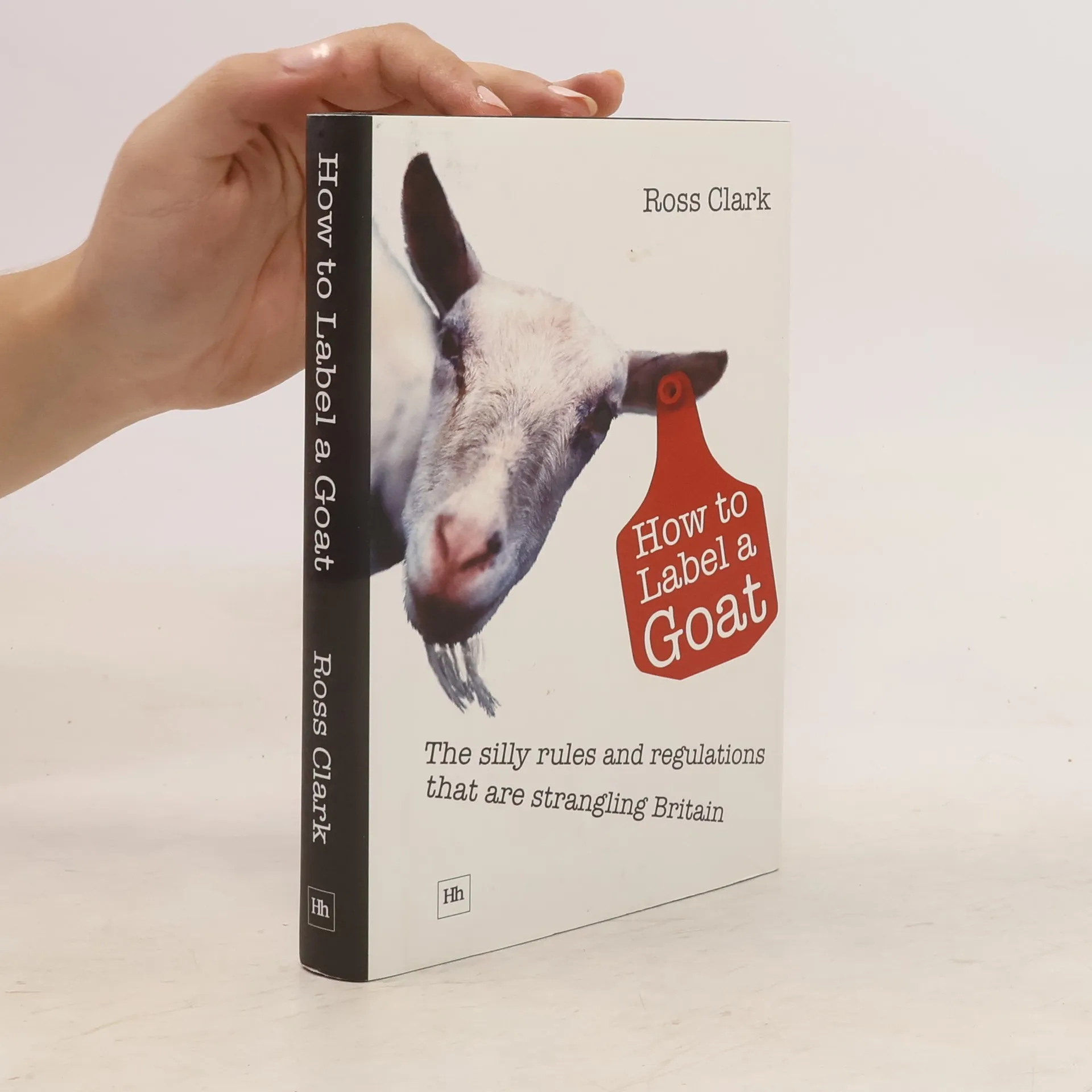
How to Label a Goat
The Silly Rules and Regulations That Are Strangling Britain
- 272 Seiten
- 10 Lesestunden
Have you ever thrown your arms up in despair while trying to complete an official form and asked yourself "Just what is the point of this?" You're not alone. Red tape in Britain has reached epidemic proportions. In just 12 months the Government produced a shocking 3,621 pieces of legislation, running to a total of 98,600 pages. That's 70 times as long as War and Peace! If it wasn't so serious, it would be quite funny. In this new book, Ross Clark exposes some of the most petty and bizarre rules and regulations which are blighting the lives of Britons today. From the 45 pages of instructions on how to correctly label a goat (or sheep) to the impact that being a deep-sea diver might have on your tax return. Among his other discoveries - That there are 279 different tax forms for businesses alone, asking a total of 6,614 questions. - The notes explaining the Treasury's 'simplified' pensions' regime ran to 1,369 pages. - The law allows you to kill or give away a bullfinch - but not to sell or barter it. - A woman from Kilbride was given an ASBO forbidding her from answering the door in her underwear. - A council spent £5,000 planting yew trees to screen a new children's play area. It then dug them up again after health and safety experts advised children could fall ill if they gobbled 'several handfuls' of leaves. All completely true and all contained, along with hundreds of others, in this eye-opening new book. Red tape and more red tape... - One Police force discovered that it had a total of 1,150 different forms on which to report crimes. - There are 1,300 pages of road traffic law - and that does not even include the law preventing petrol stations selling hot food after 11pm unless they apply for a licence. - Employers must not hold important meetings on 31 October - it might discriminate against pagans, who, of course, celebrate the festival of Samhain on that day. - A motorist in Waltham Forest, East London, was fined for parking on double yellow lines that were not even there when he parked his car. The lorry painting the lines had drawn around the stationary vehicle. - The following things have been reported to be banned in at least one making daisy chains (risk of picking up germs); playing hopscotch (risk of injury); making anything out of egg boxes (fear of salmonella); putting hands up (makes pupils who don't have the answers feel victimised); and throwing paper aeroplanes (might cause eye injuries)...
The book explores the aftermath of Britain's departure from the European Union in 2020, highlighting the stark divide in public opinion. It delves into the contrasting perspectives on Brexit, portraying it as either a liberating choice or a tragic mistake that risks economic decline and isolation. The narrative warns of potential consequences, including rising prices and unemployment, while suggesting that the EU may thrive without Britain. Through this lens, it examines the broader themes of nationalism, economic impact, and the future of British identity.
'Bravely challenging the Establishment consensus ... forensically argued' - Mail on Sunday The British government has embarked on an ambitious and legally-binding climate change target: reduce the country's greenhouse gas emissions to Net Zero by 2050. The Net Zero policy was subject to almost no parliamentary or public scrutiny, and is universally approved by our political class. But what will its consequences be? Ross Clark argues that it is a terrible mistake, an impractical hostage to fortune which will have massive downsides. Achieving the target is predicated on the rapid development of technologies that are either non-existent, highly speculative or untested. Clark shows that efforts to achieve the target will inevitably result in a huge hit to living standards, which will clobber the poorest hardest, and gift a massive geopolitical advantage to hostile superpowers such as China and Russia. The unrealistic and rigid timetable it imposes could also result in our committing to technologies which turn out to be ineffective, all while distracting ourselves from the far more important objective of adaptation. This hard-hitting polemic provides a timely critique of a potentially devastating political consensus which could hobble Britain's economy, cost billions and not even be effective.