

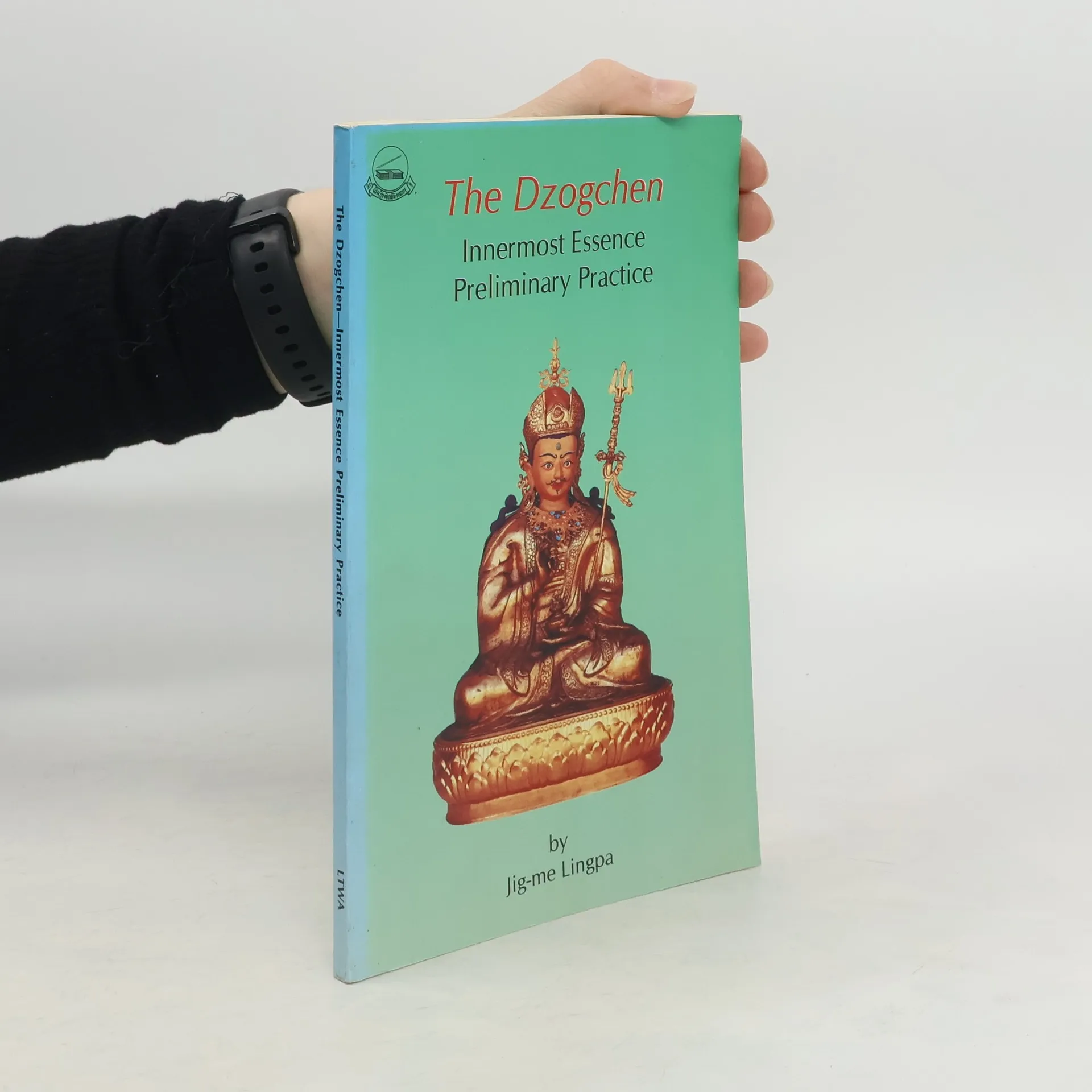
This book is a translation of the second part of a commentary on the Treasury of Precious Qualities, the most celebrated work of Jigme Lingpa (1730–1798), one of the most important figures in the Nyingma lineage. In a slender volume of elegant verse, this root text (new in this revised edition) presents the entire Buddhist path according to the Nyingma school. Because it is so concise and makes use of elaborate poetic language, the commentary is indispensable.
Jigme Lingpa Bücher
Rigdzin Jigme Lingpa gilt als eine zentrale Figur der Nyingma-Schule des tibetischen Buddhismus. Er offenbarte den beliebten Lehr- und Praxiszyklus Longchen Nyingtik durch Visionen des Meisters Longchenpa. Seine tiefgreifenden spirituellen Beiträge werden für ihre Bedeutung in der Praxis geschätzt. Man glaubt, dass er eine Inkarnation von Vimalamitra und König Trisong Deutsen ist.


While Pure Land Buddhism is often viewed as an East Asian tradition with Indian roots, the Copper-Coloured Mountain is unique as the only pure land with origins solely in the Tibetan tradition. It embodies the intriguing blend of Tibetan culture, traditional history, and liturgical tantric practice. This mountain is believed to be the current residence of Padmasambhava, the Indian master who introduced Buddhism to Tibet and established its first monastery, Samye. After departing Tibet, Padmasambhava is said to have taken residence on Cāmara, one of two islands flanking the continent of Jambudvipa, the Buddhist cosmological world. Following his conquest of the island's ogres and their conversion to Buddhism, he constructed an octagonal palace where practitioners can be transported in visions or reborn through aspiration prayers. This work presents a translation and analysis of a significant aspiration prayer composed by Jigme Lingpa, an eighteenth-century treasure revealer of the Nyingma tradition, which is the most important prayer associated with this pure land in Tibetan Buddhism. Translators Georgios Halkias and Christina Partsalaki combine academic rigor with a deep devotion to tantric principles, enhancing the understanding of the prayer's history and significance in Tibetan Buddhist literature for practitioners.
Deity, Mantra, and Wisdom
- 264 Seiten
- 10 Lesestunden
This collection contains four of the most cherished Tibetan Buddhist commentaries on the practices of visualization, mantra recitation, and meditative absorption—elements that form the core of development stage meditation, one of the most important practices of Buddhist Tantra. The texts within this volume—Ladder to Akaniṣṭha, Clarifying the Difficult Points in the Development Stage, The Four Stakes That Bind the Life-Force, and Husks of Unity—are among the most widely studied commentaries on this topic and have formed the basis for spiritual study and practice for centuries. In these eloquent and inspiring translations, Jigme Lingpa, Patrul Rinpoche, and Getse Mahāpaṇḍita explain the fundamental philosophy of the development stage, illuminating its profound insights into the nature of reality and how to utilize these insights through the practice of meditation.
Steps to the Great Perfection
- 192 Seiten
- 7 Lesestunden
The first-ever English translation of mind-training contemplations from the Dzogchen tradition of Tibetan Buddhism. A compilation of teachings on the seven contemplations, an ancient system of mind-training/lojong teachings that has been preserved as part of a rare set of instructions on Dzogchen, or the Great Perfection. This book is unique because although the lojong teachings of the Kadam tradition are well known, this is the first time the mind-training teachings from the Dzogchen tradition have been presented in an English translation, and most Western scholars and practitioners are unaware that such mind-training techniques even exist in Dzogchen. The contemplations themselves are vividly described, and some unfold as dramatic stories in which the meditator imagines himself or herself as the main character. Thus, they are quite accessible for beginning practitioners.