Gratisversand in ganz Deutschland!
Bookbot

Wolfgang Künne

    Claus Oetke
    Bernard Bolzano
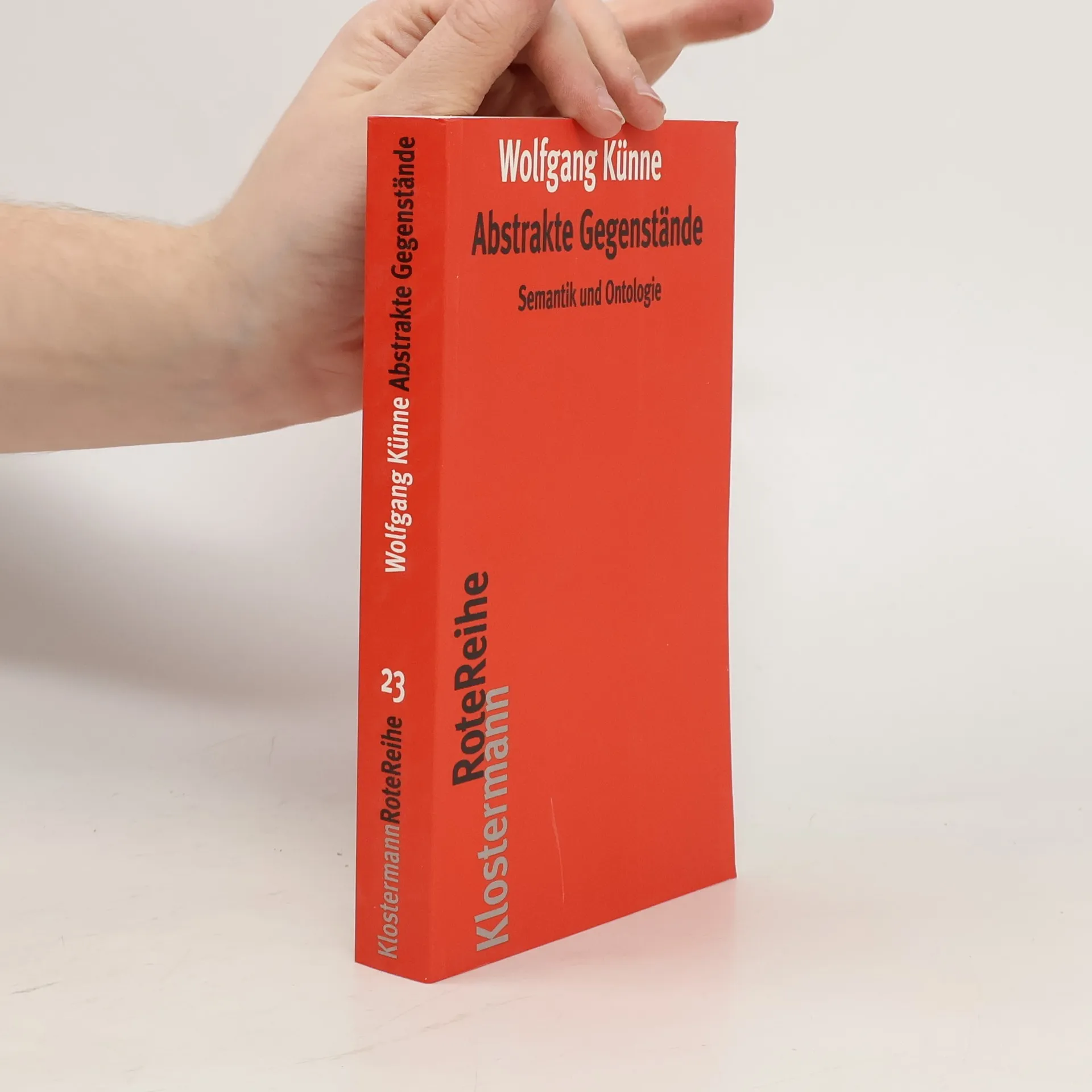
    Abstrakte Gegenstände
    • Auch Philosophen, die nicht mehr wie die von Platon beschriebenen Giganten „steif und fest behaupten, nur das sei, was man irgendwie berühren und anfassen kann“, gerieten oft in Verlegenheit wegen der Abstraktheit gewisser Gegenstände. Sie geben zu, daß viele prima facie wahre Aussagen von Eigenschaften, Typen, Propositionen, Zahlen und anderen abstrakten Gegenständen zu handeln scheinen; aber sie haben Skrupel zuzugestehen, daß es solche Gegenstände „wirklich“ gibt. Ausdrücke, die sich allem Anschein nach auf sie beziehen, sind in ihren Augen sprachliche Irrlichter, die in metaphysische Sümpfe führen. Wolfgang Künne hat für diese Neuauflage seines viel gelesenen Plädoyers für den „Platonismus“, das zuerst 1983 erschienen ist, einen Essay über die Kategorien Eigenschaft und Begriff geschrieben, dem man entnehmen kann, wie sich ihm der gegenwärtige Stand des „Universalienstreits“ in der analytischen Philosophie darstellt und in welchen Hinsichten er seine früheren Auffassungen revidiert hat. 

      Abstrakte Gegenstände
    • Bernard Bolzano

      Seine Zeit und sein Leben, sein Werk und seine Wirkung

      Bernard Bolzano, geboren 1781 in Prag, war ein bedeutender Logiker und Mathematiker, der auch als katholischer Priester reformbedürftige Ansichten vertrat. Wolfgang Künne schildert Bolzanos Leben und Wirken im Kontext der tschechischen Geschichte und stellt seine wichtigsten Schriften vor, ergänzt durch zeitgenössische Einblicke.

      Bernard Bolzano
    • Claus Oetke

      Truth Paradoxes, Meaning, and Interpretation. Two Essays

      The two essays in this book are united by a common philosophical concern. While the first is dedicated to a problem in systematic philosophy, the second mainly deals with the interpretation of a specific issue articulated in a certain Indian philosophical tradition. In the first essay Oetke focusses on a complex of questions that occupied philosophy ever since a Cretan asserted that no Cretan tells the truth. Since the discussion of the family of truth paradoxes was very intensive in 20th century logic and analytical philosophy, one would not have expected essentially new insights into the source and the range of those paradoxes, and yet this is exactly what this essay offers by emphasizing the need to distinguish different types of meaning. The second essay addresses issues in the hermeneutics of classical texts. It takes its start from Oetke's final (unpublished) comment on a series of articles in the Journal of Indian Philosophy that deal with the interpretation of the sadvitiyaprayoga (proof-formulation that entails a counterpart). Oetke generalizes the point of his critical observations by showing the relevance of acknowledging diverse types of both meaning and interpretation in the methodology of research not only in the history of Indian philosophy. His essay is a substantial contribution to the contemporary literature of methodology in the history of philosophy in general

      Claus Oetke