

Berlin: Bei Partnern noch vor dem Fest lieferbar
Bookbot

Jeffrey M. Conte

    The Trials of Harry S. Truman
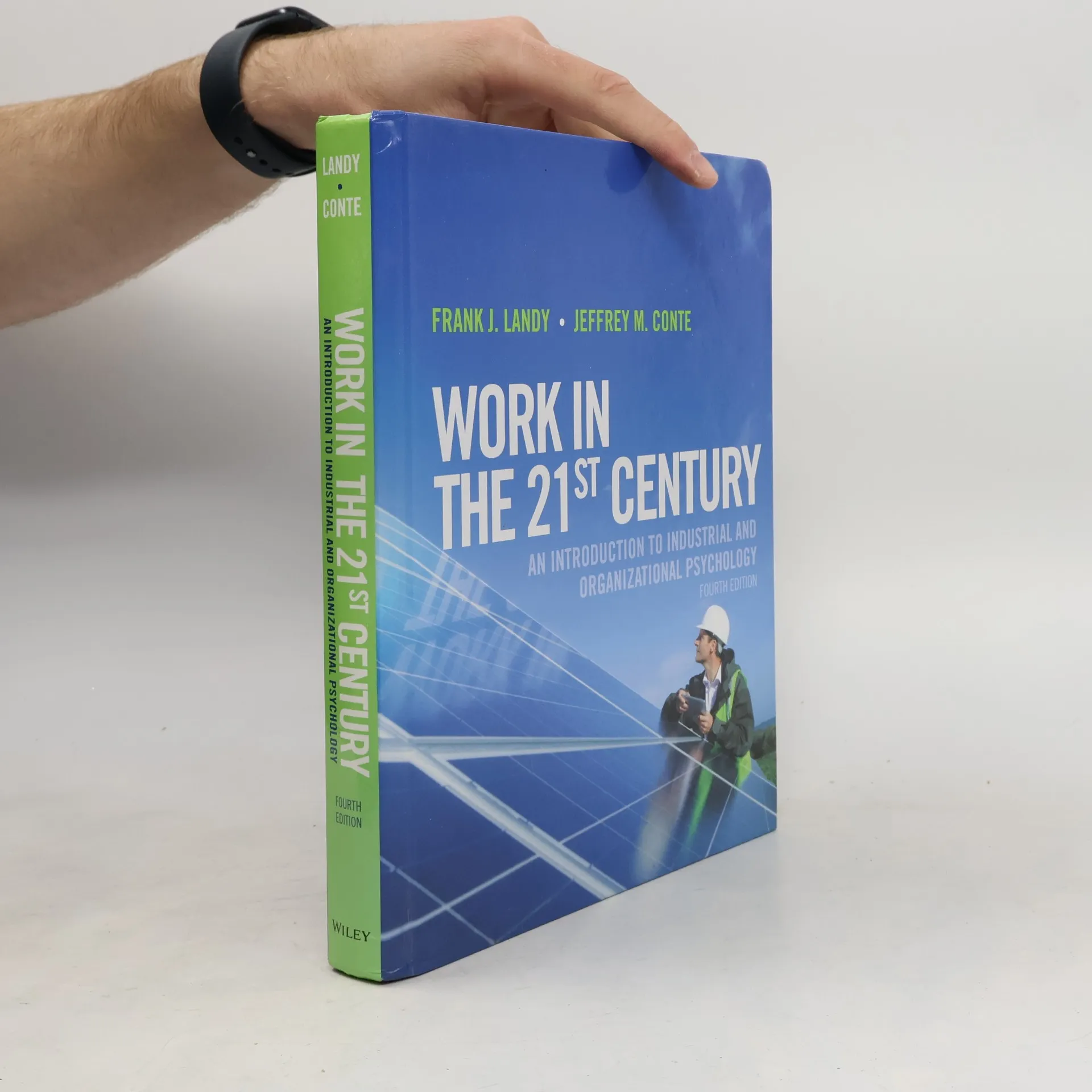
    Work in the 21st Century
    Work in the 21st Century
    • Work in the 21st Century

      An Introduction to Industrial and Organizational Psychology

      • 656 Seiten
      • 23 Lesestunden
      3,0(1)Abgeben

      Focusing on the multifaceted nature of the modern workplace, this textbook offers a comprehensive introduction to Industrial and Organizational Psychology. The seventh edition integrates contemporary themes like diversity, emotional intelligence, and technology, while maintaining an engaging narrative style. It emphasizes a scientist-practitioner model, linking theory with practical applications. Enhanced with an interactive e-text, it features videos, interactive figures, and self-scoring quizzes to deepen understanding and facilitate learning.

      Work in the 21st Century
    • Work in the 21st Century

      • 589 Seiten
      • 21 Lesestunden
      3,9(16)Abgeben

      This book retains the accessibility of the previous editions while incorporating the latest research findings, and updated organizational applications of the principles of I-O psychology. The scientist-practitioner model continues to be used as the philosophical cornerstone of the textbook. The writing continues to be topical, readable, and interesting. Furthermore, the text includes additional consideration of technological change and the concomitant change in the reality of work, as well as keeps and reinforces the systems approach whenever possible, stressing the interplay among different I-O psychology variables and constructs.

      Work in the 21st Century
    • Harry Truman's nearly eight years in office were marked by significant events, including victories in World War II, the first atomic weapon use, the onset of the Cold War, the establishment of NATO, the founding of the United Nations, the Marshall Plan, the Red Scare, and the decision to send troops to Korea. While historians often depict him as a decisive and straightforward leader, this narrative reveals a more complex individual. Truman viewed public service as a means to enhance citizens' lives and was troubled by the treatment of African Americans. Although he advocated for stronger civil rights, he struggled to shed the prejudices of his Confederate roots in rural Missouri. He was often swept up by events and influenced by advisors who shaped his understanding of the postwar landscape. Despite his Midwestern rationality, he occasionally acted on emotion, as seen when he supported the recognition of Israel after World War II. This portrayal presents Truman as a man of generous impulses, loyalty, and political acumen, yet also as someone insecure, quick-tempered, and prone to impulsive decisions. Archival research has crafted a vivid portrait of an ordinary man thrust into extraordinary circumstances, who maintained a deep love for his country and its Constitution.

      The Trials of Harry S. Truman