

SPECTATOR AND TELEGRAPH BOOKS OF THE YEAR 2015 The short, action-packed reign of James II (1685-88) is generally seen as one of the most catastrophic in British history. James managed, despite having access to tremendous reserves of good will and deference, to so alienate his supporters that he had to flee for his life. And yet, most of that life was spent not as king but first as heir to Charles II, as Duke of York (after whom New York is named) and then in the last part of his life as the first Jacobite 'Pretender', starting a problem that would haunt Britain's rulers for generations.
David Womersley Bücher

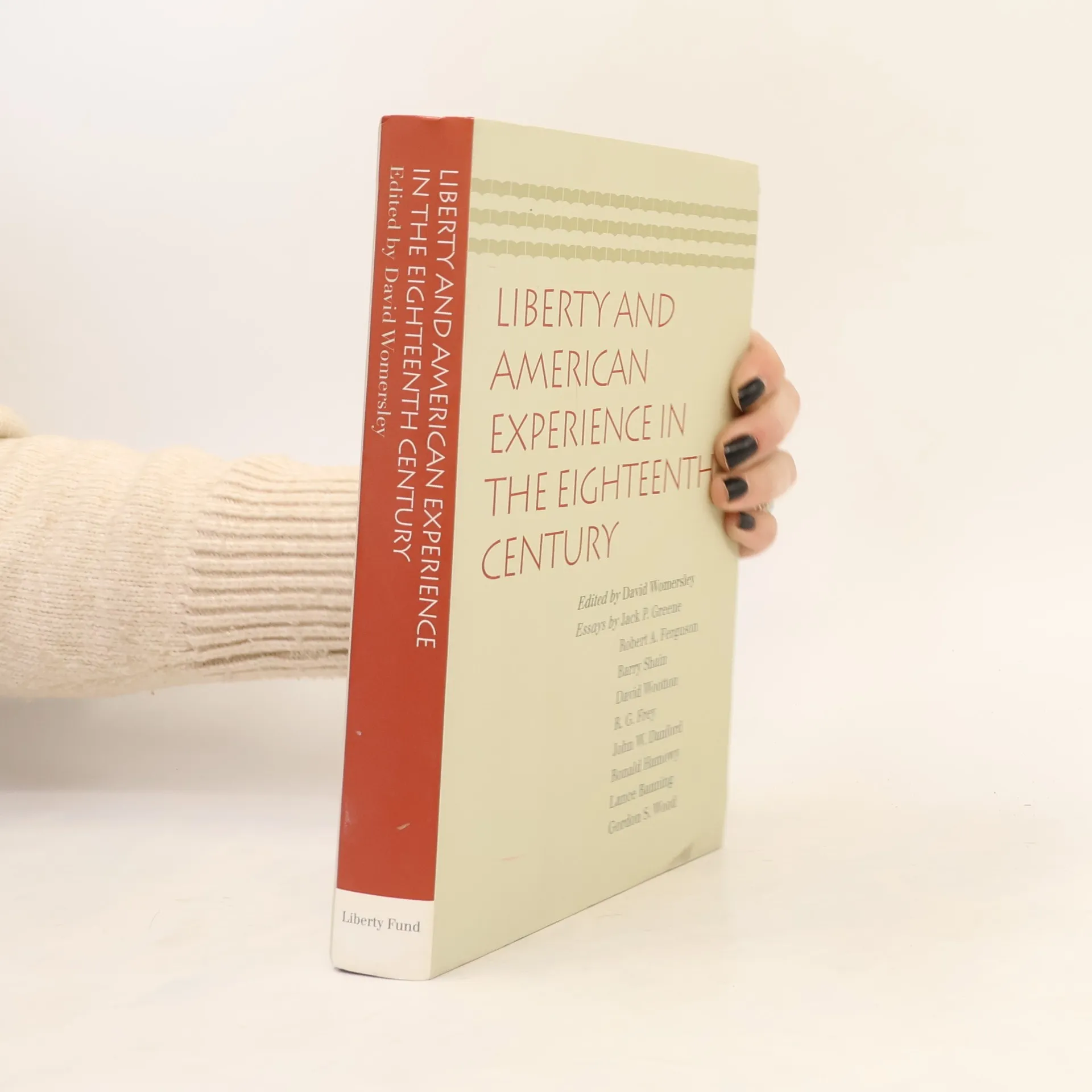
Liberty and American Experience in the Eighteenth Century
- 472 Seiten
- 17 Lesestunden
Written by leading scholars of American history, this volume examines key themes and ideologies central to the formation of the United States. David Womersley’s introduction discusses Edmund Burke’s theories on property rights and government, laying the groundwork for the themes of liberty explored throughout the book. Jack Greene’s case study on Jamaica highlights the colonies' influence over their governance in “Of Liberty and the Colonies.” Robert Ferguson investigates the interplay between religious and legal concepts of liberty in “The Dialectic of Liberty.” Barry Shain supports Ferguson’s argument by exploring the significant impact of religion on the colonists’ outlook in “Religious Conscience and Original Sin.” John Danford analyzes the Founders' economic views in relation to the Enlightenment in “Riches Valuable at All Times and to All Men,” emphasizing their preference for established governance over untested theories. R. G. Frey discusses conflicting viewpoints between moral sense theory and natural rights in “Moral Sense Theory and the Appeal to Natural Rights.” David Wootton presents an opposing view, suggesting that Enlightenment ideas shaped the Founders' innovative yet resistant system in “Liberty, Metaphor, and Mechanism.” Ronald Hamowy pays tribute to the intellectual force of American affairs in “Scottish Thought and the American Revolution.” Lance Banning examines revolutionary divisions regarding liberty i
James II (Penguin Monarchs)
- 144 Seiten
- 6 Lesestunden
'James was a king tragically trapped by principle. Yet was it wise to attempt to change the national religion?' The short reign of James II is generally seen as one of the most catastrophic in British history, ending in his exile after he unsuccessfully tried to convert England to Catholicism, a crisis that would haunt the monarchy for generations. Ultimately, David Womersley's biography shows, James was a man whose blindness to subtlety and political reality brought about his ruinous downfall.