Abwanderung und Widerspruch
- 130 Seiten
- 5 Lesestunden


Albert Otto Hirschman war ein Ökonom und Autor, dessen Beiträge die politische Ökonomie und Ideologie umspannten. Seine frühen Arbeiten zur Entwicklungspolitik befürworteten das Konzept des unausgewogenen Wachstums und argumentierten, dass Ungleichgewichte gefördert werden sollten, um die Ressourcenmobilisierung anzukurbeln, insbesondere in Entwicklungsländern, denen es an Entscheidungsexpertise mangelt. Er setzte sich für die Förderung von Industrien mit starken Verflechtungen zwischen Unternehmen ein. Später erforschte er die politische Ökonomie anhand von zwei einflussreichen Schemata: Das erste, vorgestellt in "Exit, Voice, and Loyalty", skizzierte die grundlegenden Reaktionen auf Niedergang (Aufgeben, Einspruch erheben oder loyal bleiben); das zweite, in "The Rhetoric of Reaction", sezierte die gängigen Argumente von Konservativen gegen sozialen Fortschritt.





Welche politischen Folgen hat ökonomisches Wachstum? Da die zeitgenössischen Sozialwissenschaften keine befriedigende Antwort auf diese wichtige Frage zu geben vermögen, geht Hirschman zunächst ins 17. und 18. Jahrhundert zurück, als es die beiden »Disziplinen« der Wirtschaftswissenschaften und der politischen Wissenschaft noch nicht gab. Er rekonstruiert das intellektuelle Klima jener Epoche und zeichnet den verwickelten ideologischen Transformationsprozeß nach, in dessen Verlauf die lange als Todsünde der Habsucht denunzierte Verfolgung materieller Interessen zu dem wurde, was die aufsässigen und zerstörerischen Leidenschaften des Menschen im Zaum hält. Daraus ergibt sich eine neue Entstehungsgeschichte des Geistes des Kapitalismus, die im Gegensatz zu der Annahme eines scharfen Bruchs zwischen dem Alten und dem Neuen – ein gemeinsames Merkmal des Marxschen und des Weberschen Denkens – die Kontinuität zwischen beidem betont. Ein Klassiker!
Anschaulich und präzise deckt der international angesehene Wirtschaftstheoretiker Albert O. Hirschman die drei Grundfiguren reaktionären Argumentierens gestern und heute auf. Die erste besagt, daß jeder Versuch, bestimmte Gegebenheiten zu verbessern, nur die Lage verschlimmere. Die zweite These beharrt darauf, daß jede Veränderung vergeblich sei und am Lauf der Geschichte nichts ändern könne. Das dritte Argument schließlich unterstellt, daß eine Veränderung zwar wünschenswert, aber leider unbezahlbar sei. Hirschman überzeugt davon, daß nur ein beständiger Kommunikationsprozeß diese Form des Argumentierens überwinden kann.
An innovator in contemporary thought on economic and political development looks here at decline rather than growth. Albert O. Hirschman makes a basic distinction between alternative ways of reacting to deterioration in business firms and, in general, to dissatisfaction with organizations: one, "exit," is for the member to quit the organization or for the customer to switch to the competing product, and the other, "voice," is for members or customers to agitate and exert influence for change "from within." The efficiency of the competitive mechanism, with its total reliance on exit, is questioned for certain important situations. As exit often undercuts voice while being unable to counteract decline, loyalty is seen in the function of retarding exit and of permitting voice to play its proper role. The interplay of the three concepts turns out to illuminate a wide range of economic, social, and political phenomena. As the author states in the preface, "having found my own unifying way of looking at issues as diverse as competition and the two-party system, divorce and the American character, black power and the failure of 'unhappy' top officials to resign over Vietnam, I decided to let myself go a little."
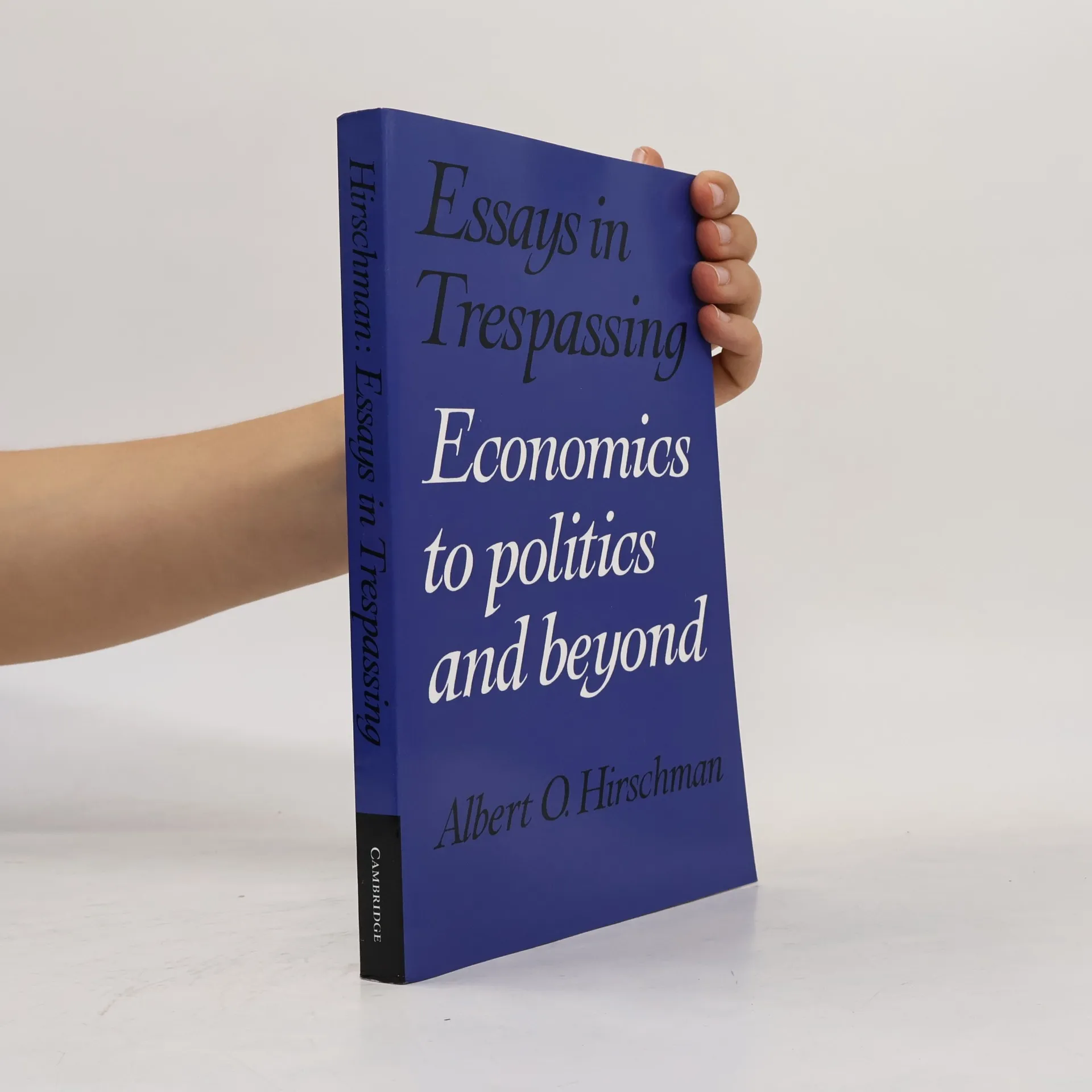
A collection of fourteen insightful articles and papers by Albert O. Hirschman, this book showcases his influential thoughts on economics, development, and social change. It highlights his unique perspectives on the complexities of human behavior and the interplay between economic theories and real-world applications. Hirschman's work challenges conventional wisdom, making it a valuable resource for anyone interested in the intersections of economics, politics, and sociology.