Microeconomia. Con connect (Economia e discipline aziendali)
- 683 Seiten
- 24 Lesestunden


Robert H. Frank ist ein angesehener Ökonom und Autor, dessen Werk sich mit ökonomischen Prinzipien und deren gesellschaftlichen Auswirkungen befasst. Durch seine Schriften und seine Kolumne in der New York Times bietet er aufschlussreiche Perspektiven auf die Komplexität der modernen Wirtschaft. Seine Analysen beleuchten, wie sich wirtschaftliche Kräfte im täglichen Leben manifestieren, und geben den Lesern Werkzeuge an die Hand, um die wirtschaftliche Landschaft zu verstehen und sich darin zurechtzufinden.




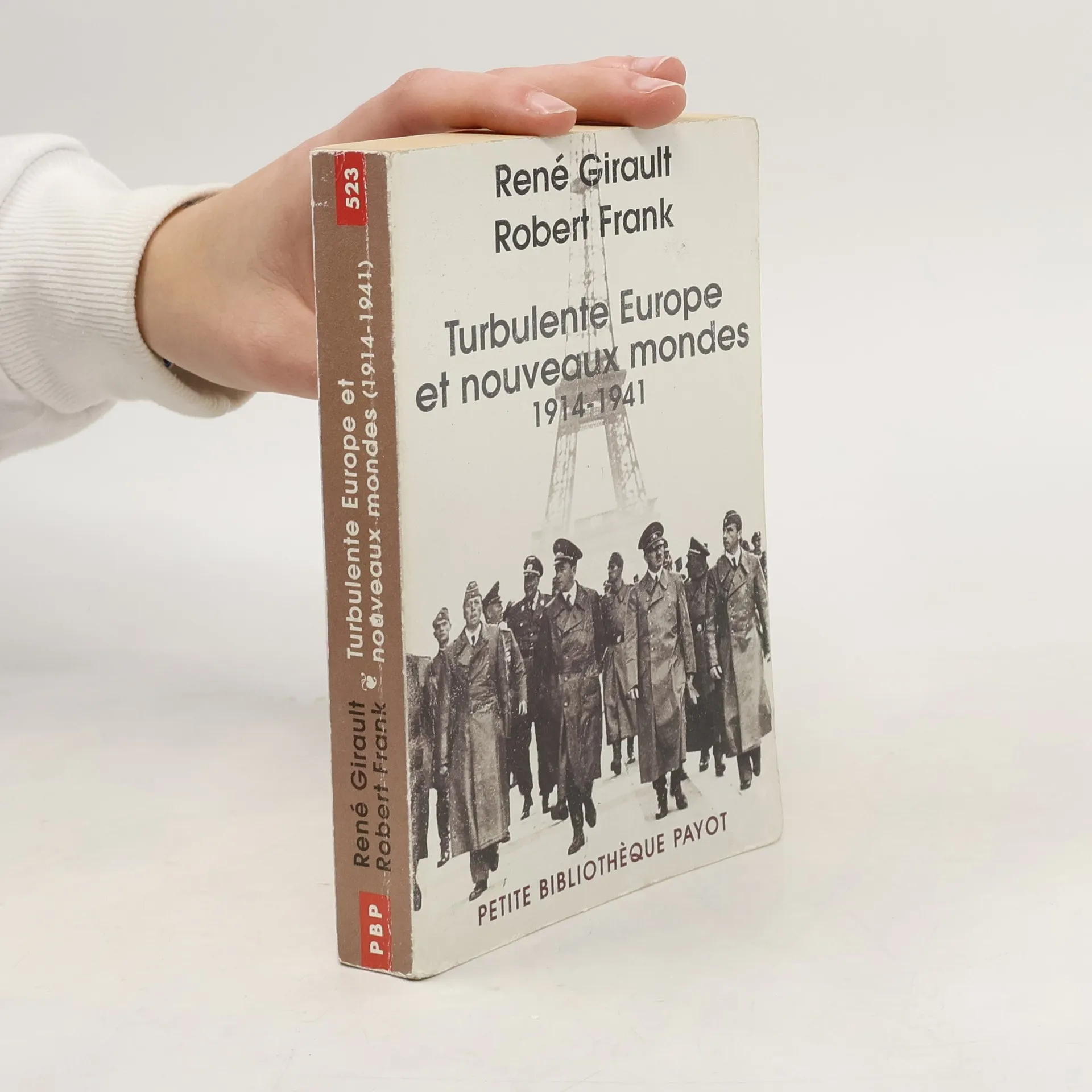
La Première Guerre mondiale bouleverse les équilibres et les valeurs du XIXe siècle. Et ce n'est pas seulement "l'ordre européen" qui change dans les années 1920, mais tout l'ensemble des rapports mondiaux entre les peuples. Quand survient la Seconde Guerre mondiale, la vieille Europe ne voit pas que les nouveaux mondes (Etats-Unis, URSS, Japon) sont capables de troubler le jeu traditionnel des puissances. A partir du moment où les deux géants, l'américain et le soviétique, entrent dans la mêlée, la guerre devient vraiment mondiale et la turbulente Europe commence è perdre la maîtrise des relations internationales qu'elle détenait depuis quatre siècles...
From New York Times bestselling author and economics columnist Robert Frank comes a revelatory exploration of social context's power and potential. Psychologists have long recognized that social environments significantly influence behavior, sometimes positively but often negatively. Notably, social influence operates both ways: our choices shape our environments. Society typically supports regulations that protect individuals from physical harm, such as smoking restrictions to shield bystanders from secondhand smoke. However, we have been slower to adopt similar measures to discourage harmful social environments, overlooking how behaviors like smoking can encourage others to smoke as well. Frank attributes this regulatory imbalance to the belief that individuals should be responsible for their actions. He argues that this belief can coexist with public policies that promote supportive social environments. Parents generally wish their children avoid becoming smokers, bullies, or problem drinkers, but these hopes diminish when such behaviors are prevalent. While the negative impacts of social behaviors are challenging to quantify, Frank insists that policymakers should not overlook them. The encouraging news is that simple policy measures could create more supportive environments without resorting to a nanny state or imposing significant sacrifices.
Microeconomics and Behaviour, third edition, is an accessible yet intellectually challenging and engaging textbook for students. It develops core analytical and technical tools and embeds them in a collection of real-world examples and applications to illuminate the power and versatility of the economic way of thinking. With this approach, students develop economic intuition and are stimulated to think more deeply about the technical tools they learn, and to find more interesting ways to apply them. This enables students to not just understand microeconomics, but to think like economists themselves, and to develop a lasting interest in the discipline. Key Features * Fully updated chapters, including new and expanded material on international labour markets, the gig economy, behavioural game theory and nudge theory. * Extensive pedagogical features such as examples, key terms and definitions, in-chapter exercises, chapter summaries, and review questions and problems. * Economic Naturalist examples that show how economic principles can be used to explain experiences and observations of everyday life. New examples include: "Why do firms benefit from the gig economy?", "Why is self-checkout becoming the norm in shops?", and "Why do online retailers have flagship stores?"
After The Americans, The Lines of My Hand is arguably Robert Frank’s most important book and without doubt the publication that established his autobiographical, sometimes confessional, approach to bookmaking. The book was originally published by Yugensha in Tokyo in 1972, and this new Steidl edition, made in close collaboration with Robert Frank, follows and updates the first US edition by Lustrum Press of 1972. The Lines of My Hand is structured chronologically and presents selections from every stage of Frank’s work until 1972—from early photos in Switzerland in 1945–46, to images of his travels in Peru, Paris, Valencia, London and Wales, and to contact sheets from his 1955–56 journey through the US that resulted in The Americans and made him famous. Here too are intimate photos of Frank’s young family, later photo-collages and stills from films including Pull My Daisy (1959) and About Me: A Musical (1971). This structure itself mirrors the rhythm of Frank’s life but it is his short personal texts, like diary entries, that fully bring his voice into the book. In its original combination of text and image, its fearless self-reflection, and its insistence on photography and film as equal though different aspects of the artist’s visual language, The Lines of My Hand has become an inspiration for many photographers—not least Robert Frank himself, who continues and expands this approach in the visual diaries he makes today.
Im Rahmen von acht spannend zu lesenden Kapiteln erfährt man mehr darüber, was alles unseren Werdegang beeinflusst und wieso nicht wenige Menschen die Bedeutung von glücklichen Zufällen oft unterschätzen aber auch, weshalb diese Wahrnehmung sich letztlich nachteilig auswirkt. Helga König, 17.01.2018
Une cinquantaine d’historiens, philosophes et spécialistes des sciences politiques, de générations et nationalités variées, explorent la "guerre-monde" avec trois objectifs : démontrer l’extension de la guerre à l’échelle mondiale, notamment en Afrique et en Asie ; montrer comment ce processus de mondialisation a transformé les catégories et représentations de l’espace et du temps ; et révéler que la guerre constituait un monde en soi. Les certitudes du temps de paix ont disparu, les mots ont changé de sens sous l’influence des propagandes, et la division sexuée du travail a été bouleversée. Des technologies civiles et des produits chimiques ont émergé des industries de la mort, et les dominations coloniales ont été profondément ébranlées. Les expériences ordinaires, comme vivre la nuit ou écouter de la musique pour échapper aux bombes, ont pris une nouvelle signification. La guerre, préparée bien avant l’invasion nazie de la Pologne en 1939, a été déclenchée dès 1931 en Mandchourie, en 1935 en Éthiopie, et surtout en Chine à partir de 1937. La période de guerre s’est prolongée au-delà du 2 septembre 1945, jusqu’aux traités de paix de février 1947, marquant le début de la guerre froide entre les États-Unis et l’URSS.
Quatre parties : "Faire la guerre", qui explore les stratégies politico-militaires des opérations ; "Inventer la guerre", qui examine les formes inédites de la guerre idéologico-militaire, y compris le génocide juif et la violence inouïe contre les civils sur le front de l'Est ; "Vivre la guerre", qui décrit comment la guerre altère les expériences quotidiennes ; "Hériter de la guerre", qui aborde la décolonisation du système international et l'émergence de nouvelles structures financières, philosophiques et juridiques, telles que les droits de l'homme et la définition des crimes contre l'humanité. Ce récit restitue les événements vécus par les individus et les collectivités sur divers fronts et lieux de souffrance, de collaboration et de résistance : des plaines russes à la jungle de Birmanie, du désert de Libye à la mer de Corail, de la bataille de l'Atlantique à la guerre du Pacifique, et bien d'autres. Cette approche permet de retracer une histoire globale de la guerre de 1937 à 1947, la seule guerre-monde que l'humanité ait vécue, inventée et surmontée, en englobant une vaste gamme de temps et d'espaces.
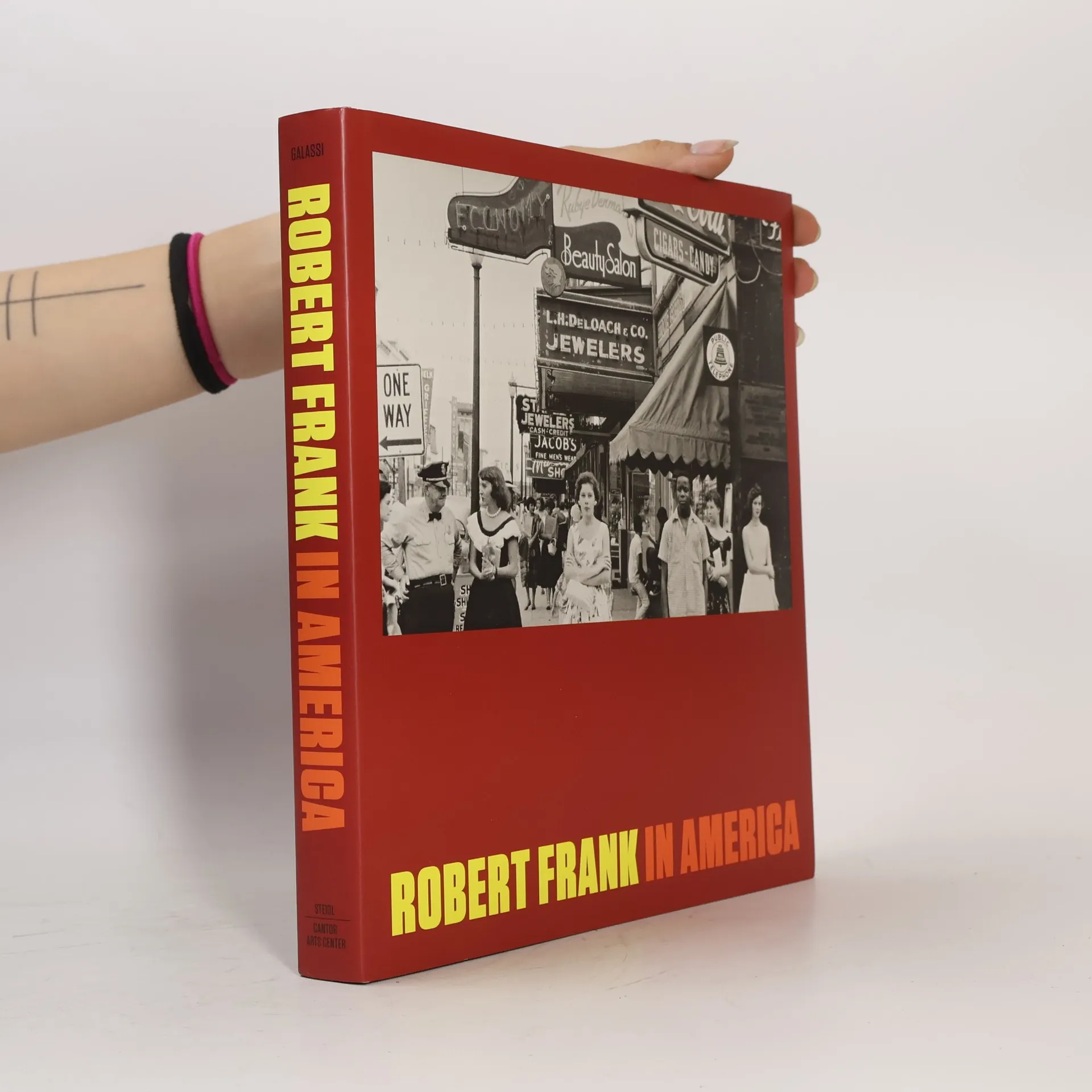
Because of the importance of Robert Frank’s The Americans; because he turned to filmmaking in 1959, the same year the book appeared in the United States; and because he made very different kinds of pictures when he returned to still photography in the 1970s, most of Frank’s American work of the 1950s is poorly known. This book, based on the important Frank collection at the Cantor Arts Center at Stanford University, is the first to focus on that work. Its careful sequence of 131 plates integrates 22 photographs from The Americans with more than 100 unknown or unfamiliar images to chart the major themes and pictorial strategies of Frank’s work in the United States in the 1950s. Peter Galassi’s text presents a thorough reconsideration of Frank’s first photographic career and examines in detail how he used the full range of photography’s vital 35mm vocabulary to reclaim the medium’s artistic tradition from the hegemony of the magazines.
In 1950, Robert Frank left his job as a photographer in New York to travel through Europe with his family. That summer he arrived in Valencia, Spain, which was at the time a humble, bleak place enduring the austere conditions of the postwar period like the rest of the country. The pictures Frank took of Valencia depict the daily life of a fishing village. His portrayal is so natural and clear that further verbal explanation seems superfluous; they simply reflect, in the photo grapher’s words, “the humanity of the moment”. The photographs in this book, many of which have never been published before, allow dignity to override poverty.
Who was the greater economist - Adam Smith or Charles Darwin? This title predicts that within the next century Darwin will unseat Smith as the intellectual founder of economics. It argues that Darwin's understanding of competition describes economic reality far more accurately than Smith's.
Qu'est-ce qui pousse les plus riches à dépenser des sommes folles pour acquérir des objets de luxe ? Et quel est le prix de cet engouement pour les individus et pour la société ? Voilà les questions qui ont conduit Robert H. Frank à examiner le rapport entre nos habitudes de consommation et notre quête du bonheur. Psychologie évolutionniste à l'appui, il révèle que la consommation de luxe est souvent liée à des préoccupations de statut social. Si les dépenses de luxe ne font guère souffrir les plus riches, Frank démontre leur effet sur l'ensemble de la société : nos heures de travail ne cessent de s'allonger et le temps consacré à la famille ou aux amis diminue comme peau de chagrin. Tout cela pour rester dans la course. Affirmant par ailleurs que les difficultés ainsi engendrées pour la classe moyenne et les plus démunis sont imputables aux forces concurrentielles du marché, Frank plaide pour une réforme fiscale ingénieuse qui permettrait de remédier aux effets pervers de la consommation de luxe. Livre à la fois engagé et solidement ancré dans la recherche, La course au luxe séduit tant par son analyse originale des inégalités économiques que par les perspectives qu'il laisse entrevoir.
After completing his seminal photography book The Americans in 1958, Robert Frank put aside the still image and concentrated throughout the 1960s on film-making. He only returned to still photography in the 1970s, using a Polaroid camera with black-and-white positive/negative film. These images were frequently layered with text, which Frank inscribed by hand onto the Polaroid negative. He found that these works allowed him more freedom to "destroy that image, that perfect image." In recent years Frank has worked almost exclusively with Polaroids, exploring the collage and assemblage possibilities of the instant photograph.Originally announced as Robert Polaroids , This slipcased collection of small, staple-bound books represents a new stage in the practice of a remarkable artist who continually challenges the limits of photography and film, and strives to avoid repeating himself. It brings together seven sequences of single new images compiled by Frank. As always, the photographs and stories relate Frank's life and milieu--his homes in Mabou and New York, for example, or trips to China and Spain.
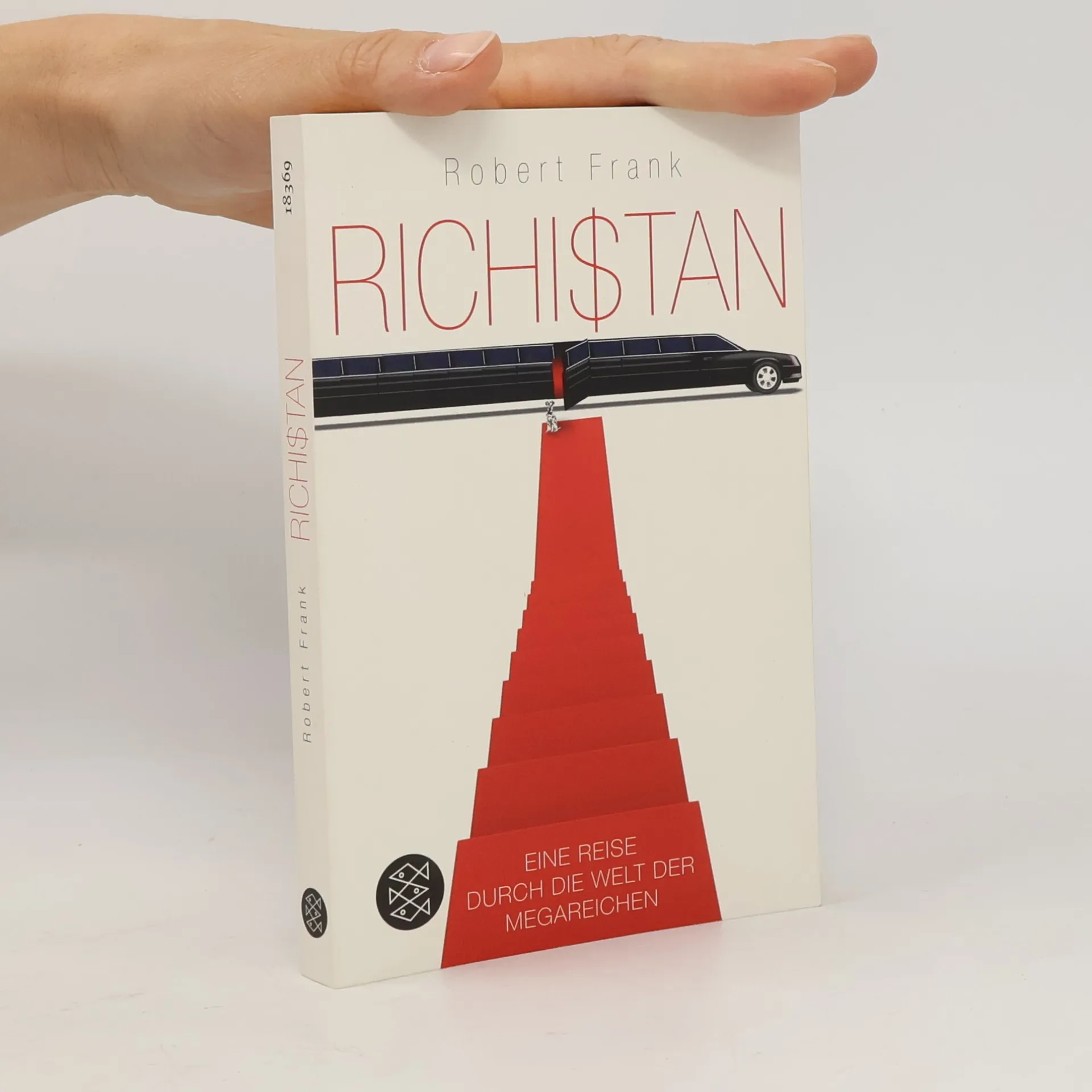
Wie leben sie wirklich, die Ultrareichen dieser Welt? Robert Frank ist Spezial-Korrespondent des Wall Street Journal für die Welt des Supergeldes und nimmt uns mit auf die unglaubliche Reise durch die sonst unerreichbare Welt Richistan. Man erhält witzige und spannende Einblicke in das Leben seiner Einwohner, ihre ungewöhnlichen Sitten und teilweise seltsamen Gebräuche. Beruhigende Einsicht: Es gibt, außer für Warren Buffet, immer einen, der mehr hat – wie im richtigen Leben auch. »Gleich einem Anthropologen im Amazonasbecken wagt sich Robert Frank in andere Welten. Statt dem Lendenschurz trägt er einen weißen Smoking.« New York Times Book Review
The Economic Naturalist is back with a whole batch of intriguing new questions and answers, drawn from his New York Times columns, that reveal how we really behave when confronted with economic choices. Do tax cuts for business owners really stimulate employment? Why shouldn't we just leave everything to the market? And why do we all save so little? Discover the answers to these and many more questions. With his trademark plain-speaking wit and insight, Robert Frank shows through dozens of examples how our personal choices about everything from paying for food and housing to large-scale policy decisions about taxation and the regulation of markets all boil down to the same simple economic principles, often resulting in the same wasteful mistakes. He shows that while our desires may be boundless, the resources necessary to satisfy them remain limited and argues that choices are always best made pragmatically - by carefully weighing the costs and benefits of competing options. This is a fascinating, entertaining and revealing collection full of insights that have more bearing than ever on our bank balances and our personal happiness.
Writing from New York in March 1949, Robert Frank sent home to his mother in Switzerland a birthday gift of a book maquette of a series of photographs he had made during a visit to Peru. Frank made an identical book for himself and one of each of these two dummies now resides in the collections of the Museum of Modern Art, New York, and National Gallery of Art, Washington. A few of these images are well-known in Frank’s oeuvre but previously the entire series had only ever been seen by a small number of people. This book presents for the first time the complete sequence of images, based on the original book Frank had conceived and realised under his direction. Peru is a work of major historical significance in both the artist’s history and the history of photography.
Paris is the first time that the significant body of photographs which Robert Frank made in Paris in the early 1950's have been brought together in a single book. His visit to Paris in 1951 was his second return to Europe after he had settled in New York City in 1947 and some of the images he made during that visit have become iconic in the history of the medium. The 80 photographs selected by Robert Frank and Ute Eskildsen suggest that Frank's experience of the new world had sharpened his eye for European urbanism. He saw the city's streets as a stage for human activity and focused particularly on the flower sellers. His work clearly references Atget and invokes the tradition of the flaneur.
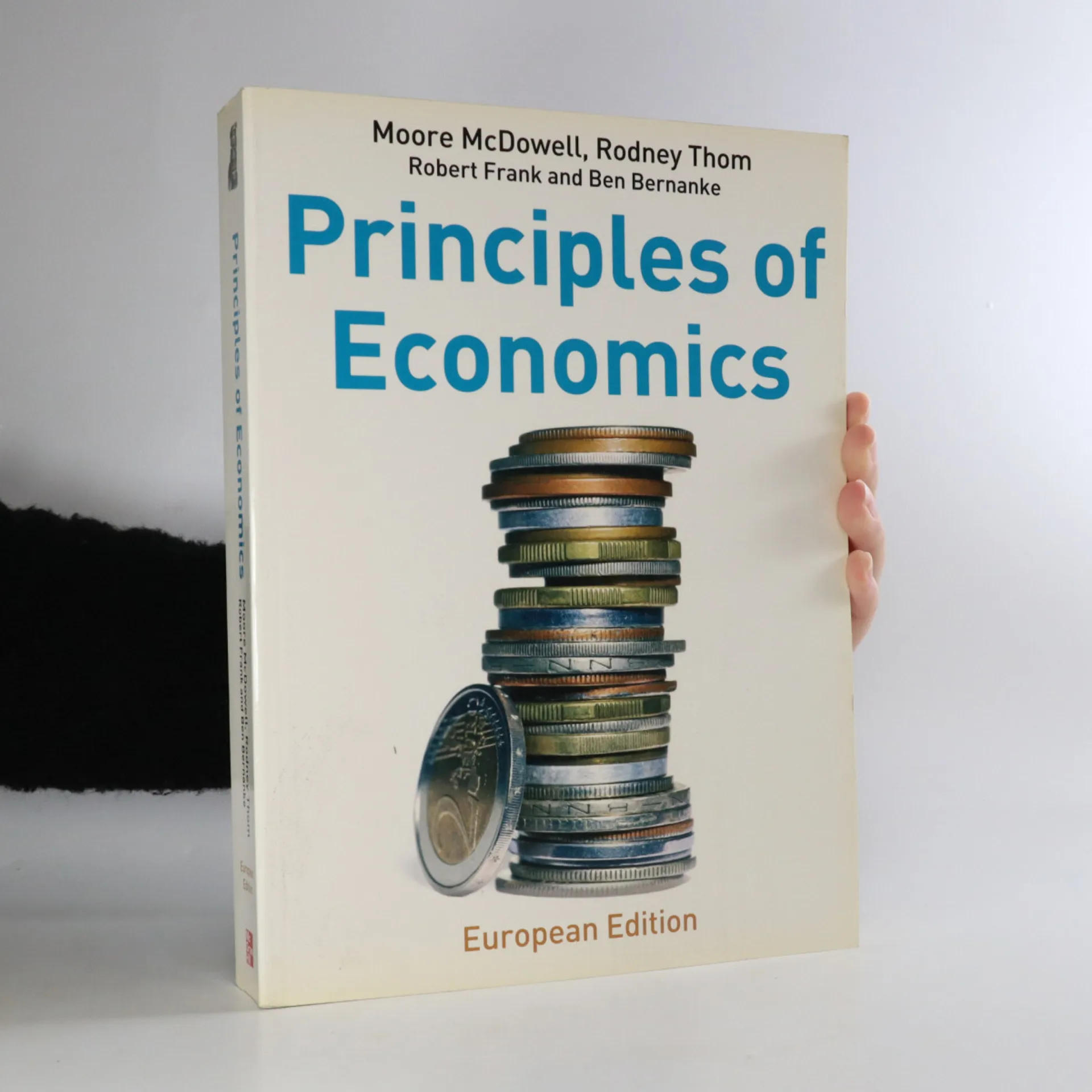
Fourth Edition - This International Student Edition Is For Use Outside Of The U.S.
Contains Chapters 1-16. book is a value edition black and white.
Why do the keypads on drive-up cash machines have Braille dots? Why are round-trip fares from Orlando to Kansas City higher than those from Kansas City to Orlando? For decades, Robert Frank has been asking his economics students to pose and answer questions like these as a way of learning how economic principles operate in the real world--which they do everywhere, all the time.Once you learn to think like an economist, all kinds of puzzling observations start to make sense. Drive-up ATM keypads have Braille dots because it's cheaper to make the same machine for both drive-up and walk-up locations. Travelers from Kansas City to Orlando pay less because they are usually price-sensitive tourists with many choices of destination, whereas travelers originating from Orlando typically choose Kansas City for specific family or business reasons. The Economic Naturalist employs basic economic principles to answer scores of intriguing questions from everyday life, and, along the way, introduces key ideas such as the cost benefit principle, the "no cash left on the table" principle, and the law of one price. There is no more delightful and painless way of learning these fundamental principles.
"War is over; the heroic French population reaffirms superiority. Love, Paris, and Flowers but London was black, white, and gray, the elegance, the style, all present in front of always changing fog. Then I met a man from Wales talking about the Miners and I had read "How Green Was My Valley." This became my only try to make a 'Story'." --"Robert Frank" This magnificent new edition of "London/Wales," which features never-before-seen photographs, juxtaposes Frank's images of the elegant world of London money with the grimy working-class world of postwar Wales--bankers opposite coal miners. It brings together two distinct bodies of work, and reveals a significant documentary precedent for "The Americans." In also offers an important view of Frank's development, demonstrating an early interest in social commentary, in the narrative potential of photographic sequencing, and innovative use of the expressionistic qualities of the medium.
In November of 1991 Robert Frank went to Beirut on a commission to photograph the city's devastated downtown in the aftermath of the Lebanese civil war (1975-1990). Much of the work he did there, together with that of five other photographers with whom he shared the assignment, was put together in Beirut City Centre by Editions du Cypres in 1992. Alongside that commissioned work, he also made Polaroids of the city and its environs, which, on his return home, he stowed away in his studio. It was only many years later that he considered those images again, and used them to create a sketchbook's worth of Polaroid collages. Come Again is a facsimile reprint of that notebook. In recent years Frank has worked almost exclusively with Polaroids, exploring the collage and assemblage possibilities of the instant photograph. Come Again, which comes as a sewn softcover in a paper bag, printed with special four-color matt inks and a Polaroid varnish, offers insight into the early stages of Frank's experimentation with the Polaroid and presents a previously unseen artist's book.
Exploring the evolution of Pop culture from the late 1950s to the late 1960s, this comprehensive survey examines its impact on art, film, photography, and architecture, highlighting the interplay between mass production and mass media. Unlike other works that focus solely on Pop art, it offers a holistic view of the movement's influence across America, Britain, and Europe, showcasing its diverse manifestations and cultural significance during this transformative era.
Histoire des relations internationales contemporaines, Tome 2
La Première Guerre mondiale bouleverse les équilibres et les valeurs du XIXe siècle. Et ce n'est pas seulement "l'ordre européen" qui change dans les années 1920, mais tout l'ensemble des rapports mondiaux entre les peuples. Quand survient la Seconde Guerre mondiale, la vieille Europe ne voit pas que les nouveaux mondes (Etats-Unis, URSS, Japon) sont capables de troubler le jeu traditionnel des puissances. A partir du moment où les deux géants, l'américain et le soviétique, entrent dans la mêlée, la guerre devient vraiment mondiale et la turbulente Europe commence è perdre la maîtrise des relations internationales qu'elle détenait depuis quatre siècles...
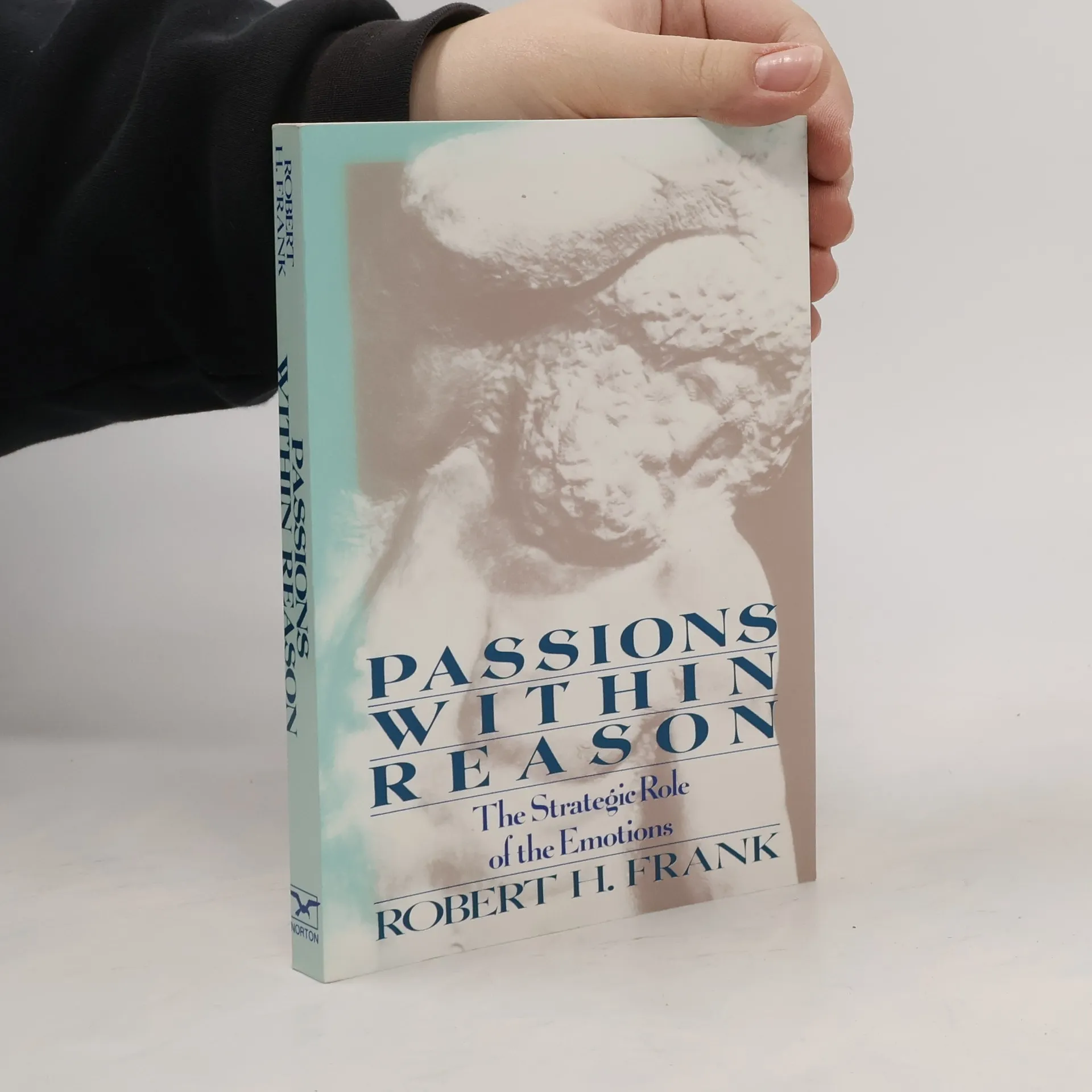
Drawing on research Robert Frank has conducted and published since 1990, he challenges the familiar homo economicus stereotype by describing how people create bonds that sustain cooperation in one-shot prisoner's dilemmas.
Designed and sequenced by Robert Frank himself, "Storylines" is a major exhibition catalogue published to accompany Frank's fall 2004 retrospective at the Tate Modern in London. Features all of Frank's most important work, including film stills, photographs, Polaroids, contact sheets, and recent digital images. 3-86521-041-4$40.00 / DAP / Distributed Arts Publishing
Učebnice ekonomie dvou významných amerických ekonomů.
Avoiding excessive reliance on formal mathematical derivations, this text presents concepts intuitively through examples drawn from familiar contexts. It relies throughout on a shortlist of core principles which it reinforces repeatedly by illustrating and applying each in numerous contexts.
Why the Few at the Top Get So Much More Than the Rest of Us
In today's hyper-competitive world, in business, as in sport, thousands are competing for only a handful of top prizes. This relentless on coming out on top has shaped our society and how we define sucess in troubling ways. But a more equitable and more prosperous future is possible. The Winner-Take-All Society reveals how.
Die dritte Auflage von Microeconomics and Behaviour bietet eine zugängliche und gleichzeitig intellektuell anspruchsvolle Auseinandersetzung mit mikroökonomischen Konzepten. Das Lehrbuch richtet sich an Studierende und fördert ein tiefes Verständnis der wirtschaftlichen Verhaltensweisen, indem es komplexe Theorien ansprechend und verständlich aufbereitet. Es kombiniert theoretische Grundlagen mit praktischen Anwendungen, um die Relevanz der Mikroökonomie im Alltag zu verdeutlichen.
In this book, I make use of an idea from economics to suggest how noble human tendencies might not only have survived the ruthless pressures of the material world, but actually have been nurtured by them.
Es ist 1955 und ein junger europäischer Fotograf, Robert Frank, erhält ein Stipendium der Guggenheim-Stiftung, um ein fotografisches Werk über Amerika zu schaffen. Frank wird das riesige Land bereisen und zwischen 1955 und 1956 48 verschiedene Bundesstaaten besuchen. Die Straßen, die Gesichter der Menschen, die Plätze der Städte, die Bars und Geschäfte, die Bürgersteige und die unbedeutendsten Details werden vor dem intelligenten und teilnehmenden Objektiv des Fotografen festgehalten. Das Ergebnis wird "Die Amerikaner" sein, ein Buch, das seinen Autor als Meister der Fotografiegeschichte auszeichnet. Der Band stellt ein wahres "Bildgedicht" dar, das der amerikanischen Straße und ihrer neuen, trostlosen Epoche gewidmet ist; ein Bericht, der wie nur wenige andere eine Ära geprägt hat und für Generationen von Fotografen die Hauptreferenz geworden ist, um zu fotografieren, zu reisen und mit dem Blick zu erkennen.