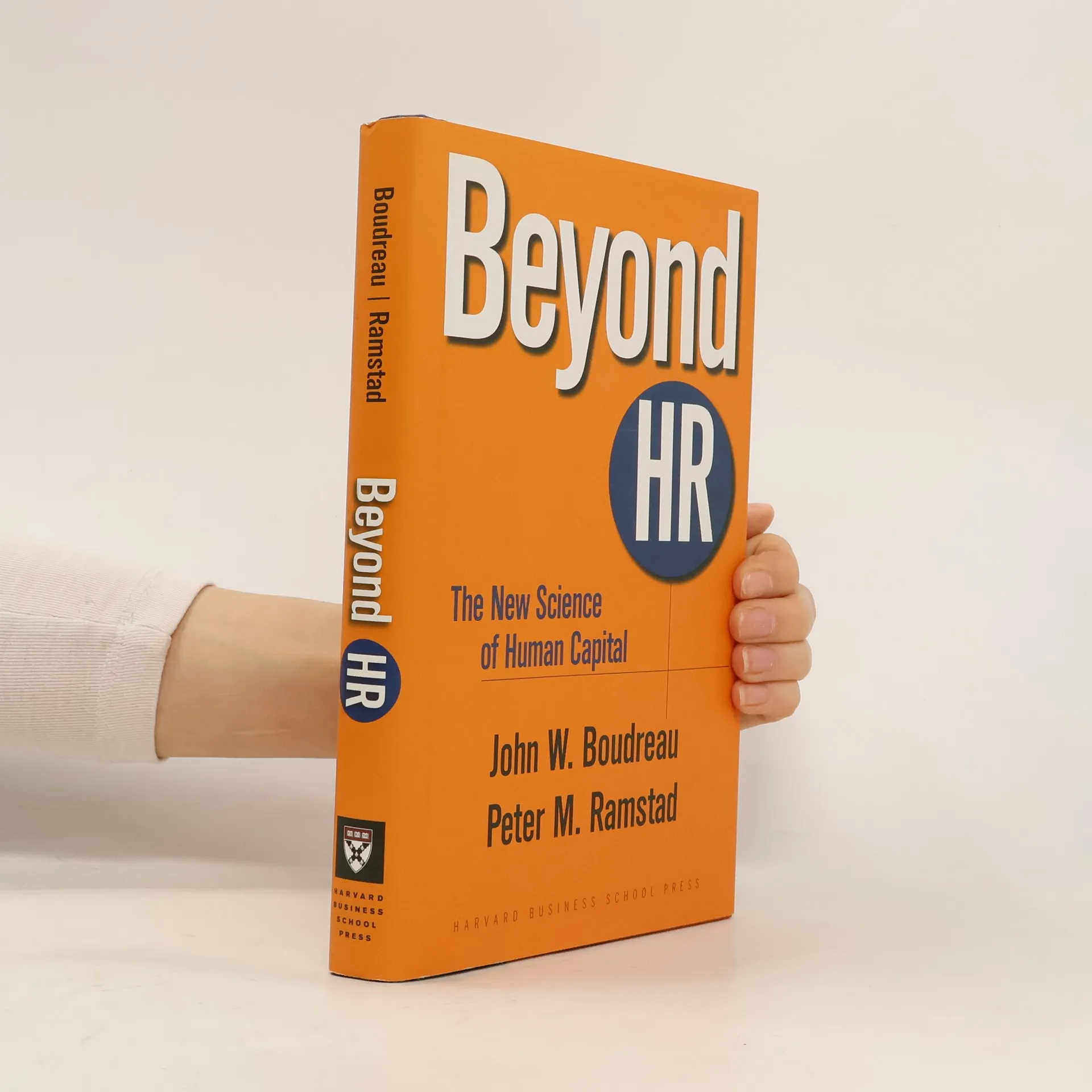
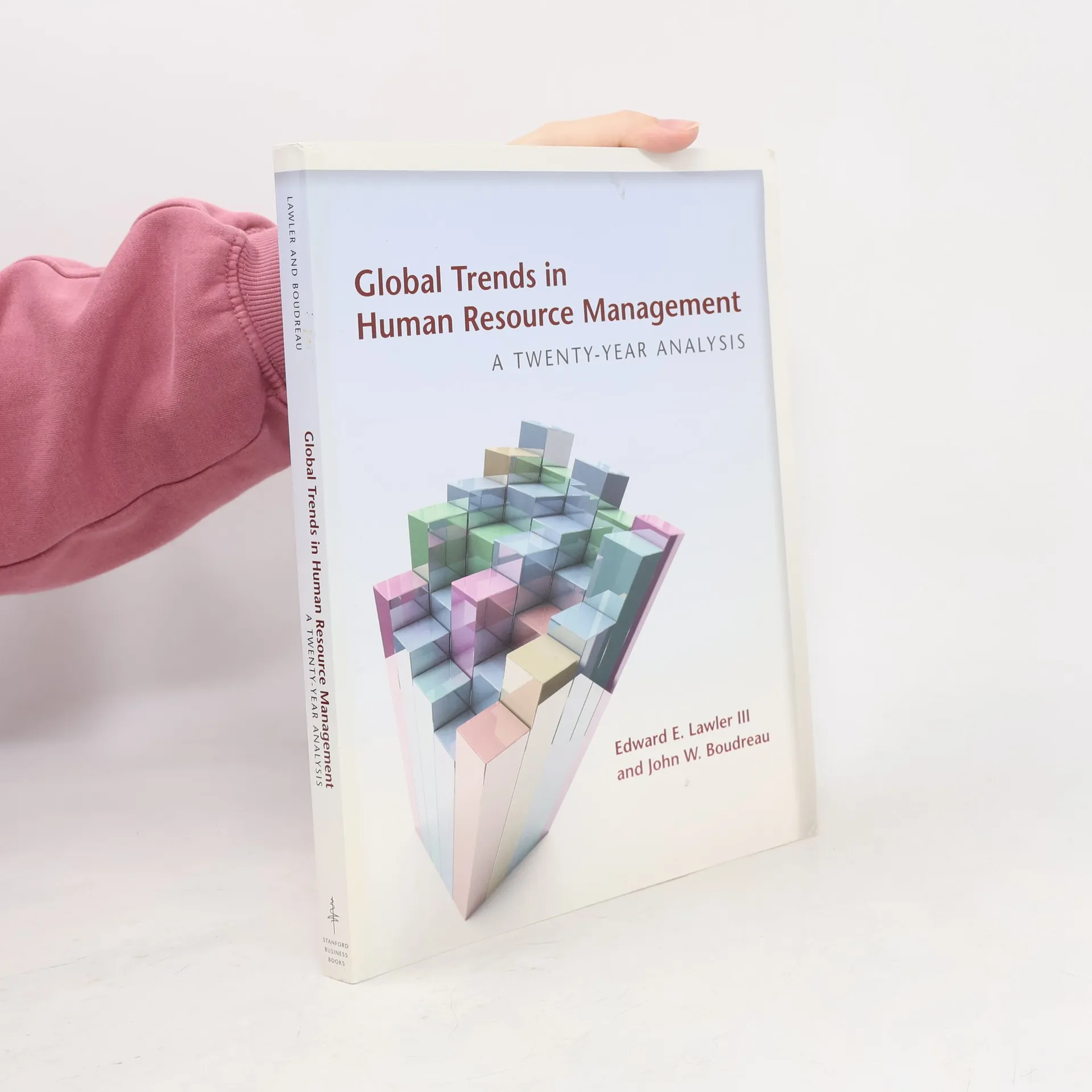
Since 1995, USC's Center for Effective Organizations (CEO) has conducted the definitive longitudinal study of the human resource management function in organizations. By analyzing new data every three years since then, the Center has been able to consistently chart changes in how HR is organized and managed, while at the same time providing guidance on how professionals in the field can drive firm performance. Global Trends in Human Resource Management , the seventh report from CEO, provides the newest findings about what makes HR successful and how it can add value to organizations today. Edward E. Lawler III and John W. Boudreau conclude that HR is most powerful when it plays a strategic role, makes use of information technology, has tangible metrics and analytics, and integrates talent and business strategies. To adapt to the demands of a changing global marketplace, HR is increasingly required to span the boundaries between its function, the organization as a whole, and the dynamic environment within which it operates. This report tracks changes in a global sample of firms that shows how HR differs across Europe, the U.S., and Asia, providing an international benchmark against which to measure a company's practice and shows how HR can adapt in a rapidly changing landscape.
John W. Boudreau Bücher

Investing in People
- 360 Seiten
- 13 Lesestunden
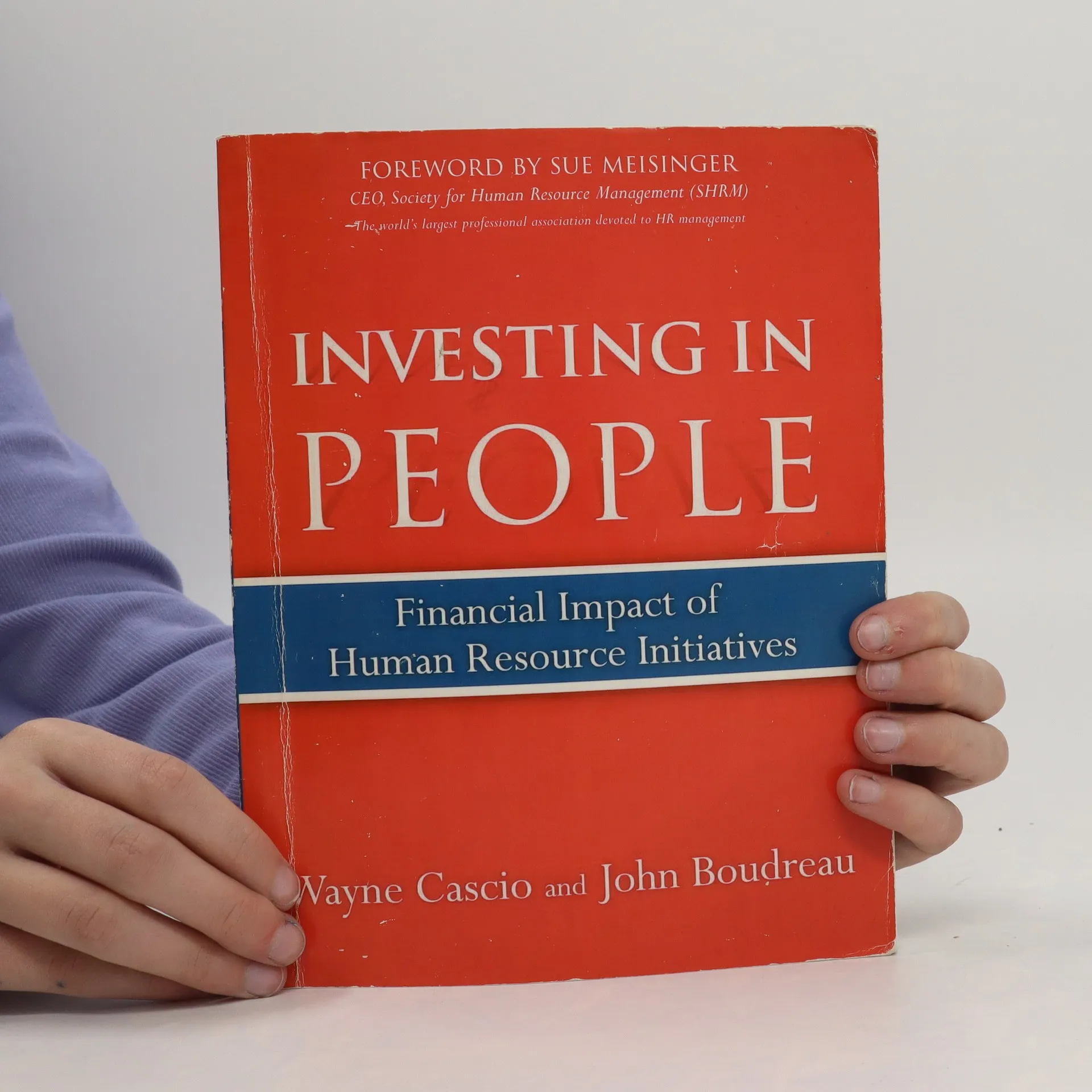
This book presents a logical framework for understanding the economic value of Human Resources investments, guiding readers on how to select HR initiatives that provide optimal strategic value while eliminating ineffective ones. It introduces best-practice metrics and analysis techniques for various HR areas, including talent management and health programs. The authors, Wayne F. Cascio and John W. Boudreau, offer a groundbreaking approach to HR measurement that aligns investments with organizational goals, positioning HR as a vital strategic partner. Readers will learn to implement and utilize metrics to enhance decision-making and organizational effectiveness while maximizing HR investment value. Key foundational principles such as risk, return, and economies of scale are discussed, enabling objective evaluations of investments in areas like training and work/life programs. The book also emphasizes integrating HR with enterprise strategy and budgeting, fostering collaboration with business leaders outside HR. For those seeking to secure or enhance their role in strategic discussions, this resource is essential. Additionally, free online software is available to automate key calculations, making it accessible even for those without advanced math skills.
Human resource management
- 740 Seiten
- 26 Lesestunden
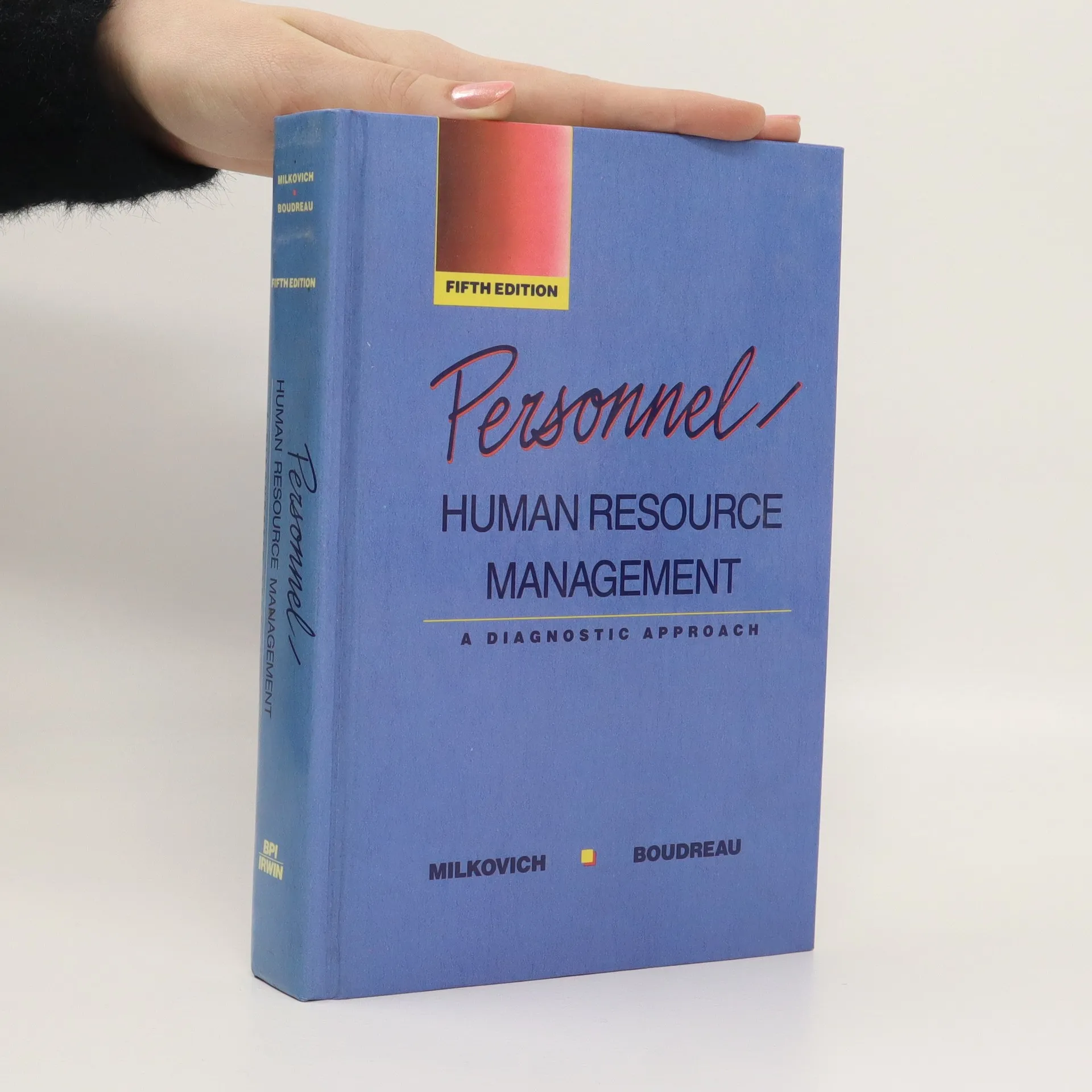
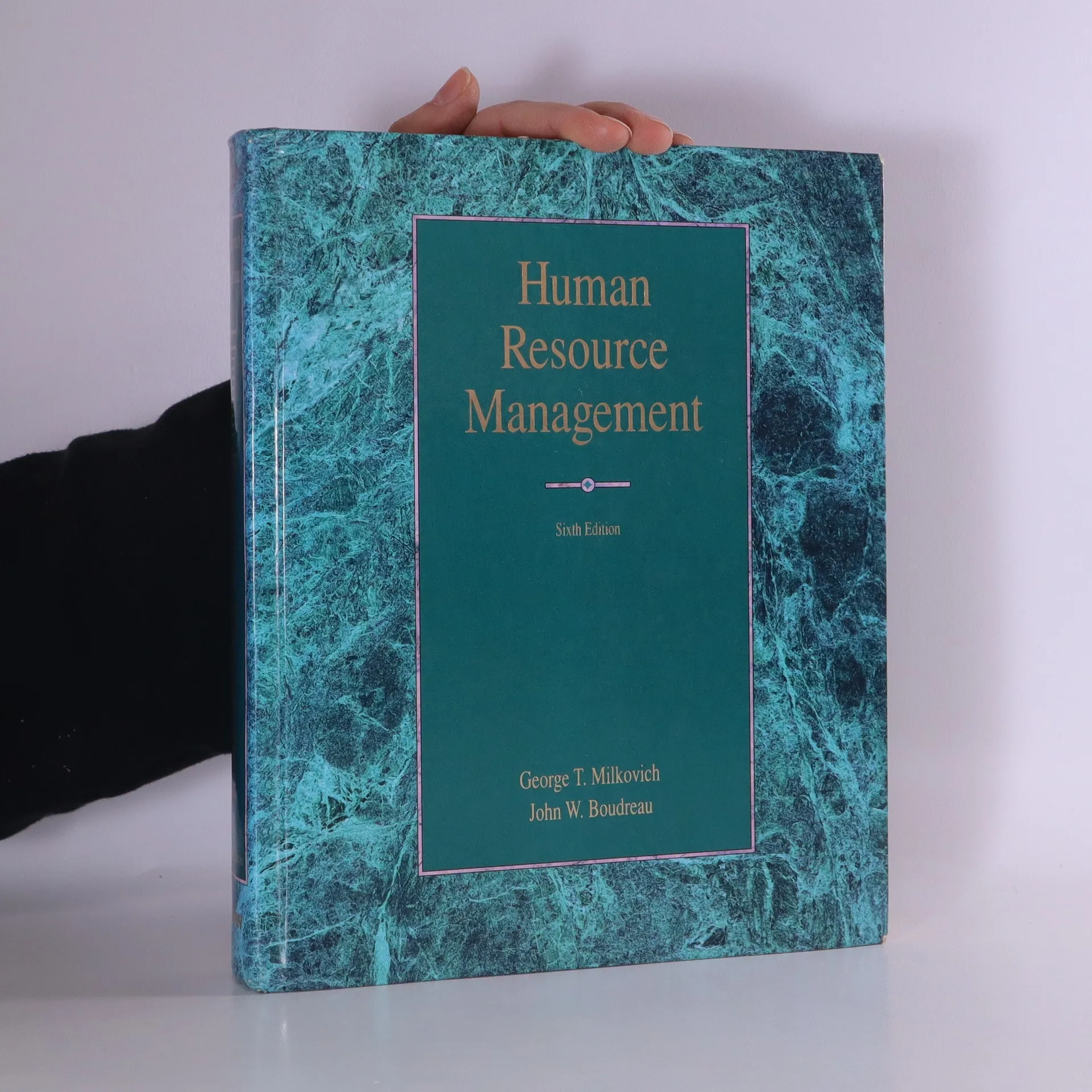
This text adopts a diagnostic approach to human resources management, setting up a diagnostic model consisting of four phases: assess conditions, set objectives, choose activities and evaluate results. The book examines how to make effective decisions about human resources by analyzing the prevailing pressures and issues facing managers. The new features of this edition includes discussion on external recruitment reflecting the latest developments using the World Wide Web to hunt for jobs and the latest data on growth of contingent workers, internal staffing and careers, and a new chapter providing the history of HRM.
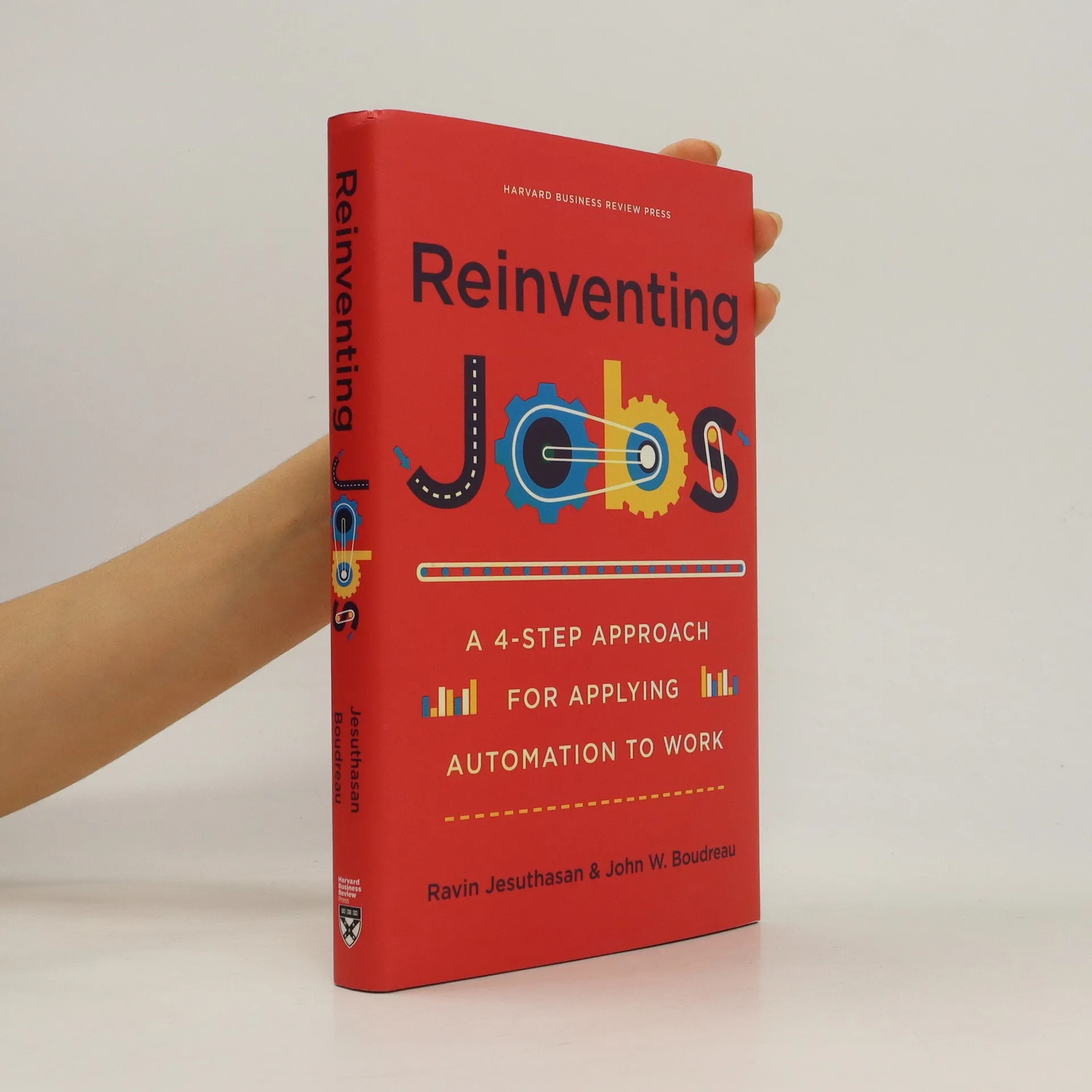
Work is traditionally seen as a "job," with workers as "jobholders," defined by titles, hierarchies, and qualifications. In this bestseller, Ravin Jesuthasan and John Boudreau introduce a transformative approach to work. They advocate for a new "work operating system" that breaks down jobs into their essential components and reassembles them into more effective combinations tailored to individual skills and abilities. In an era marked by rapid automation, the need for organizational agility, diversity efforts, and alternative work arrangements, the conventional job-based system proves to be inefficient. The authors present a roadmap for the future of work, showcasing real-world examples of organizations that have successfully embraced work deconstruction and innovation. For instance, DHL's use of social robotics in distribution centers raises questions about the definition of a "job" when technology and human workers collaborate. Similarly, Genentech's job deconstruction efforts have led to enhanced flexibility, engagement, and retention. Other organizations have found agility through internal talent marketplaces, worker exchanges, and crowdsourcing. This essential guide encourages organizations to reboot their work operating systems for a more dynamic future.
Reinventing Jobs
- 224 Seiten
- 8 Lesestunden
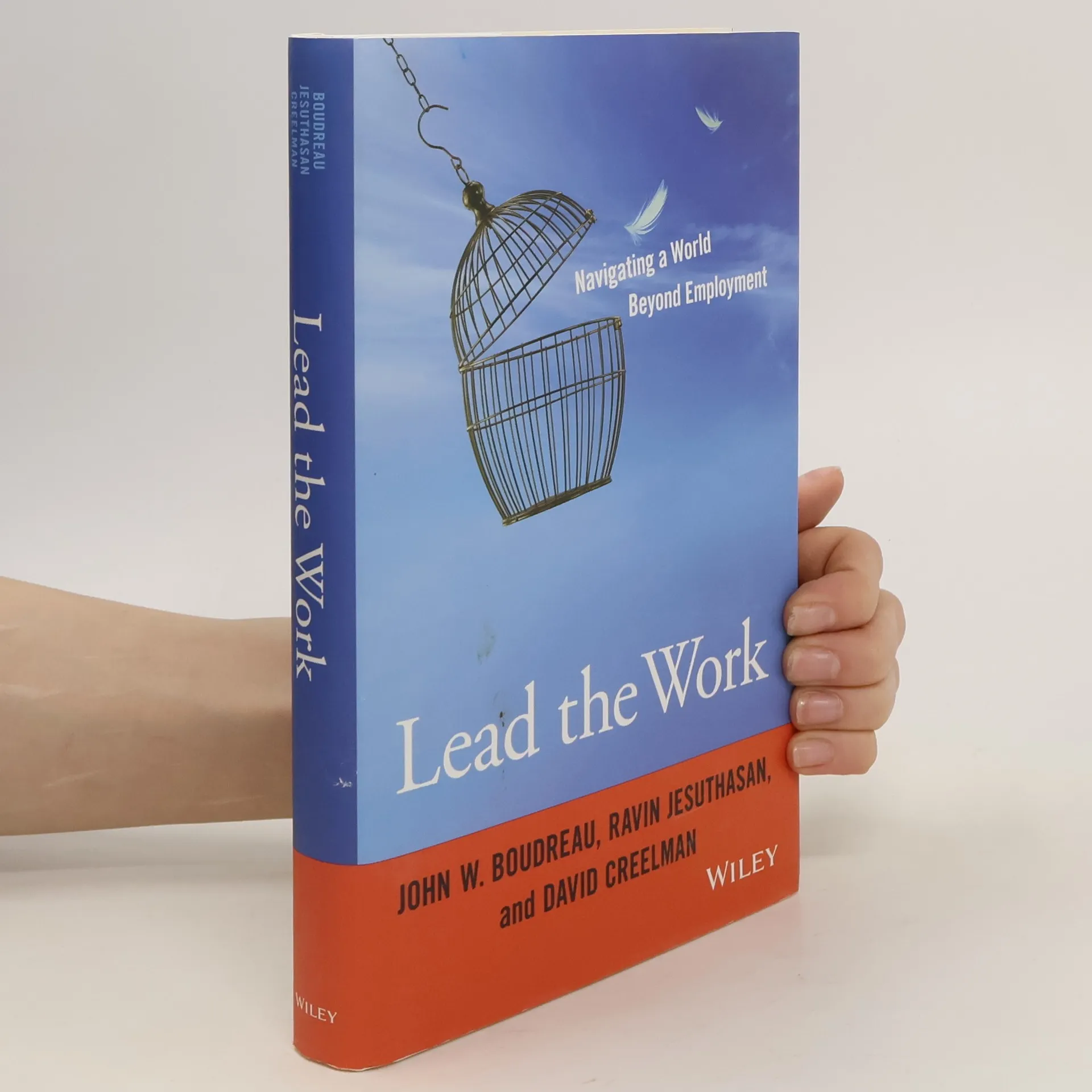
Introduction: AI and robotics are here. Now what? -- Part One. Optimizing work automation: a 4-step framework: Deconstruct the job: which job tasks are best suited to automation? -- Assess the relationship between job performance and strategic value: what is the automation payoff? -- Identify options: what automation is possible? -- Optimize work: what does the right human-automation combination look like? -- Part Two. Redefining the organization, leadership, and workers: automation implications beyond reinventing jobs: The new organization: digital, agile, and boundaryless and work-centric -- The new leadership: democratic, social and perpetually upgraded -- Deconstruct and reconfigure your work: using the work-automation -- Framework to navigate your personal work evolution
Lead the Work
- 277 Seiten
- 10 Lesestunden
This work offers a comprehensive examination of the changing landscape of employment and its significant implications for management and productivity. As the nature of work evolves, leaders must recognize that talent can now flow in and out of organizations, moving away from the traditional model of long-term employment. This shift marks a critical change in the relationship between individuals and organizations, with medium- and short-term employment becoming more common. What was once a rare occurrence—utilizing non-employees for tasks—is now embraced by forward-thinking organizations. The text delves into this transformation, presenting a roadmap for managers to navigate this new environment effectively. The trend away from conventional employment practices signals a profound shift that impacts every organization, regardless of size. It outlines how management practices must evolve to adapt to these changes and survive in a competitive landscape. Readers will explore the concept of dispersed organizations, the rise of impermanent and individualized work, and innovative strategies for leadership. Additionally, the book emphasizes the importance of decision science in this new era, likening workplaces to biological entities where only the strongest thrive. Ultimately, it provides insights on adapting to and succeeding in this transformed employment landscape.
Is your talent strategy a unique competitive advantage? This book shows how organizations can uncover talent contributions, strategically differentiate their HR practices and metrics, and optimally allocate talent to create value.
Personnel human resource management : a diagnostic approach
- 872 Seiten
- 31 Lesestunden
Řízení lidských zdrojů
- 930 Seiten
- 33 Lesestunden