The book offers a modern approach to negotiation, addressing the impact of recent global changes such as the pandemic, political divides, and digital communication. It emphasizes the need to adapt traditional negotiation tactics to new contexts, including cultural differences and virtual platforms. Max Bazerman, a renowned expert, provides insights on how to navigate these challenges while offering essential techniques for both beginners and seasoned negotiators. This guide serves as a comprehensive toolkit for effective negotiation in today's evolving landscape.
Max H. Bazerman Reihenfolge der Bücher (Chronologisch)
Max H. Bazermans Arbeit konzentriert sich auf Entscheidungsfindung, Verhandlung und Ethik. Seine Forschung befasst sich mit den Feinheiten des menschlichen Urteilsvermögens und untersucht, wie Einzelpersonen und Organisationen ihre Entscheidungsprozesse verbessern können. Durch seine umfangreichen Publikationen trägt er zu einem tieferen Verständnis kognitiver Verzerrungen und ihrer Auswirkungen auf das Verhalten bei. Bazermans Ansatz verbindet theoretische Erkenntnisse mit praktischen Implikationen und bietet den Lesern wertvolle Einblicke in die Komplexität moderner Entscheidungsfindung.

Complicit
- 264 Seiten
- 10 Lesestunden
This book addresses the widespread tendency to enable wrongdoing across various sectors, including workplaces and politics. While it's easy to denounce high-profile wrongdoers like Elizabeth Holmes and Harvey Weinstein, we often overlook the many individuals who supported their unethical actions. These include business partners, employees, investors, and media organizations. The author, a Harvard Business School professor, confronts our complicity and provides strategies to recognize and avoid the psychological traps that lead us to ignore or support unethical behavior. Through compelling stories related to scandals like Theranos and WeWork, the opioid crisis, and the #MeToo movement, the book outlines seven behavioral profiles that contribute to complicity, from active partners to those benefiting from systemic privileges. It also shares the author's personal experiences with complicity. Ultimately, the book offers practical solutions for individuals, leaders, and organizations to prevent complicity, challenging the idea that only a few individuals are responsible for societal issues and advocating for a collective effort toward a more ethical world.
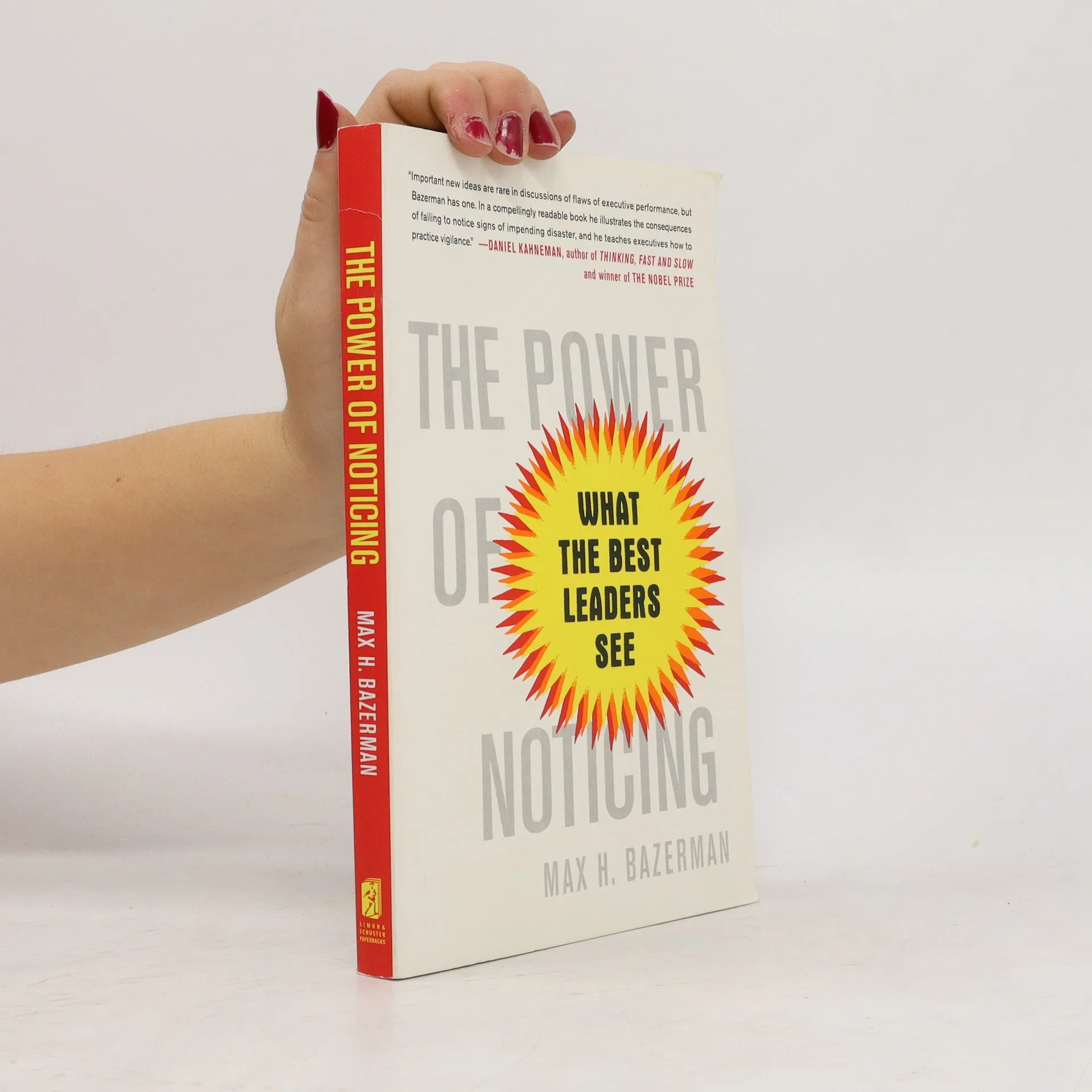
From a Harvard Business School Professor and Co-Director of the Harvard Kennedy School's Center for Public Leadership comes a guide to enhancing decision-making, leadership skills, and the ability to notice critical information often overlooked. Imagine the advantage you could gain in negotiations and leadership if you could train yourself to see what others miss. This book offers a blueprint for achieving that. Max Bazerman, a specialist in applied behavioral psychology, leverages three decades of research and his teaching experience with MBAs and corporate executives to help you recognize and act on subtle information. Through real-world examples, including the Challenger Space Shuttle disaster and Bernie Madoff's Ponzi scheme, Bazerman reveals the overlooked information and the reasons behind it. He encourages readers to confront their cognitive blind spots, identify missed details, and implement strategies to prevent future oversights. While many business books discuss our susceptibility to cognitive biases, Bazerman focuses on avoiding the habits that lead to poor decisions and ineffective leadership. His step-by-step guide empowers you to break bad habits and uncover hidden details that can transform your decision-making and leadership capabilities. With insights on paying attention to what didn’t happen and acknowledging self-interest, you can learn to notice what others miss and lead more effectively.
Blind Spots. Why We Fail To Do What's Right And What To Do About It
- 208 Seiten
- 8 Lesestunden
When faced with ethical dilemmas, many believe they would uphold their principles, yet we often overestimate our ethical capabilities. The authors, both prominent business ethicists, explore how we inadvertently act unethically. They analyze notable failures in the business realm—such as Enron's collapse, tobacco industry corruption, the Ford Pinto scandal, and Bernard Madoff's downfall—to reveal the underlying nature of these ethical failures and how we can align our actions with our values. Traditional ethics approaches often fall short; the authors highlight blind spots like ethical fading, which removes ethics from decision-making, leading to disasters such as the Challenger shuttle tragedy, steroid use in baseball, and financial market crashes. They illustrate how ethical standards can shift and how we often overlook the unethical actions of others. Compliance initiatives may inadvertently encourage unethical behavior. By distinguishing our "should self" (the ethical decision-maker) from our "want self" (the one making choices), the authors identify ethical pitfalls that lead to questionable actions. They propose innovative strategies for individuals and groups to enhance ethical judgment, aiming to embed ethics in workplaces, institutions, and everyday life.
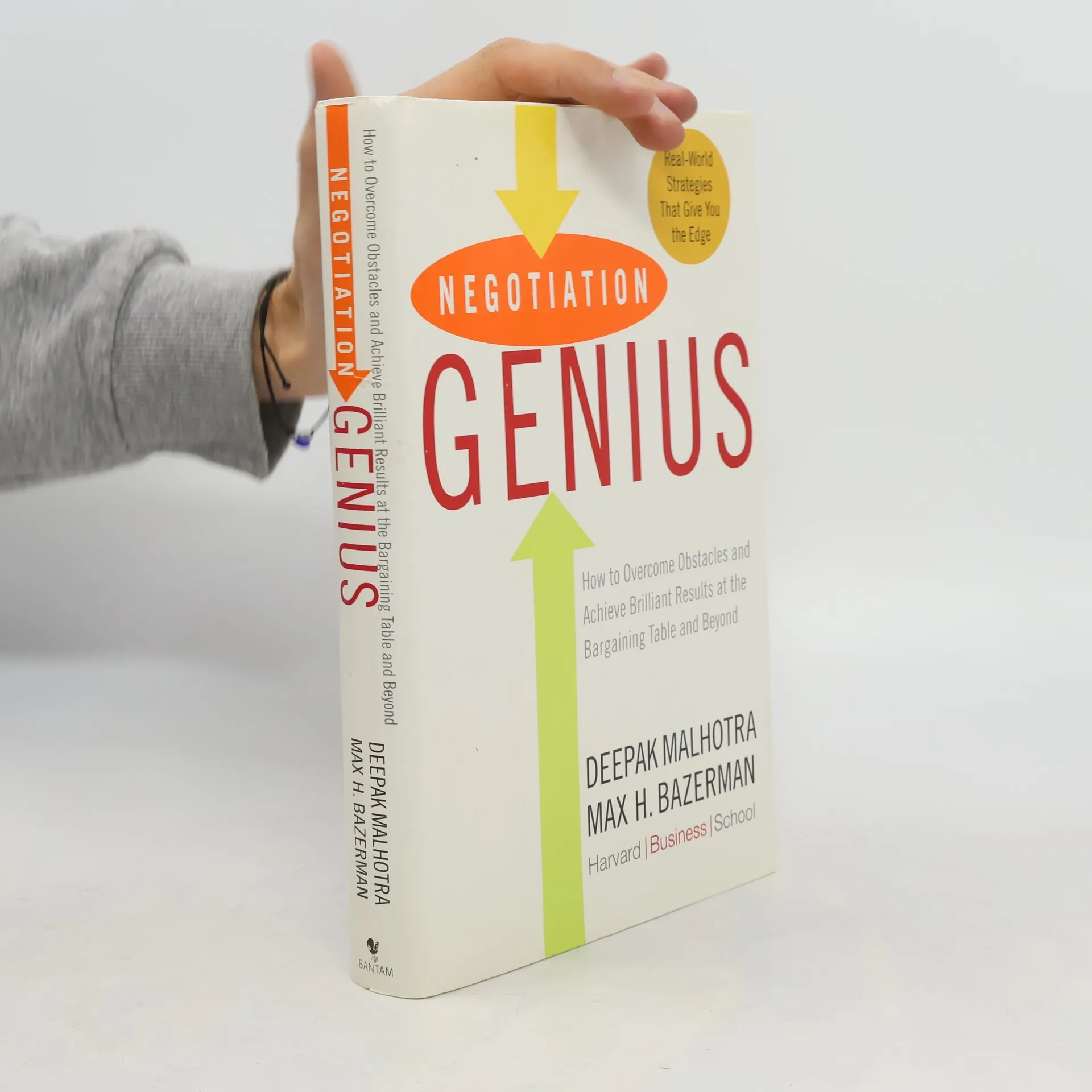
From two of the leading teachers of executive education in the United States comes this complete guide to the nuts-and-bolds skills, proven strategies, and creative techniques necessary to succeed in any negotiation.
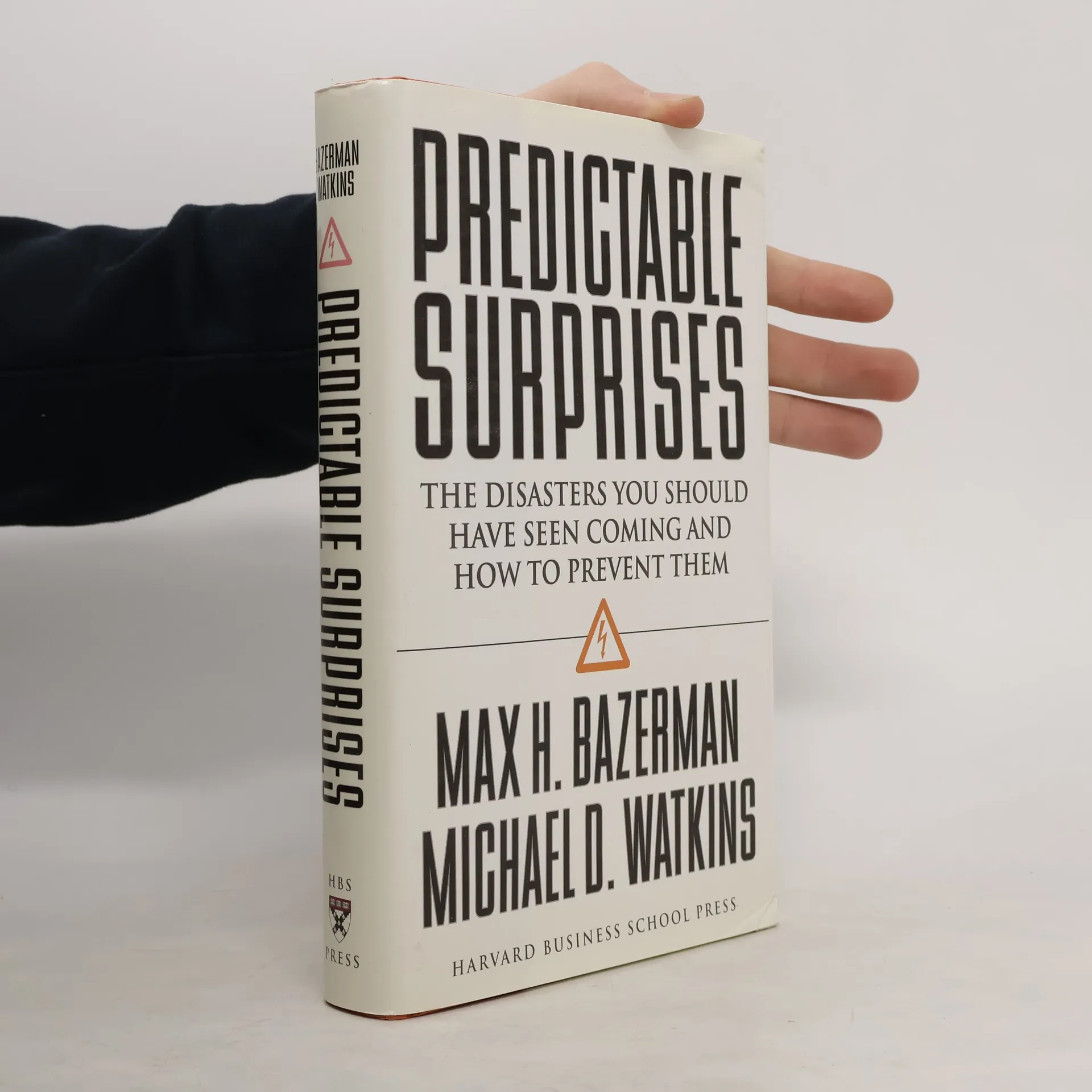
Predictable Surprises
- 317 Seiten
- 12 Lesestunden
Most events that catch us by surprise are both predictable and preventable, but we consistently miss (or ignore) the warning signs This book shows why such “predictable surprises” put us all at risk, and shows how we can understand, anticipate, and prevent them before disaster strikes. There is a universal fear factor surrounding this that society and the workplace are filled with disasters in the making that we could prevent if we only knew what to look for. This book plays on that fear and offers a positive, proactive resolution to it.
Why do our government leaders continually make decisions and craft policies that everybody knows are foolish? Because they, like the rest of us, remain trapped in foolish and unproductive habits of thinking. "You Can't Enlarge the Pie" analyzes the unspoken assumptions that lead to bad policy, wasted resources, and lost lives, and shows exactly why they're wrong. With fascinating case studies and clear, compelling analysis, it dissects six psychological barriers to ineffective government:1. Do no harm. 2. Their gain is our loss.3. Competition is always good. 4. Support our group. 5. Live for the moment.6. No pain for us, no gain for them. By freeing ourselves from the narrow way we evaluate our government leaders, we can learn to judge their performance more as that of business leaders is judged: by the overall health of their organizations.
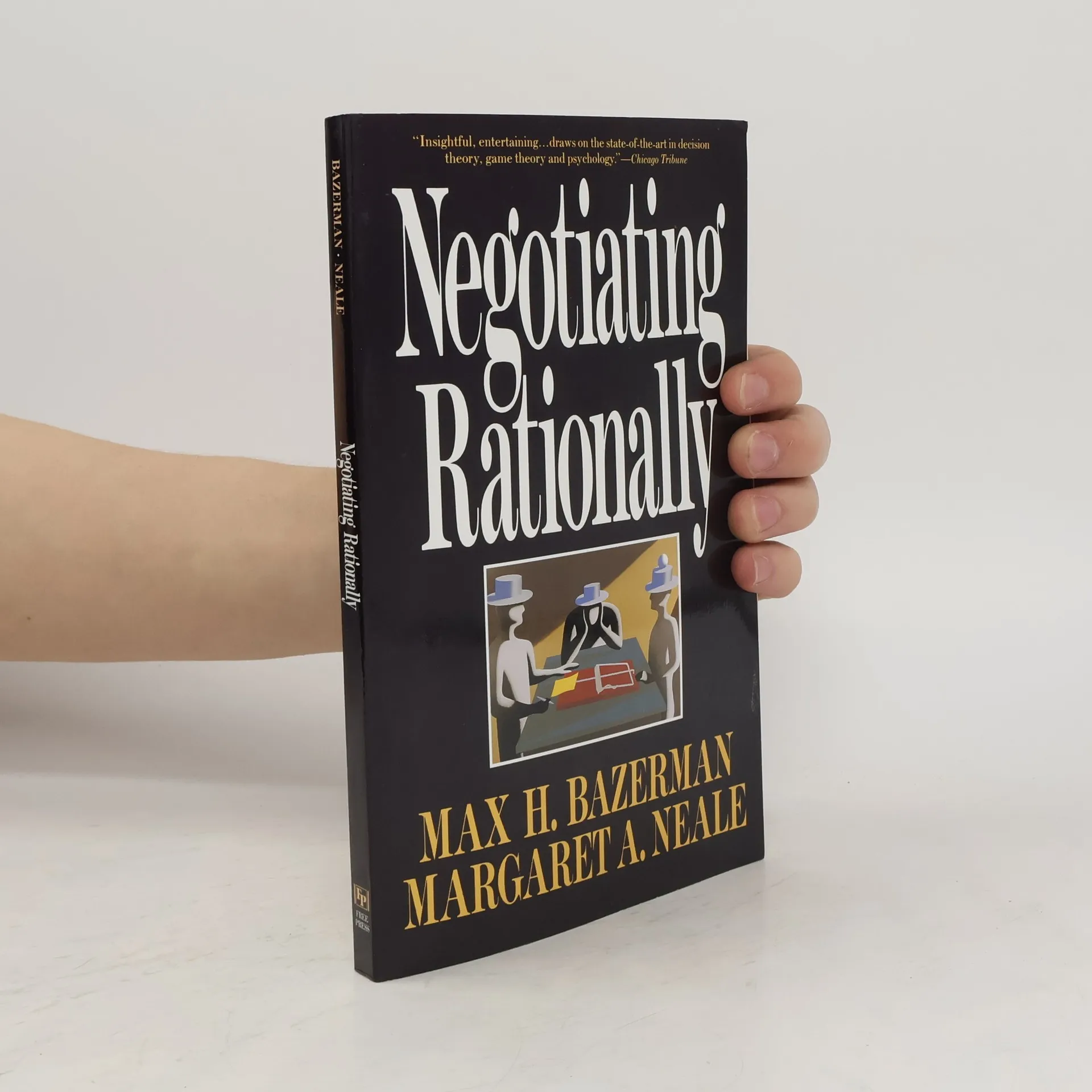
Negotiating rationally
- 196 Seiten
- 7 Lesestunden
In Negotiating Rationally , Max Bazerman and Margaret Neale explain how to avoid the pitfalls of irrationality and gain the upper hand in negotiations.For example, managers tend to be overconfident, to recklessly escalate previous commitments, and fail to consider the tactics of the other party. Drawing on their research, the authors show how we are prisoners of our own assumptions. They identify strategies to avoid these pitfalls in negotiating by concentrating on opponents’ behavior and developing the ability to recognize individual limitations and biases. They explain how to think rationally about the choice of reaching an agreement versus reaching an impasse. A must read for business professionals.
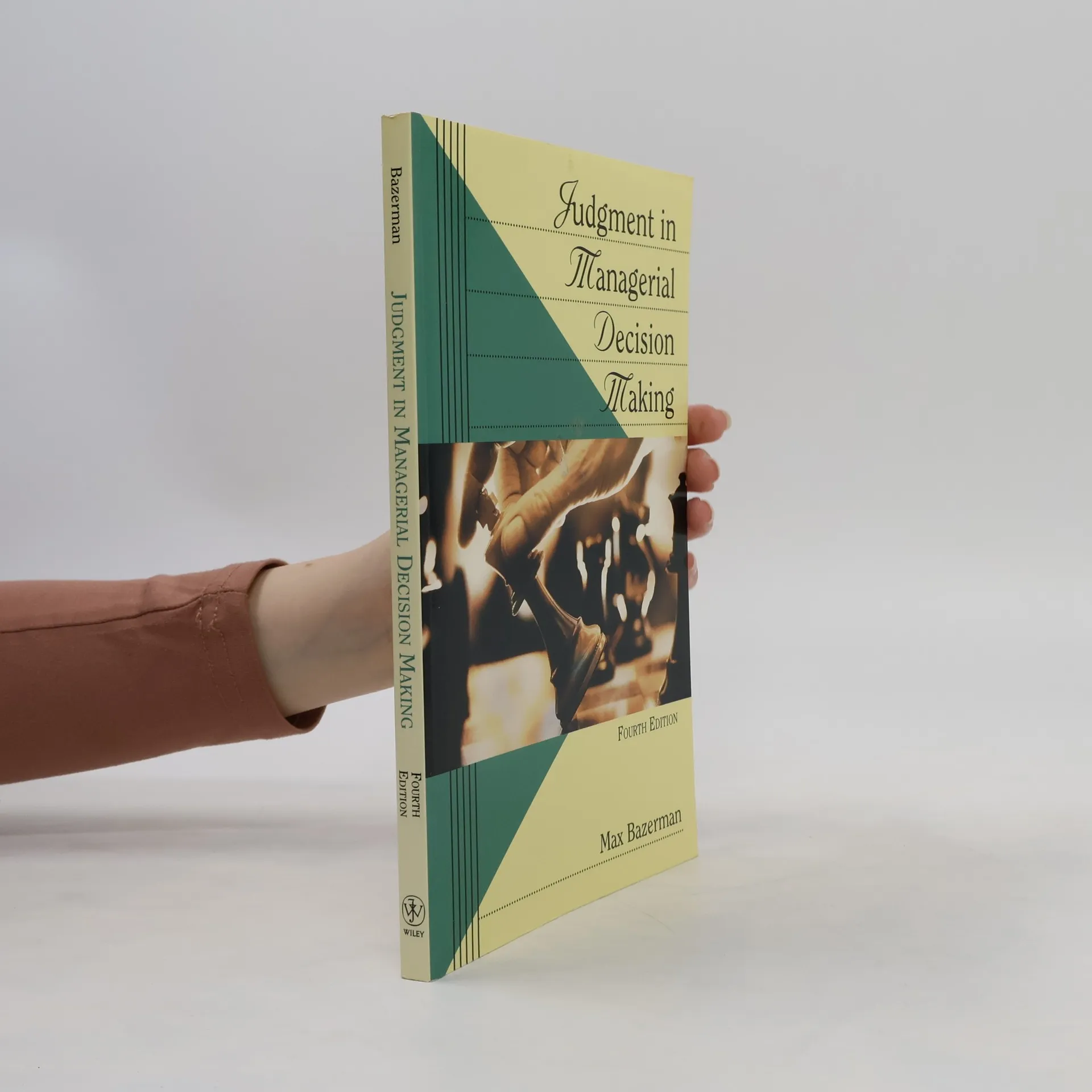
Judgment in Managerial Decision Making
- 212 Seiten
- 8 Lesestunden
Merges behavioural decision research into the organizational context by providing managerial examples and examining judgement. The book first introduces the micro perspective (chapters 2-6) and then builds on this base when introducing multi-party contexts (chapters 7-9).