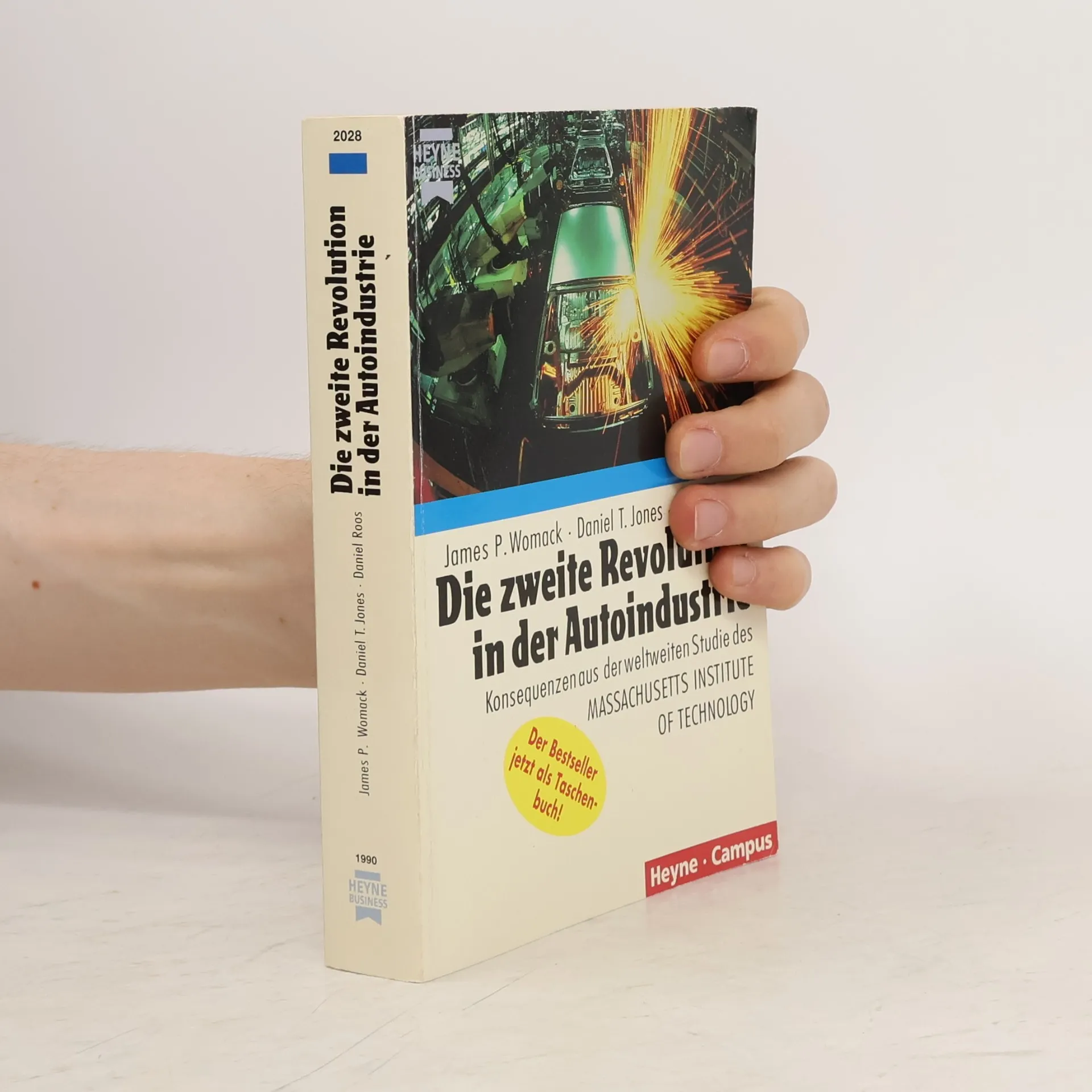
AuszugDie zweite Revolution in der Autoindustrie ist das anerkannte Standardwerk zur schlanken Produktion. »Lean Production« hat inzwischen auch bei vielen europäischen Unternehmen die Produk- tivität verdoppelt, Qualität verbessert und gleichzeitig Kosten gesenkt. Sie verändert über die Autoindustrie hinaus praktisch jede Industrie. »Ein spannend zu lesendes Buch, das mit vielen liebgewonnenen Vorurteilen aufräumt und nicht nur für die Automobilindustrie wegweisend ist.« Bilanz
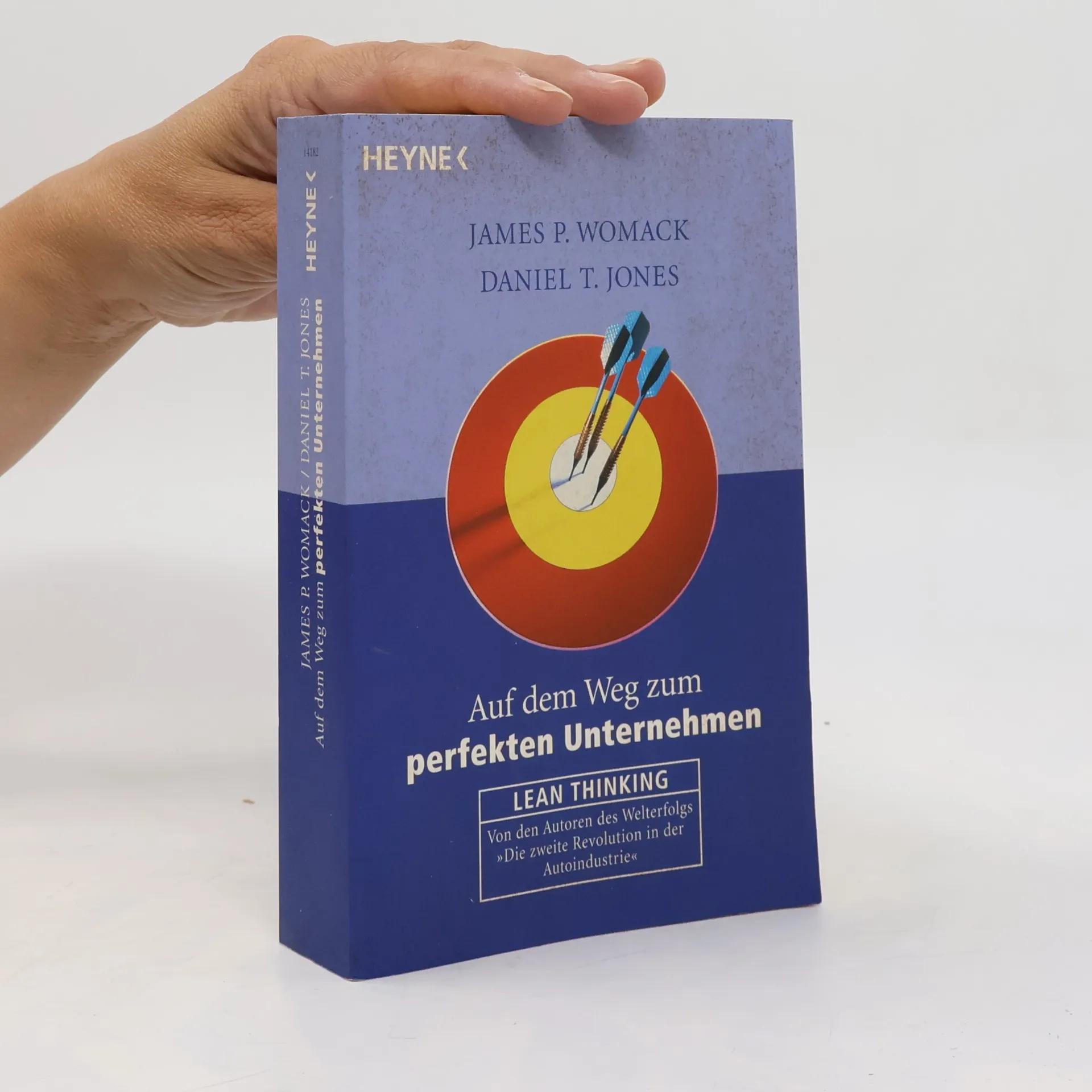
Anhand von fünf Grundprinzipien des Lean Thinking führen die beiden Management-Experten vor, wie schlankes Denken und schlanke Organisation praktisch anwendbar sind.
The life of lean revolves around experiments, with authority stemming from real-world observations at the gemba, rather than rigid interpretations of doctrine. Jim Womack emphasizes that lean is a daily practice of experimentation and knowledge accumulation. Over three decades, he has visited numerous companies to observe how teams create value, sharing his insights with the Lean Community through a monthly letter. In Gemba Walks, he compiles and reorganizes these letters, adding new material for context. The book explores various lean principles and the essential practice of "go see, ask why, and show respect." Womack discusses the need for organizations to prioritize continuous improvement over heroics, explaining how "good" employees can become ineffective in flawed processes. He highlights the importance of empowering workers to identify and solve their own issues, and how short-term lean tool gains can lead to lasting change through effective management. Furthermore, he describes the lean manager's role as one of relentless inquiry into organizational challenges, probing root causes, and leading experiments to identify effective solutions. Womack's personal journey of discovery offers valuable insights into the transformative potential of lean practices.
To remain competitive, leaders must engage all employees to apply lean principles effectively. Strategy deployment, known as hoshin kanri at Toyota, is a proven method for achieving this goal. In his book, Pascal Dennis details the essentials of strategy deployment, addressing two critical questions: What planning system inspires meaningful company-wide continuous improvement? How can we shift mental models that hinder a culture of continuous improvement?
The narrative follows a company and its President and COO, an experienced lean leader brought in to guide Atlas. Although Atlas had implemented basic lean principles, it struggled to connect people with business processes for significant improvement. The introduction of strategy deployment provided a framework to align efforts and direct tools effectively.
The book offers insights into key components of strategy deployment, including defining the company's “True North,” utilizing the PDCA cycle, achieving consensus through “catch-ball,” and embracing A3 thinking. It emphasizes that lean tools, such as value-stream maps, kaizen events, and 5S, serve as means to an end rather than goals themselves. Ultimately, it illustrates how leaders can leverage strategy deployment to unlock the full potential of Lean within their organizations.
Every healthcare system in the United States should master the ideas in this book and practice them every day. If they did, we would see a revolutionary improvement in medical care outcomes and massive cost reductions." - Paul O'Neill, 72nd Secretary of the U.S. Treasury
This book details how ThedaCare Health System in Northeast Wisconsin transformed its culture by redesigning its daily management system. Traditionally, hospitals have depended on individual heroics—relying on standout nurses or physicians to resolve issues—leading to disjointed efforts that compromise safety and quality while driving up costs. This narrative illustrates how ThedaCare moved away from that pattern.
The book outlines how ThedaCare teams developed their management system, featuring stories from doctors, nurses, and administrators. It delves into eight essential components of the lean system: Team Huddles, Managing to Established Standards, Problem Solving, Transparency, Advisory Teams, Scorecards, Standard Work for Leaders, and the Physician's role in a Business Performance System.
Readers will learn to create a continuous improvement system aligned with strategic goals, effectively cascade information throughout the organization, implement daily employee coaching and mentoring, and build standard work for executives in gemba to support ongoing improvement. This practical guide is invaluable for healthcare leaders, bridging a significant gap i
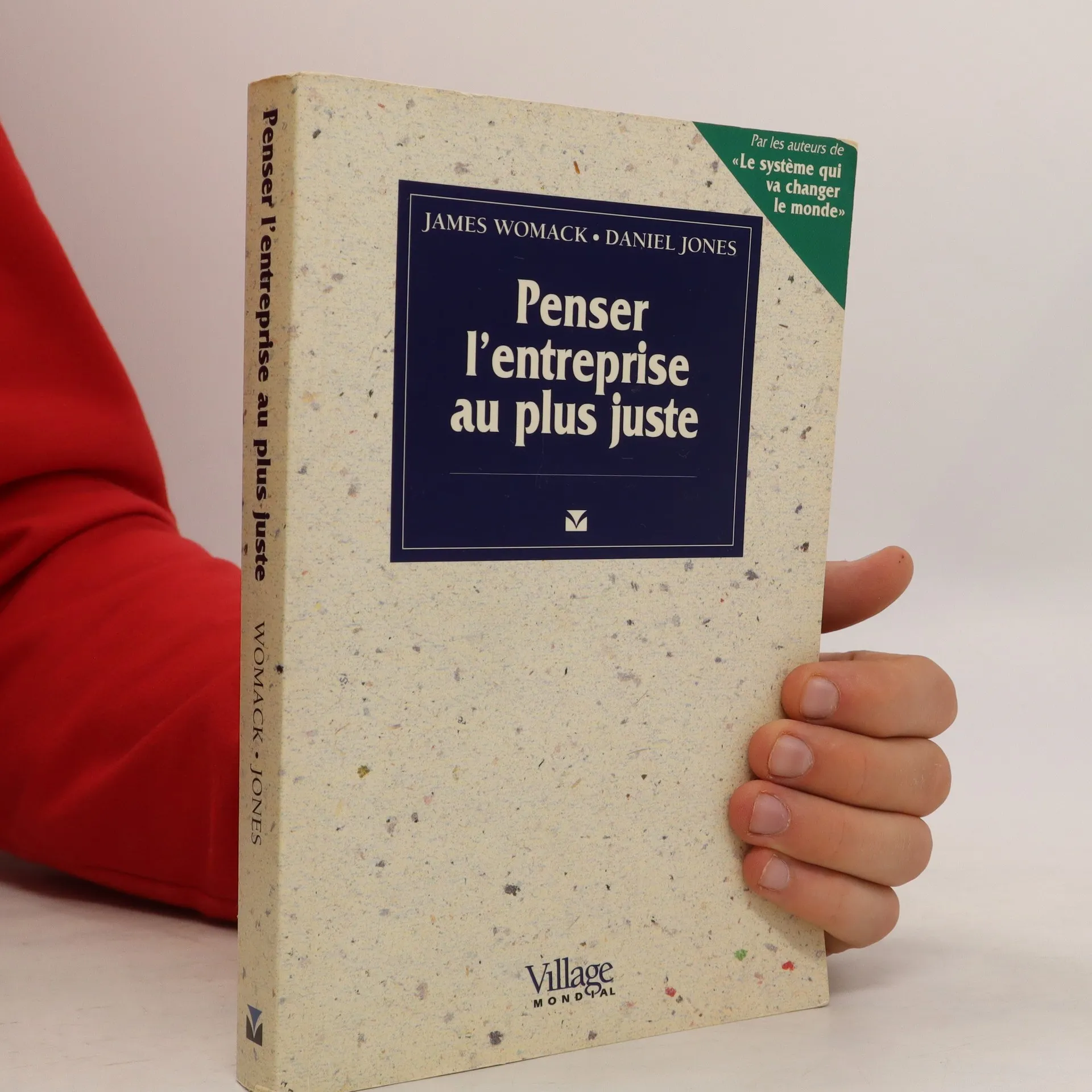
Pour parvenir à une recherche systématique de la valeur pour le client. Pour éliminer les gaspillages tout au long du processus allant de la production à la livraison. Pour repenser l'entreprise en fonction des priorités de la clientèle. S'appuyant sur une expérience approfondie auprès de vingt-cinq entreprises européennes, japonaises et américaines, les auteurs vont plus loin dans le concept de production au plus juste qu'ils avaient révélé aux milieux professionnels internationaux. Ils développent ici leur démarche pour l'appliquer à l'entreprise tout entière, qu'elle soit industrielle ou de services. La méthode mise en œuvre assure un équilibre optimal entre moyens et objectifs, grâce à une priorité renforcée aux clients et à une motivation accrue du personnel. Elle permet de réduire de nombreux gaspillages et d'ouvrir le champ à de nouvelles créations de valeur.