




Bookbot

Dennis Mueller

    13. Juni 1940
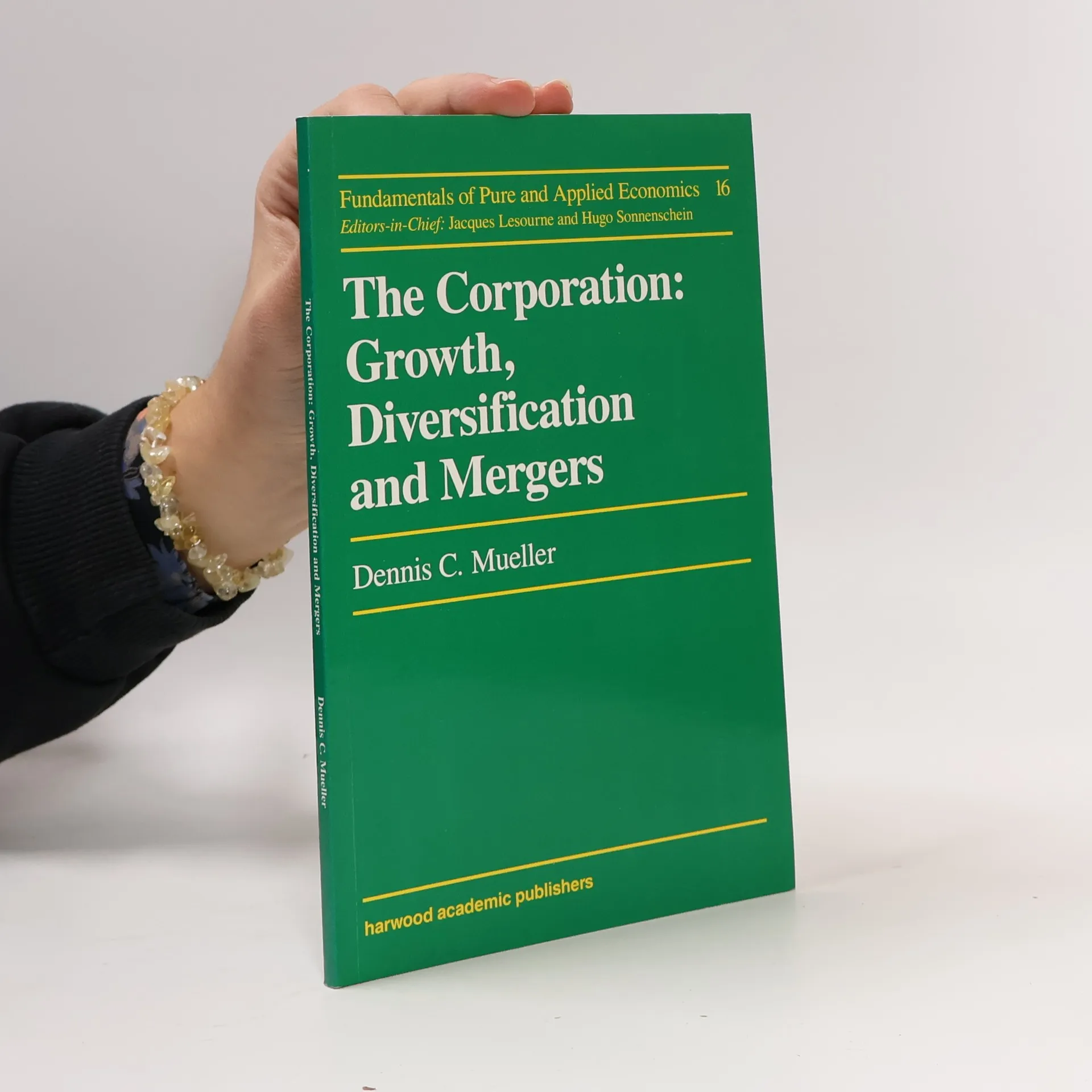
    Fundamentals of Pure and Applied Economics - 16: The Corporation
    Public Choice II
    Profits in the Long Run
    Public choice III
    • Public choice III

      • 788 Seiten
      • 28 Lesestunden

      This book represents a considerable revision and expansion of Public Choice II (1989). As in the previous editions, all of the major topics of public choice are covered. These include: why the state exists, voting rules, federalism, the theory of clubs, two-party and multiparty electoral systems, rent seeking, bureaucracy, interest groups, dictatorship, the size of government, voter participation, and political business cycles. Normative issues in public choice are also examined. The book is suitable for upper level courses in economics dealing with politics, and political science courses emphasizing rational actor models.

      Public choice III2003
      3,8
    • Public Choice II

      A Revised Edition of Public Choice

      • 544 Seiten
      • 20 Lesestunden

      This book discusses the main topics of the public-social choice literature of the past 40 years. Separate chapters discuss various applied public choice questions such as rent seeking, the growth of government, the rise and decline of nations, political business cycles, why people vote, and the nature and extent of redistribution. The book details normative issues in public choice, including Bergson-Samuelson social welfare functions, the Arrow and Sen impossibility theorems, the work of John Rawls, John Harsanyi, James Buchanan, and Gordon Tullock. This book is a major revision of Public Choice, containing eleven new chapters in addition to substantial revision and expansion. Separate sections containing proofs of the most important theorems have been added. It is appropriate for both graduate and undergraduate courses in public choice economics and political theory, or as a supplement in courses dealing with related questions such as public finance.

      Public Choice II1989
    • Profits in the Long Run asks two questions: Are there persistent differences in profitability across firms? If so, what accounts for them? This book answers these questions using data for the 1000 largest US manufacturing firms in 1950 and 1972. It finds that there are persistent differences in profitability and market power across large US companies. Companies with persistently high profits are found to have high market shares and sell differentiated products. Mergers do not result in synergistic increases in profitability, but they do have an averaging effect. Companies with above normal profits have their profits lowered by mergers. Companies with initially below normal profits have them raised. In addition, the influence of other variables on long-run profitability, including risk, sales, diversification, growth and managerial control, is explored. The implications of antitrust policy are likewise addressed.

      Profits in the Long Run1988