


Through a detailed investigation, Sylvia Walby explores the dual nature of women's progress in Europe and America, highlighting both advancements and emerging inequalities. She analyzes shifts in women's employment, education, and political representation while examining the intricate interplay of gender, class, and ethnicity. The book sheds light on how local conditions and global influences shape women's roles in the labor market and their broader social, political, and economic standing today.
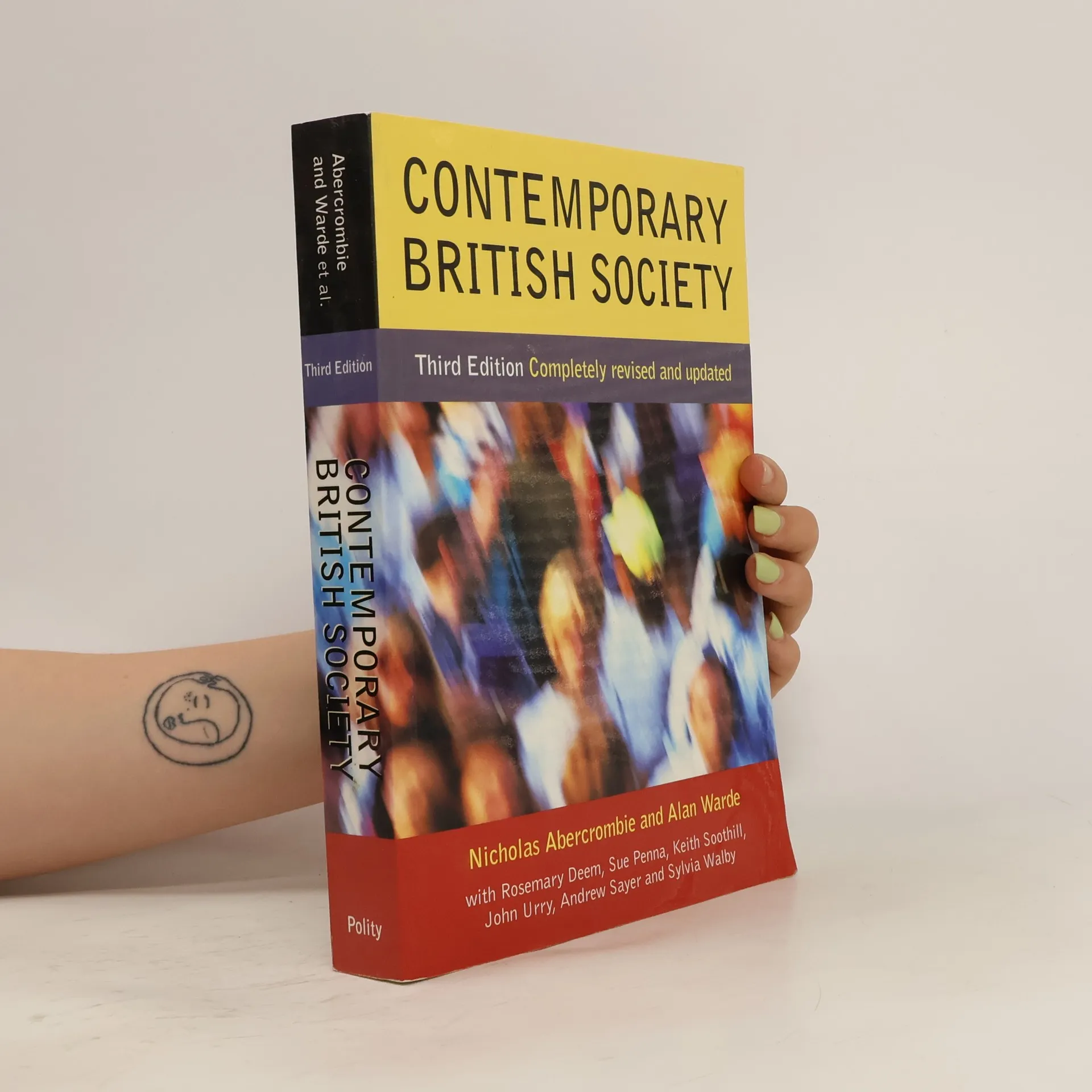
The third edition of this acclaimed textbook offers comprehensive coverage of modern Britain's social structure. Fully revised and updated, it incorporates the latest statistical data and empirical studies, addressing new arguments and debates surrounding British society. The book features separate chapters on key areas of life, including economic organization, employment, inequality, class, gender, ethnicity, family, education, health, media, deviance, and politics. Notably, new chapters on globalization, associations, and leisure have been added. Emphasizing accessibility, the text is written in a jargon-free style with extensive cross-referencing and clear summaries of arguments. Numerous photographs, diagrams, graphs, and cartoons enhance the reader's understanding. This resource is ideal for students of introductory sociology at the 'A' level or in their first year of undergraduate studies, as well as those in related fields like social policy, health, and town planning, who require insight into specific aspects of British society. For more information, please visit the accompanying website.
Offering a groundbreaking theoretical framework, this work by Sylvia Walby delves into the complexities of social inequalities globally. As a prominent figure in social sciences, Walby presents a fresh perspective that is both innovative and essential for understanding the dynamics of inequality. This highly anticipated book promises to contribute significantly to the discourse on social justice and equity.
In "The Future of Feminism," Sylvia Walby argues that feminism is alive and evolving, countering claims of its decline. She presents a thorough review of contemporary feminist movements, highlighting their diverse goals and alliances, and emphasizes the importance of these developments for addressing gender and social inequalities globally.
Sylvia Walby's book explores the rising violence in society, linking it to punitive justice and growing inequalities. She argues for a new understanding of violence and security, emphasizing the need for gendered analyses of state and economy. Using complexity science, Walby offers insights and solutions to address these issues.
'I have always had a soft spot for nature, and admire views and the beauty of a place. I write with all that in mind. I start writing what I see or do, whatever comes to mind. Some of my inspirational poems have developed from these trips. 'I have always got pleasure from making these poems. They give me a lot of fulfilment, which gives me the inspiration to carry on. I hope that my poems will give you as much enjoyment as the things they describe have given me.' Susan Francis
This book offers a theory of trafficking and modern slavery with implications
for policy. Going beyond polarised debates on the sex trade, this book shows
the importance of coercion and the societal complexities that perpetuate
modern slavery.