

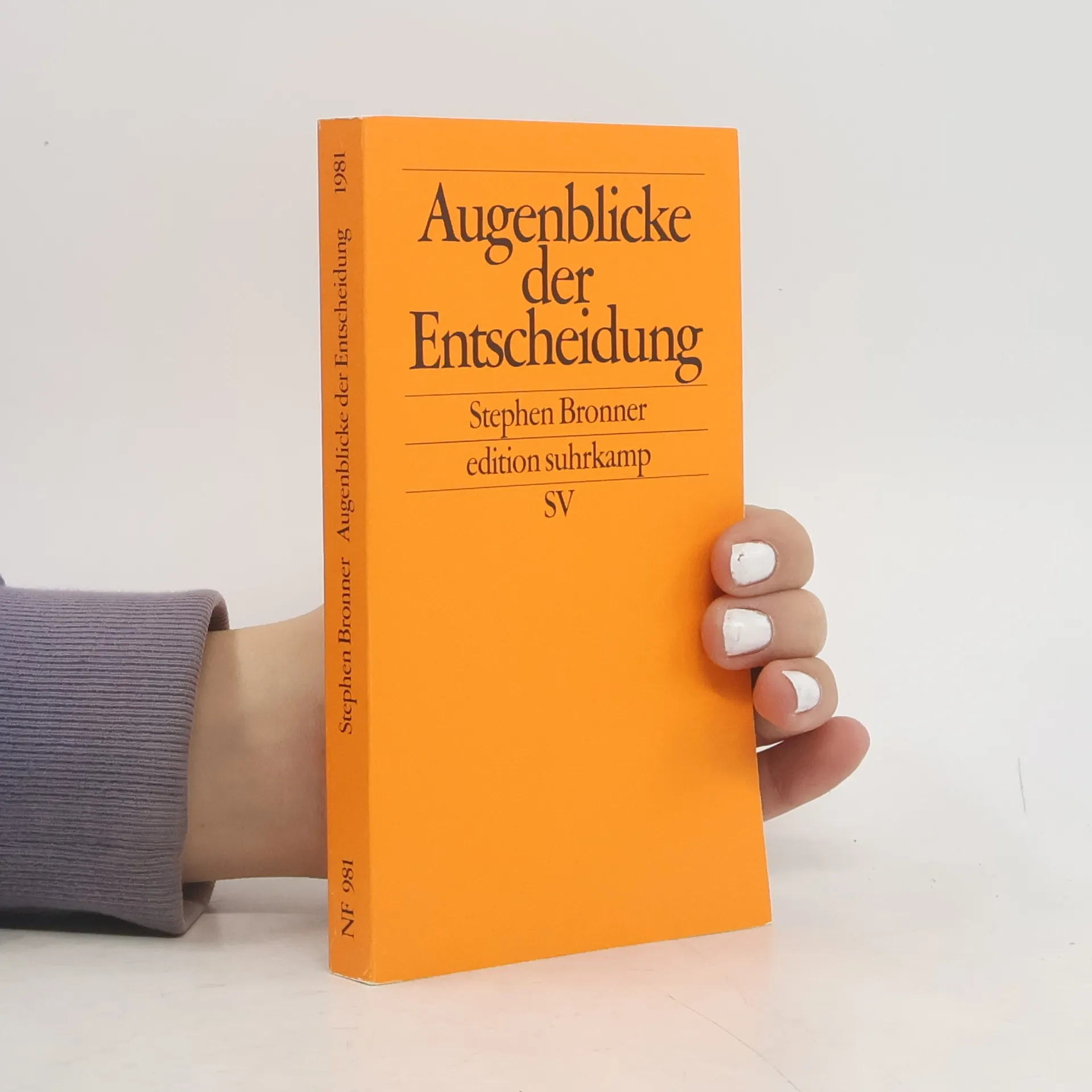
Augenblicke der Entscheidung
- 247 Seiten
- 9 Lesestunden
Stephen Eric Bronner ist ein herausragender Politikwissenschaftler und Philosoph, dessen Werk sich mit der Komplexität globaler Beziehungen und dem tiefgreifenden Studium von Völkermord und Menschenrechten befasst. Seine akademischen Beiträge bieten kritische Einblicke in die Kräfte, die unsere Welt prägen, und machen seine Analyse für das Verständnis zeitgenössischer geopolitischer und ethischer Herausforderungen unerlässlich.


Betr. u. a. den Berner Prozess von 1934/35 (S. 137-142).
Essays that critically evaluate Americas domestic and foreign policy landscape since President Obama took office. President Barack Obama was elected to office on a wave of hope. With his tenure as President of the United States now concluded it is time to take stock of his record at home and abroad. The Bitter Taste of Hope is a collection of essays that critically evaluate Americas domestic landscape on the one hand, particularly new social movements, and the nations foreign policy, particularly in the Middle East, on the other. Stephen Eric Bronner engages a wide-ranging set of political and ideological conflicts that defined the Age of Obama, especially the most pressing international concerns that have developed in accord with an increasingly globalized world. Bronner illuminates not only well-known events like the American involvement in Afghanistan and Iraq, the plight of the Palestinians, and the Arab Spring but also matters about which the general public knows little such as the national hopes of the Circassians, the complexities of Sudan, and the pitiful existence endured by the Coptic Christians of Cairo. Clearly written, lively in its style, interdisciplinary in conception and timely in its message, The Bitter Taste of Hope will undoubtedly prove required reading for activists and academics alike.
This biography of Albert Camus examines his writings in the context of the history of France and Algeria and contemporary Europe and elucidates the thought of Camus in his novels, essays, and dramas in relation to the "existenialist" school of philosophy.
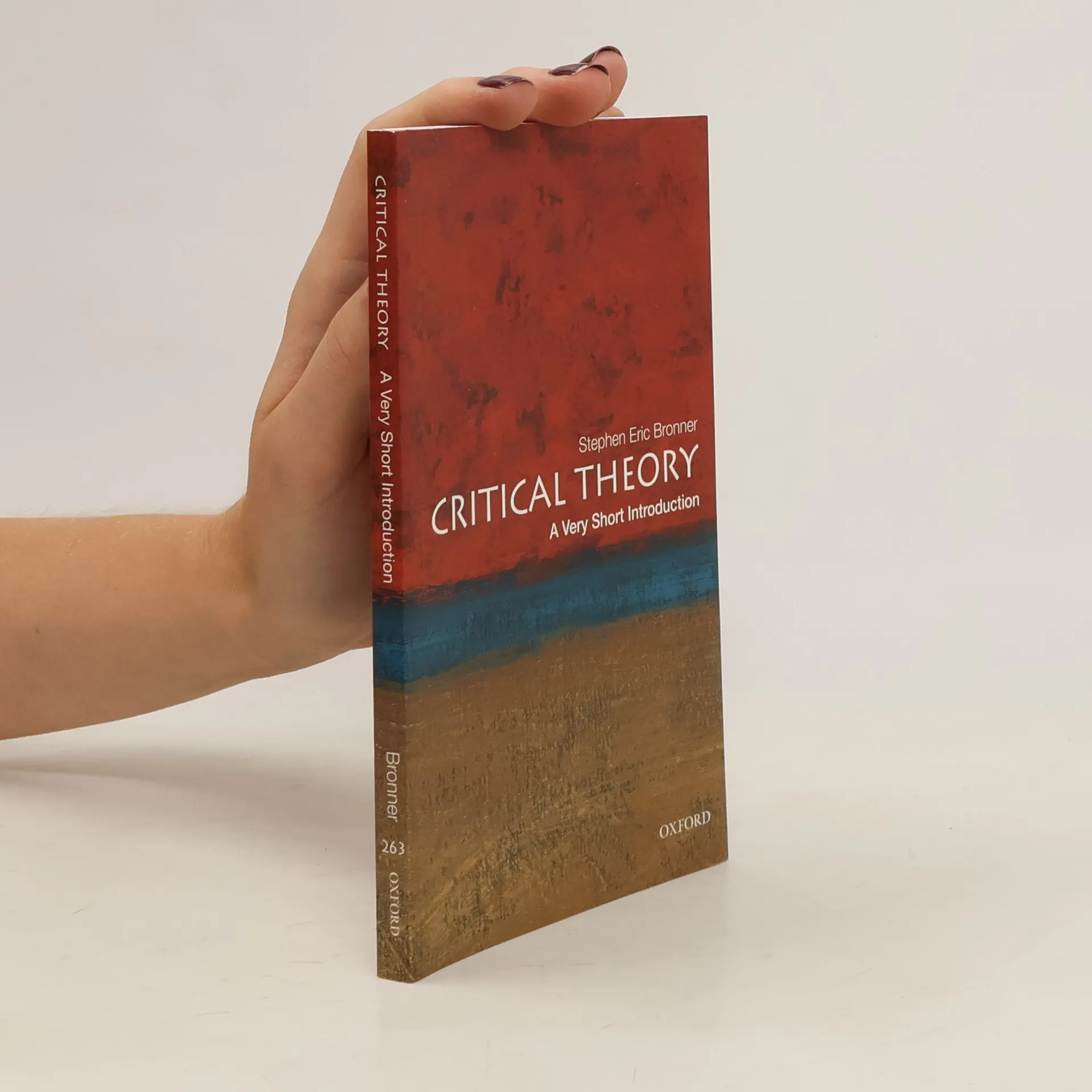
Preface -- Introduction: what is critical theory? -- The frankfurt school -- A matter of method -- Critical theory and modernism -- Alienation and reification -- Enlightened illusions -- The utopian laboratory -- The happy consciousness -- The great refusal -- From resignation to renewal -- Unfinished tasks -- Further reading -- Index
Critical Theory emerged in the 1920s from the work of the Frankfurt School, the circle of German-Jewish academics who sought to diagnose-and, if at all possible, cure-the ills of society, particularly fascism and capitalism. In this book, Stephen Eric Bronner provides sketches of leading representatives of the critical tradition (such as George Lukacs and Ernst Bloch, Theodor Adorno and Walter Benjamin, Herbert Marcuse and Jurgen Habermas) as well as many of its seminal texts and empirical investigations. This Very Short Introduction sheds light on the cluster of concepts and themes that set critical theory apart from its more traditional philosophical competitors. Bronner explains and discusses concepts such as method and agency, alienation and reification, the culture industry and repressive tolerance, non-identity and utopia. He argues for the introduction of new categories and perspectives for illuminating the obstacles to progressive change and focusing upon hidden transformative possibilities. Only a critique of critical theory can render it salient for a new age. That is precisely what this very short introduction provides.
Exploring the concept of "authenticity," this thought-provoking study delves into how individuals define themselves and their interactions within social and political contexts. It raises critical questions about what constitutes genuine identity and the implications for radical political engagement, challenging readers to consider the nuances of authenticity in their lives and communities.
Focusing on the concept of sovereignty, this book challenges common misconceptions and offers a fresh interpretation through the lens of a theory of practice. It delves into the complexities of political life, aiming to reshape the understanding of sovereignty and its implications. By examining the topic from an unconventional perspective, the author invites readers to reconsider the foundational aspects of political authority and its relevance in contemporary discussions.