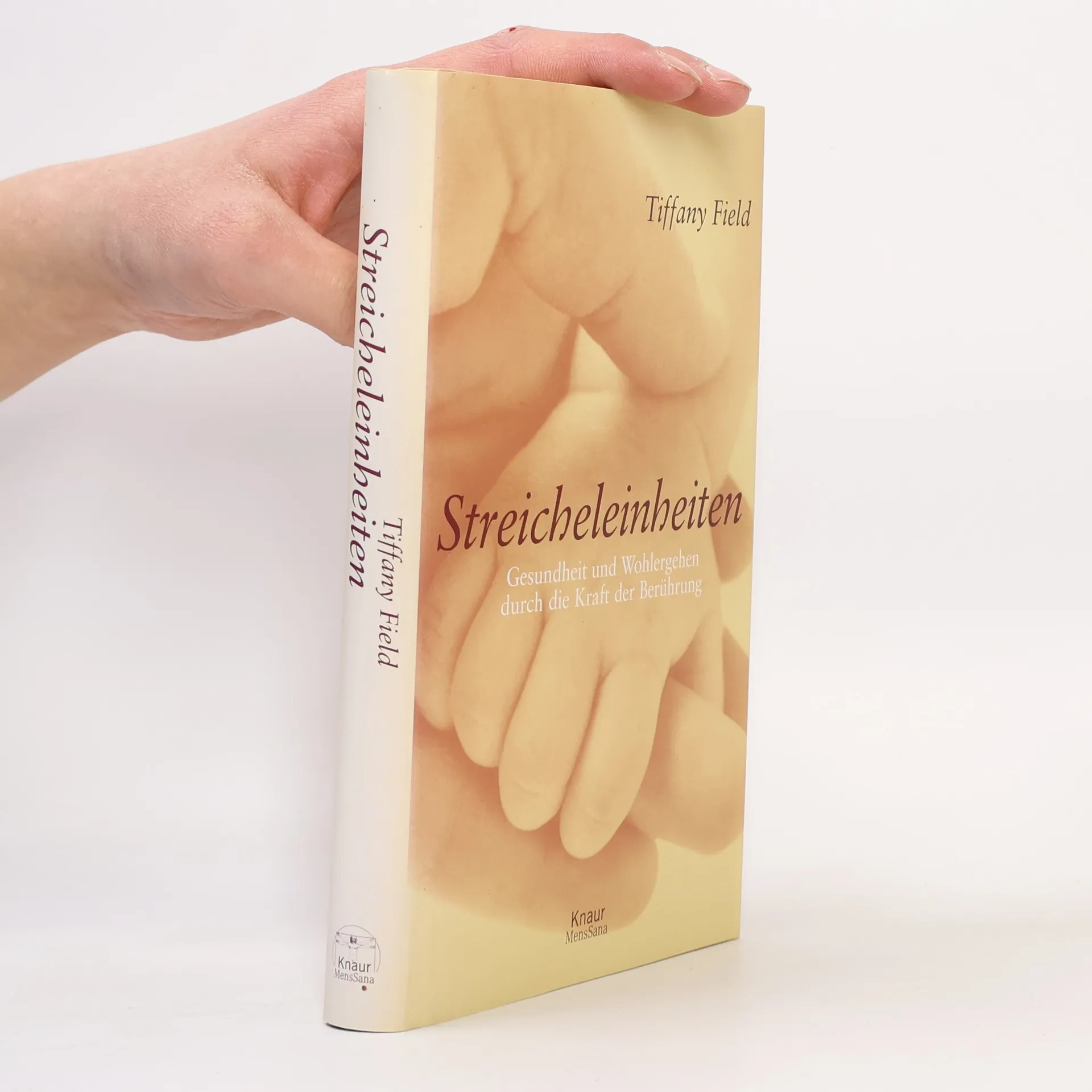
Wissenschaftlich ist es längst erwiesen: Streicheleinheiten und Berührungen sind Grundvoraussetzungen für eine positive geistige und körperliche Entwicklung beim Kleinkind. Auch bei Erwachsenen tragen sie maßgeblich zu Gesundheit, innerer Gelassenheit und Lebensmut bei. Dennoch leidet unsere heutige Gesellschaft an einer nie gekannten Berührungsarmut. Dieses Standardwerk zeigt, wie positiv sich Berüh- rungen auf unser Körpergefühl auswirken. Tiffany Field stellt effektive Übungen vor, mit denen wir unsere Gesundheit selbst in die Hand nehmen.
Until very recently, almost all books on infancy assumed basic infant immaturity. Remarkably, as Tiffany Field shows in her survey of recent research, investigators are discovering that infants possess sophisticated perceptual skills, such as hearing, even before birth. Newborns can sense touch and motion, discriminate tastes and smells, recognize their mother's voice, and imitate facial expressions. In fact, the newborn is an active learner, looking, reaching, sucking, and grimacing from its first moments in its new environment. Field provides a readable account of our current knowledge about infant development. She looks at the emergence of sensorimotor and cognitive skills, which play an important role in social and emotional development in the months following birth as the infant experiences the world. In a chapter with important implications for working mothers, Field reviews the literature on infants in nursery and daycare programs, countering negative assessments with studies that show an enhancement of infants' social interaction in good care settings. In the concluding chapter, she pays particular attention to infants at risk because of disease (including AIDS), maternal drug use, prematurity, or maternal depression, and describes possible intervention strategies. The bibliography provides an invaluable summary of significant primary reference papers for professional researchers, students, and parents.