

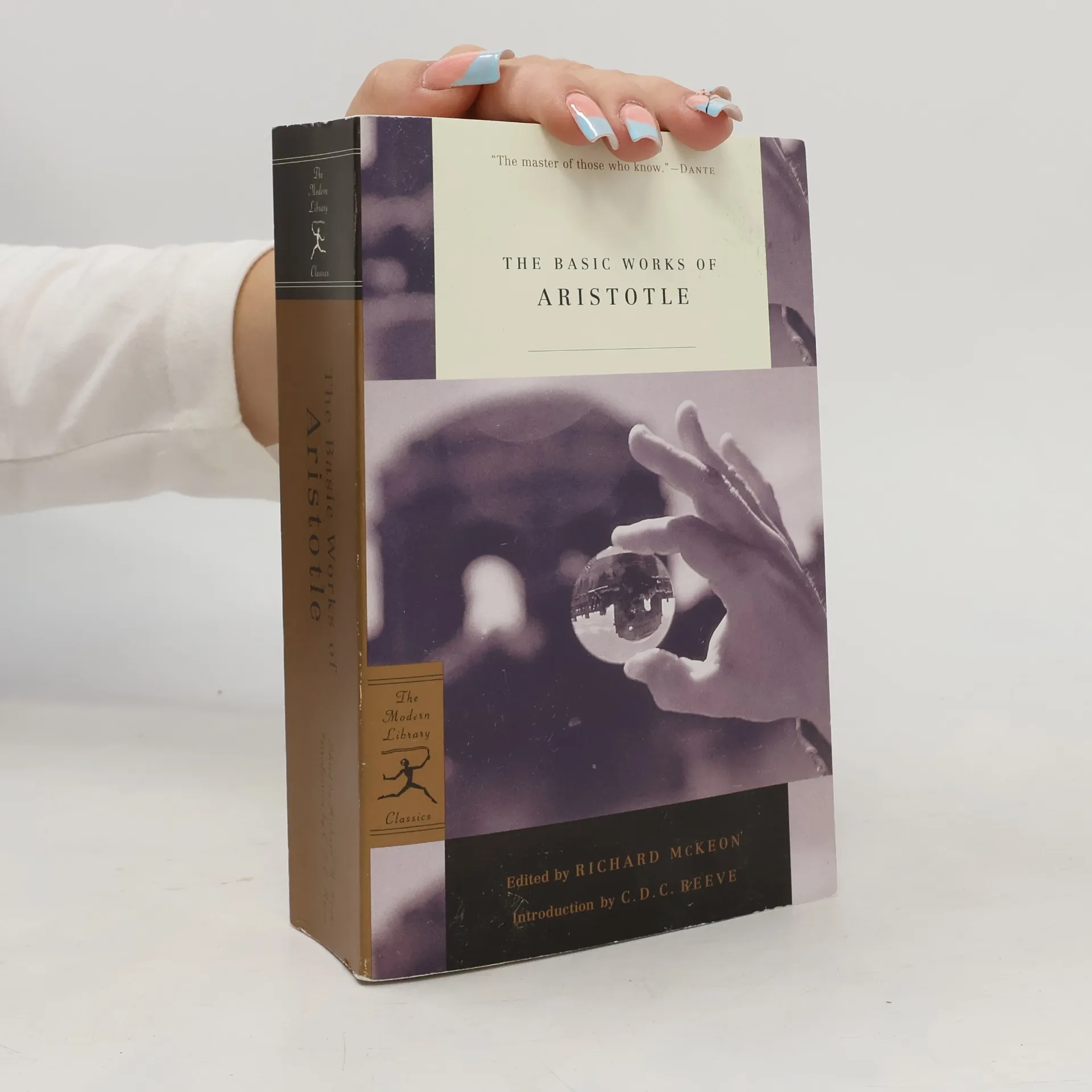
Edited by Richard McKeon, with an introduction by C.D.C. Reeve Preserved by Arabic mathematicians and canonized by Christian scholars, Aristotle’s works have shaped Western thought, science, and religion for nearly two thousand years. Richard McKeon’s The Basic Works of Aristotle—constituted out of the definitive Oxford translation and in print as a Random House hardcover for sixty years—has long been considered the best available one-volume Aristotle. Appearing in paperback at long last, this edition includes selections from the Organon, On the Heavens, The Short Physical Treatises, Rhetoric, among others, and On the Soul, On Generation and Corruption, Physics, Metaphysics, Nicomachean Ethics, Politics, and Poetics in their entirety.
C. D. C. Reeve Bücher
C. D. C. Reeve ist ein Philosoph, dessen Werk tief in die altgriechische Tradition eintaucht, mit einem besonderen Fokus auf Platon und Aristoteles. Seine wissenschaftlichen Interessen sind breit gefächert und umfassen die allgemeine Philosophie sowie die Philosophie von Sex und Liebe sowie Betrachtungen zum Film. Reeves Beiträge umfassen auch bedeutende Übersetzungen klassischer griechischer Texte. Er bringt einen strengen analytischen Ansatz mit, um grundlegende philosophische Ideen zu verstehen.


Rhetorik
- 255 Seiten
- 9 Lesestunden
Die „Rhetorik“ des Aristoteles ist das bedeutendste antike Fachbuch zur Redelehre. Platon hatte die Redekunst (der Sophisten) als „unmoralisch“ bekämpft, Aristoteles rehabilitiert sie und weist ihr eine Mittelstellung zwischen Dialektik und praktischer Philosophie zu. Aristoteles, der Rhetorik im Spannungsfeld der Trias Sache - Redner - Hörer sieht, präsentiert systematisch das gesamte Arsenal der Redetypen, Redetechniken und Aufgaben des Redners. Vermittelt über Cicero und Quintilian ist dieses Buch bis weit in die Neuzeit hinein verbindlich geblieben.
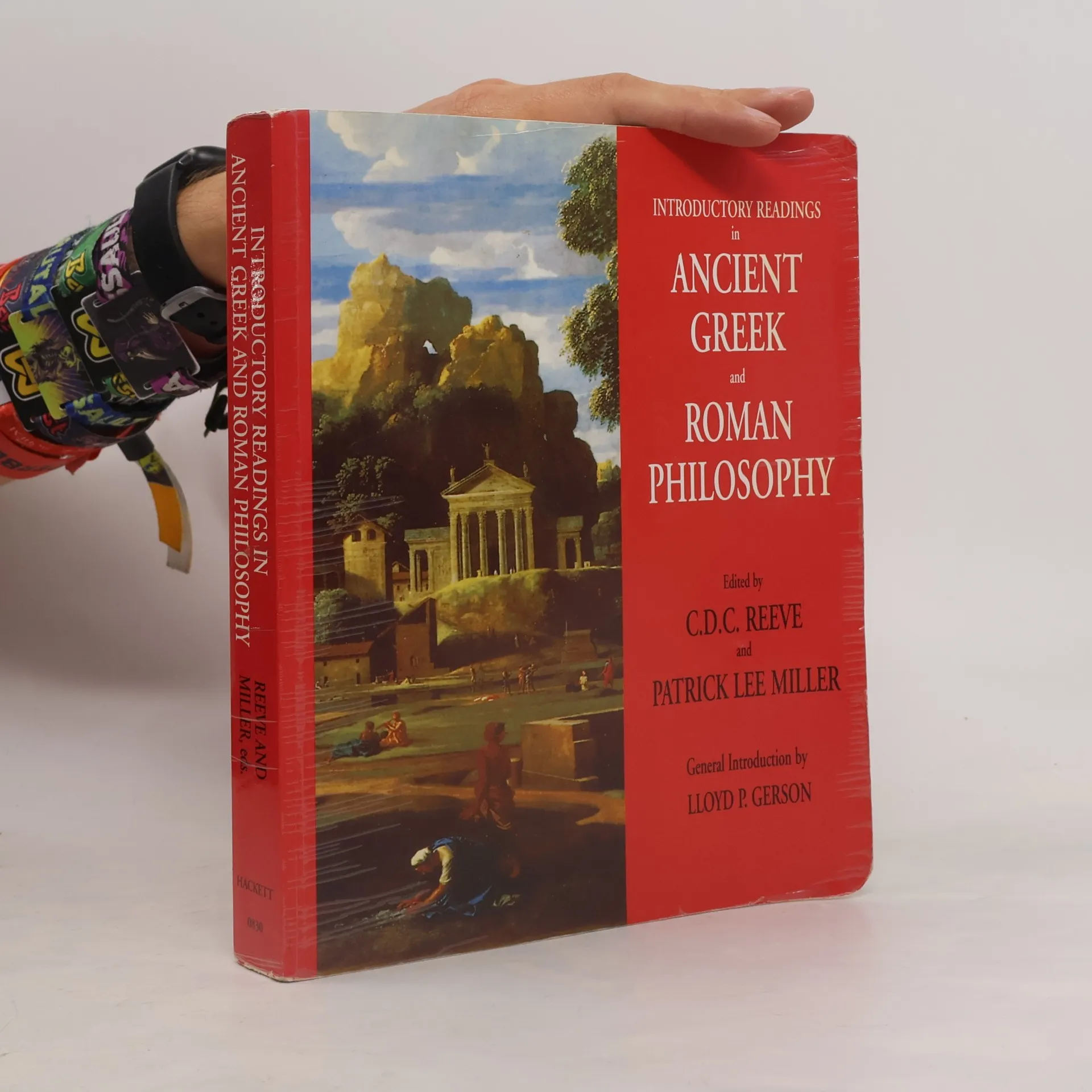
Introductory Readings in Ancient Greek and Roman Philosophy
- 459 Seiten
- 17 Lesestunden
A concise anthology for the ancient philosophy survey that ranges from the Presocratics through the Neoplatonists, <i>Introductory Readings in Ancient Greek and Roman Philosophy</i> features essential selections from C.D.C. Reeve's 2004 translation of Plato's <i>Republic</i>, which casts reported speech into direct dialogue, as well other translations known for their accuracy and accessibility. Introductions and notes are also included.
Introductory Readings in Ancient Greek and Roman Philosophy
- 536 Seiten
- 19 Lesestunden
This concise anthology of primary sources designed for use in an ancient philosophy survey ranges from the Presocratics to Plato, Aristotle, the Hellenistic philosophers, and the Neoplatonists. The Second Edition features an amplified selection of Presocratic fragments in newly revised translations by Richard D. McKirahan. Also included is an expansion of the Hellenistic unit, featuring new selections from Lucretius and Sextus Empiricus as well as a new translation, by Peter J. Anderson, of most of Seneca's De Providentia . The selections from Plotinus have also been expanded.
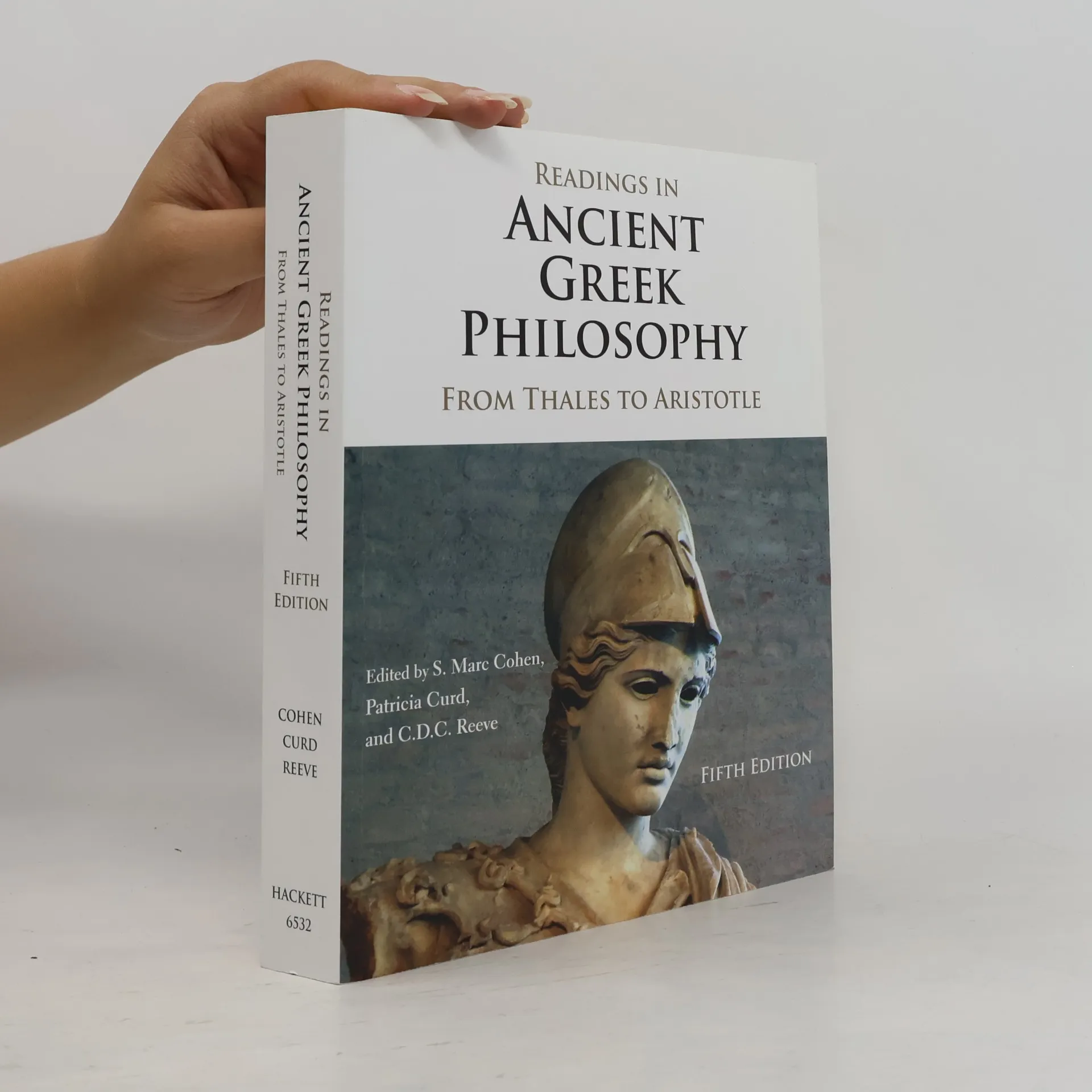
Readings in Ancient Greek Philosophy
From Thales to Aristotle - Fifth Edition
- 736 Seiten
- 26 Lesestunden
Soon after its publication, Readings in Ancient Greek Philosophy was hailed as the favorite to become "the 'standard' text for survey courses in ancient philosophy." * More than twenty years later that prediction has been borne out: Readings in Ancient Greek Philosophy still stands as the leading anthology of its kind. It is now stronger than ever: The Fifth Edition of Readings in Ancient Greek Philosophy features a completely revised Aristotle unit, with new translations, as well as a newly revised glossary. The Plato unit offers new translations of the Meno and Republic . In the latter, indirect dialogue is cast into direct dialogue for greater readability. The Presocratics unit has been re-edited and streamlined, and the pages of every unit have been completely reset. * APA Newsletter for Teaching Philosophy
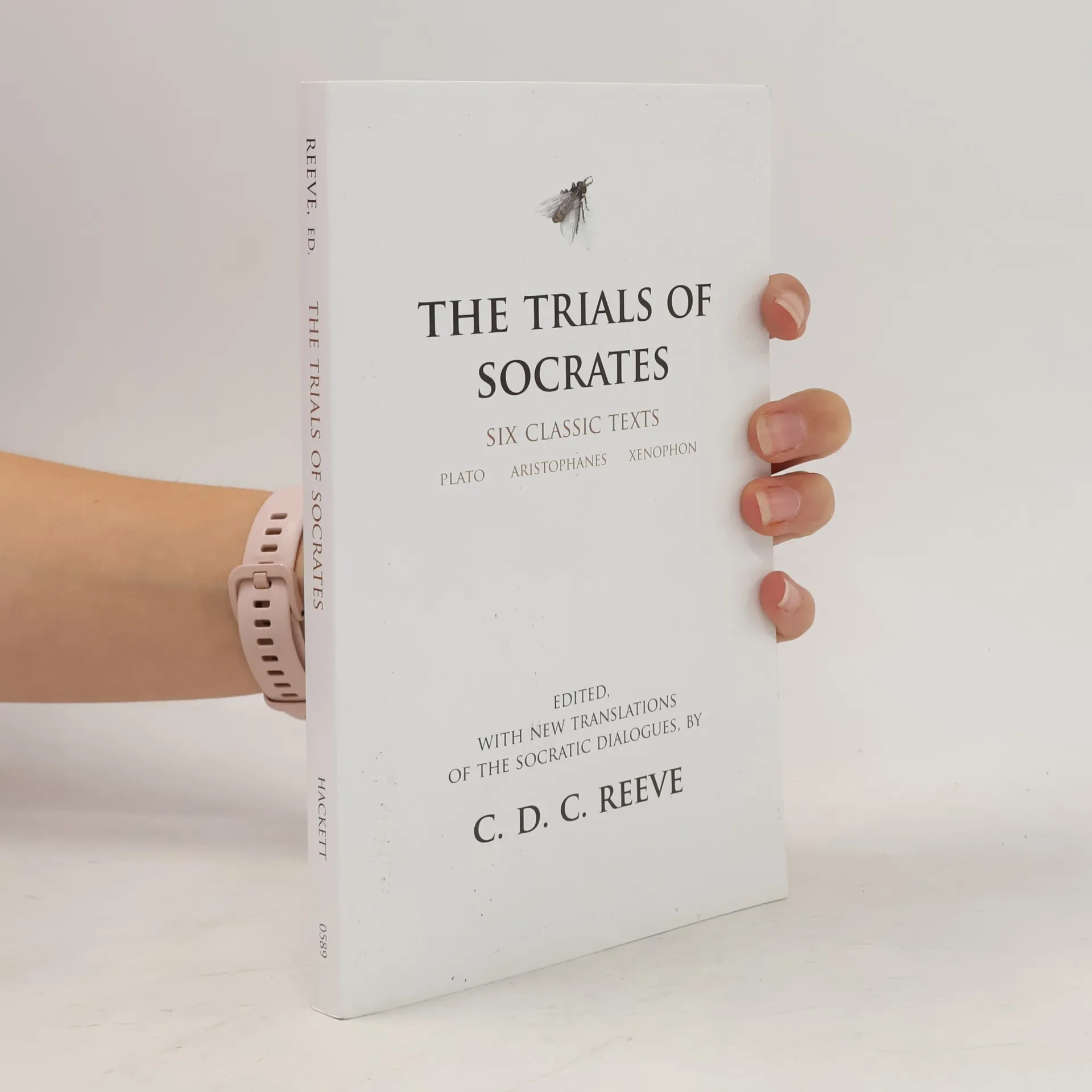
The Trials of Socrates
Six Classic Texts - Edited, With New Translations of the Socratic Dialogues
- 192 Seiten
- 7 Lesestunden
Although present-day (like ancient Greek) opinion on the real Socrates diverges widely, six classic texts that any informed judgment of him must take into account appear together, for the first time, in this volume.