William Gardner Smith war ein amerikanischer Journalist, Romanautor und Herausgeber, dessen Werk der Tradition schwarzer sozialkritischer Romane der 1940er und 1950er Jahre zuzuordnen ist. Sein dritter Roman gilt als wegweisendes Werk des militanten Protestgenres. Smiths letzter veröffentlichter Roman bot eine seltene literarische Darstellung des Pariser Massakers von 1961 und blieb bis in die frühen 1990er Jahre eine der wenigen Darstellungen dieses Ereignisses. Seine Schriften setzen sich mit bedeutenden sozialen und politischen Themen auseinander und festigen seine Position als wichtige Stimme seiner Zeit.
An Athenian general of the fifth century B.C. chronicles the disastrous 27-year conflict between Athens and Sparta. Thucydides traces the conflict's roots and provides detailed, knowledgeable analyses of battles and the political atmosphere.
A roman à clef about racism, identity, and bohemian living amidst the tensions and violence of Algerian War-era France, and one of the earliest published accounts of the Paris massacre of 1961. As a teenager, Simeon Brown lost an eye in a racist attack, and this young African American journalist has lived in his native Philadelphia in a state of agonizing tension ever since. After a violent encounter with white sailors, Simeon makes up his mind to move to Paris, known as a safe haven for black artists and intellectuals, and before long he is under the spell of the City of Light, where he can do as he likes and go where he pleases without fear. Through Babe, another black American émigré, he makes new friends, and soon he has fallen in love with a Polish actress who is a concentration camp survivor. At the same time, however, Simeon begins to suspect that Paris is hardly the racial wonderland he imagined: The French government is struggling to suppress the revolution in Algeria, and Algerians are regularly stopped and searched, beaten, and arrested by the French police, while much worse is to come, it will turn out, in response to the protest march of October 1961. Through his friendship with Hossein, an Algerian radical, Simeon realizes that he can no longer remain a passive spectator to French injustice. He must decide where his true loyalties lie.
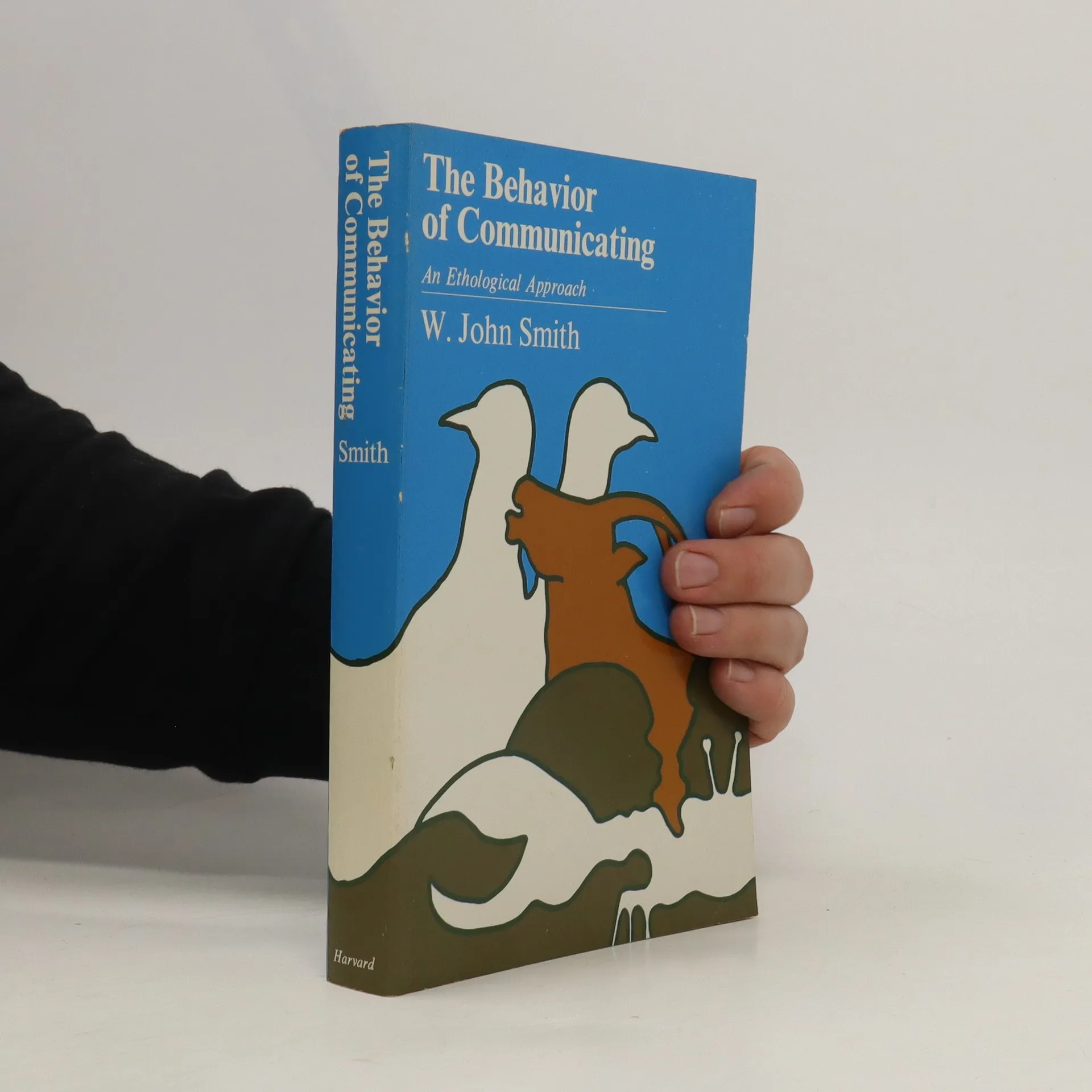
W. John Smith enlarges ethology's perspective on communication and takes it in new directions. Traditionally, ethnological analysis has focused on the motivational states of displaying animals. The Behavior of Communicating emphasizes messages. After developing the concept of messages and discussing their forms, Smith turns to the evolution of display behavior. He then revises the traditional ethnological concept of displays and in a final chapter develops the further concept of formalized interactions.
Something wonderful happens when a hug is shared. You express love, forgiveness, acceptance, and encouragement that flows from your heart. Hugs generate warmth and affection, and nurture lasting bonds of friendship. Within the pages of this very special book, you'll find hug after hug filled with inspiration and refreshment for yourself and the ones you love. Warm stories by the beloved storyteller John William Smith, personalized Scriptures by LeAnn Weiss, uplifting quotes by various well-known people, and inspirational messages by an "anonymous disciple" come together to form enduring hugs that warm the heart.
The author explores the deep divisions within the country, questioning the reliability of those who provide information about America's state. They argue that the government has failed its citizens by permitting individuals with hidden agendas to manipulate public opinion, thereby undermining the principles of democracy and free enterprise. This critical examination seeks to uncover the truth behind societal fractures and the impact of commercial interests on democratic values.
The narrative delves into the final two years of Donald Trump's presidency, focusing on the dynamics of power following the midterm elections. With the House of Representatives no longer under his control, Trump seeks to manipulate the Judiciary by aligning with Attorney General William Barr, who supports his agenda by dismissing the Mueller investigation. The book highlights Trump's increasing boldness, aided by compliant Republicans in Congress, as he attempts to navigate and exert influence over the government during a tumultuous period.
This classic work of Russian fiction by Leo Tolstoy tells the story of a nobleman who has lost the ideals of his youth. He finds himself as a jury member in a case involving a woman he wronged, accused of murder. First published in 1899, this was Tolstoy's last novel and serves as a critique of the injustices of man-made laws and the hypocrisy of the institutionalized church. The narrative also delves into Georgism, an economic philosophy Tolstoy strongly supported later in life. Originally serialized in the magazine Niva to fund the resettlement of the Doukhobors, the story follows Dmitri Ivanovich Nekhlyudov, who seeks redemption for a past sin involving a maid, leading to her downfall into prostitution. A decade later, he unwittingly sentences her, Maslova, to Siberian prison for murdering a client who abused her. The novel chronicles Nekhlyudov's efforts to aid her while grappling with his moral dilemmas. His visits to the prison expose him to the harsh realities of suffering and injustice, revealing a world of cruelty hidden beneath his aristocratic existence. Through harrowing tales of the imprisoned, the narrative builds to a feverish intensity, highlighting the depths of human despair and the search for redemption.
This reprint captures the essence of a classic work originally published in 1856, preserving its historical significance and literary style. Readers can expect an authentic experience of the themes, characters, and narrative techniques that defined the era, making it a valuable addition to any collection of historical literature. The reissue aims to introduce new audiences to the timeless insights and storytelling of the original text.
This book is a reproduction of a historical work, presented in large print to enhance accessibility for readers with impaired vision. Published by Megali, a company dedicated to making historical texts more available, it aims to provide a clearer reading experience while preserving the original content.
Originally published in 1857, this reprint preserves the historical significance and cultural context of the time. It offers readers a glimpse into the themes and narratives that shaped the era, providing an authentic experience of the literature from that period. The text captures the essence of its original publication, making it a valuable addition for those interested in classic literature and historical perspectives.
Stories, Sayings, and Scriptures to Encourage and Inspire
128 Seiten
5 Lesestunden
From the back of the dust jacket: Someone you know needs a hug today . . . it may even be you! Something wonderful happens when you share a hug with your Dad. Your hugs express all the love, respect, gratitude, and devotion you feel in your heart. Dads need to be hugged -- often -- so they'll know how very much they're appreciated. In the pages of this very special book, you'll find a great many hugs that express your warmest feelings of love and admiration. Each part of this collection is chosen to inspire and encourage Dad in his life. Fascinating stories by the beloved storyteller John William Smith, personalized scriptures by LeAnn Weiss, uplifting quotes by various well-known people, and powerful messages by an "anonymous disciple" come together to form enduring hugs that will warm Dad's heart. Do you know a dad who needs a hug today? Share a hug that will bless him for a lifetime!