

“Above all, Romans is a letter about Spirit-enabled participation and transformation in Christ and his story, and thus in the mission of God in the world.” This commentary engages the letter to the Romans as Christian scripture and highlights the Pauline themes for which Michael Gorman is best known—participation and transformation, cruciformity and new life, peace and justice, community and mission. With extensive introductions both to the apostle Paul and to the letter itself, Gorman offers background information on Paul’s first-century context before proceeding into the rich theological landscape of the biblical text. In line with Paul’s focus on Christian living, Gorman interprets Romans at a consistently practical level, highlighting the letter’s significance for Christian theology, daily life, and pastoral ministry. Questions for reflection and sidebars on important concepts make this especially useful for those preparing to preach or teach from Romans—the “epistle of life,” as Gorman calls it, for its extraordinary promise that, through faith, we might walk in newness of life with Christ.
Michael J. Gorman Bücher


Reading Revelation Responsibly
- 232 Seiten
- 9 Lesestunden
Focusing on the interpretation of Revelation, Michael Gorman provides a thoughtful guide for those grappling with its complexities. He emphasizes the importance of understanding the text within its historical and literary contexts, linking it to broader Christian doctrine and practice. Gorman argues that Revelation should be viewed as a framework for worship and mission rather than merely an end-times script, highlighting its potential to positively influence faith and community while countering prevailing cultural narratives.
Abide and Go
- 258 Seiten
- 10 Lesestunden
Exploring the Gospel of John, Michael Gorman presents a compelling argument for its profound spirituality and missional focus, countering interpretations that see it as sectarian. He emphasizes the concept of "Abide and go" from John 15, illustrating how disciples engage in divine love and life through Jesus's ministry, death, and resurrection. Gorman introduces the idea of missional theosis, highlighting that as God's children, believers grow in likeness to Christ and participate in God's life-giving mission, fostering a broader understanding of Christian mission.
Apostle of the Crucified Lord
- 731 Seiten
- 26 Lesestunden
THIS COMPREHENSIVE, WIDELY USED TEXT by Michael Gorman presents a theologically focused, historically grounded interpretation of the apostle Paul and raises significant questions for engaging Paul today. After providing substantial background information on Paul's world, career, letters, gospel, spirituality, and theology, Gorman covers in full detail each of the thirteen Pauline epistles. Enhancing the text are questions for reflection and discussion at the end of each chapter as well as numerous photos, maps, and tables throughout. The new introduction in this second edition helpfully situates the book within current approaches to Paul. Gorman also brings the conversation up-to-date with major recent developments in Pauline studies and devotes greater attention to themes of participation, transformation, resurrection, justice, and peace.
During the nineteenth century a powerful and unified Germany emerged from a collection of over 350 independent states and cities. Gorman uses a wide range of primary sources to look at the role of Bismarck in this transformation. This successful volume in the Cambridge Topics in History series is reprinted with a full colour cover.
The Death of the Messiah and the Birth of the New Covenant
- 292 Seiten
- 11 Lesestunden
Exploring the concept of atonement, Michael Gorman critiques existing models for neglecting the transformative purpose behind Jesus' death. He posits that the "new-covenant" model, potentially the earliest in Christian thought, emphasizes the creation of a Spirit-filled community rather than merely the mechanics of atonement. Gorman highlights the coherence of New Testament metaphors, presenting Jesus' death as the fulfillment of prophetic promises and the establishment of a covenant of peace, thereby reshaping the understanding of Christian community and identity.
Inhabiting the Cruciform God
- 194 Seiten
- 7 Lesestunden
In this groundbreaking study of Paul's soteriology, Michael Gorman builds on his influential Paul's Narrative Spirituality of the Cross to argue that cruciformity is, at its heart, theoformity -- what the Christian tradition has called theosis or participation in the life of God. "A richly synthetic reading of Paul. . . . Gorman deftly integrates the results of recent debates about Pauline theology into a powerful constructive account that overcomes unfruitful dichotomies and transcends recent controversies between the 'New Perspective on Paul' and its traditionalist critics. Gorman's important book points the way forward for understanding the nonviolent, world- transforming character of Paul's gospel." -- Richard B. Hays, Duke Divinity School
A world-renowned senior scholar presents the essential elements of sound exegetical method in a succinct and incisive way. Now updated and revised.
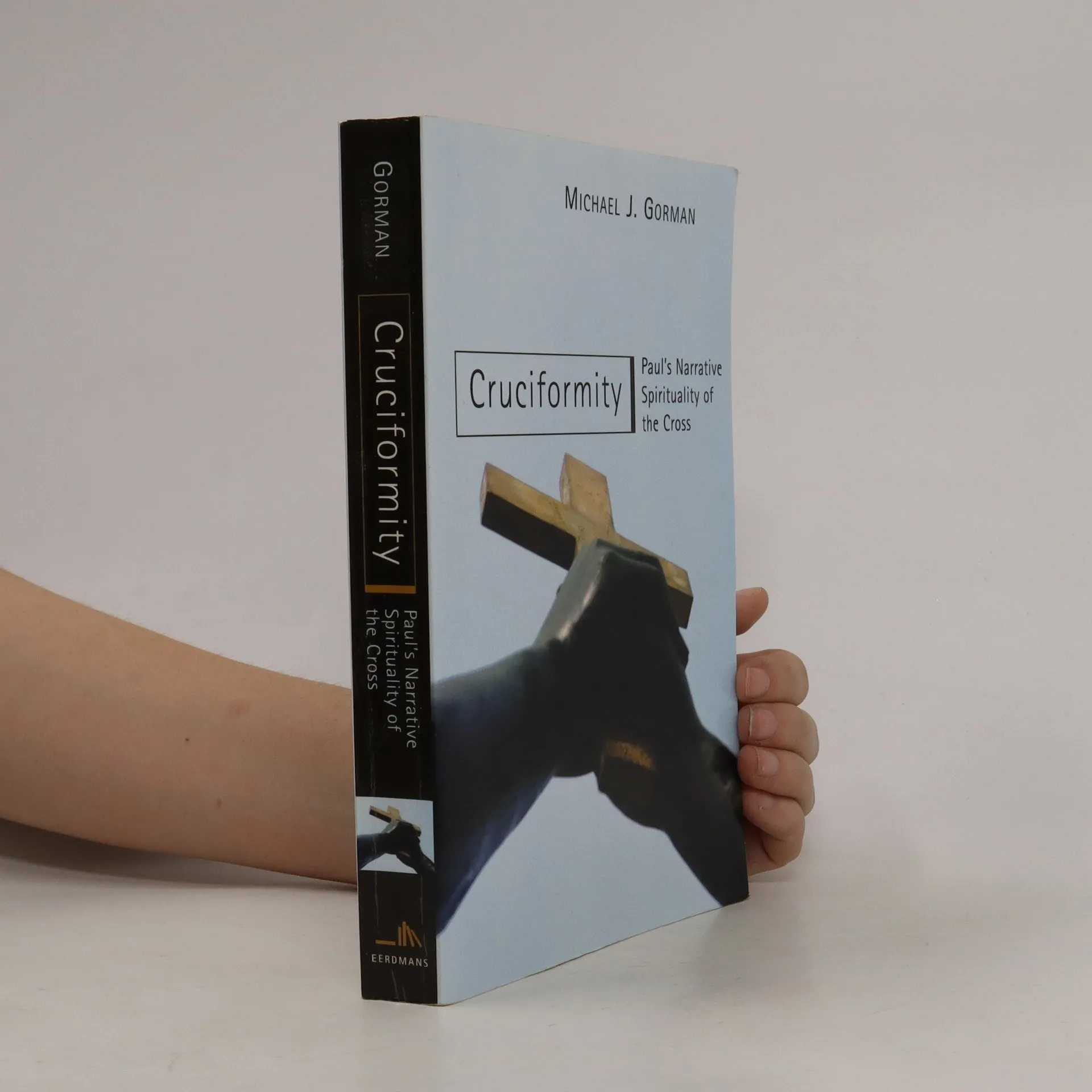
Cruciformity
- 440 Seiten
- 16 Lesestunden
Most studies of Paul concentrate solely on his theology. This book breaks new ground by focusing on the source and nature of Paul's spirituality. Taking his cue from Paul's express desire to "know nothing but Christ crucified," Michael Gorman shows how Paul's personal experience of God constantly intersects with the story of the cross, an event that both reveals the cruciform character of God and shapes believers into a community of "cruciformity" (conformity to the crucified Christ). Expertly combining biblical studies and theological reflection, this noteworthy volume presents a model of the Christian life marked by faith, love, power, and hope.
Abortion and the Early Church
- 120 Seiten
- 5 Lesestunden
Exploring the historical context of abortion, this book delves into its significance from ancient times to the twentieth century. It examines the early Christian church's response to abortion amidst Greco-Roman cultural influences, raising critical questions about morality, legality, and societal implications. The text investigates how church leaders grappled with defining abortion and its ethical ramifications, providing insight into the evolving perspectives on this complex issue throughout history.
