

U. G. ist eine Art Antichrist, die Reinkarnation Nietzsches auf dem spirituellen Parkett. Es gibt nur die Vergangenheit in Tätigkeit und diese Bewegung erschafft die Illusion von Gegenwart und Zukunft. Sie mögen das, was ich hier sage, logisch oder unlogisch finden, und Sie mögen es akzeptieren oder ablehnen. Aber es wird in jedem Fall die Vergangenheit sein, die das tut, denn nur sie ist in Ihnen wirksam. Die Vergangenheit hat diese Ziele projiziert – Gott, Erleuchtung, Seelenfrieden, was auch immer – und sie in die Zukunft verlegt, außer Reichweite. Alles, wofür Sie stehen, woran Sie glauben, was Sie erfahren und anstreben, ist das Ergebnis des Denkens. Und das Denken ist deshalb destruktiv, weil es nichts weiter als ein Schutzmechanismus ist, der darauf programmiert ist, mit allen Mitteln seine eigenen Interessen zu schützen. Die Kultur hat den Organismus daran gehindert, in seiner ganzen Einzigartigkeit zu erblühen. Sie hat etwas Falsches vor ihn hingestellt – den idealen Menschen. Das Ganze ist aus dem entzweienden Bewusstsein der Menschheit geboren. Es hat uns nichts als Gewalt gebracht.
U. G. Krishnamurti Bücher
U.G. Krishnamurti war ein indischer Denker, der die Existenz von Erleuchtung und allen Denksystemen, die sich auf die ultimative Wahrheit beziehen, verneinte. Er betonte die Unmöglichkeit und Sinnlosigkeit jeglicher menschlicher Veränderung, da der Körper und seine Handlungen bereits vollkommen seien. Er lehnte den individuellen Geist ab und sprach stattdessen von einem „Weltgeist“, aus dem das menschliche Gehirn wie eine Antenne Gedanken aufnimmt. Er postulierte, dass menschliche Erfahrung das Ergebnis dieses Denkprozesses sei, während der natürliche Zustand des Körpers, in dem die Chakren reaktiviert werden und die Zirbeldrüse die Kontrolle übernimmt, frei von Gedanken sei.

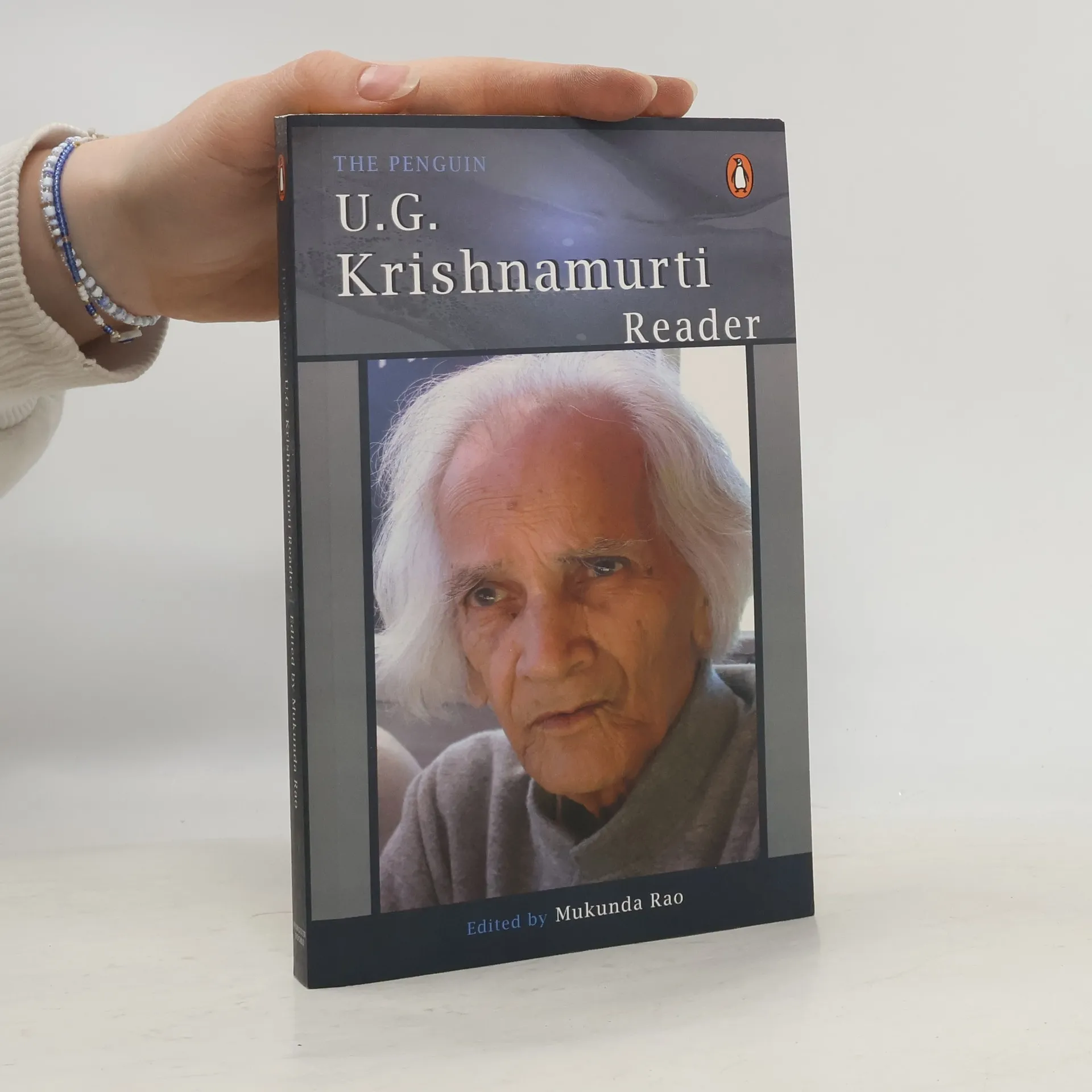
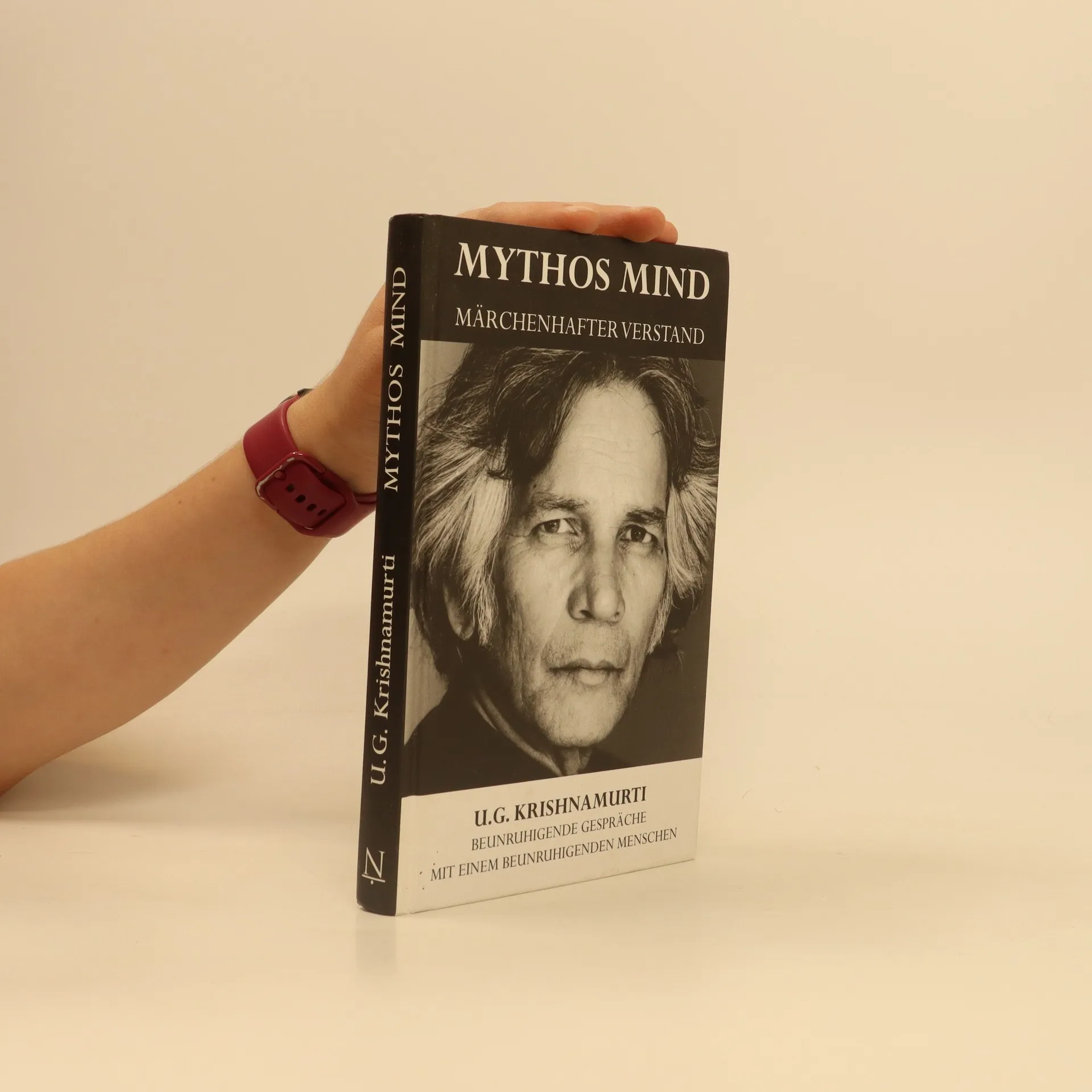
The Penguin U.G. Krishnamurti Reader
- 272 Seiten
- 10 Lesestunden
My teaching, if that is the word you want to use, has no copyright. You are free to reproduce, distribute, interpret, misinterpret, distort, garble, do what you like, even claim authorship, without my consent or the permission of anybody. Thus spoke U.G. Krishnamurti in his uniquely iconoclastic way, distancing himself from gurus and spiritual advisers. His only advice was for people to discard their crutches and liberate themselves from cultural conditioning. Born on 9 July 1918 in Masulipatnam, Andhra Pradesh, he passed away on 22 March 2007 in Vallecrosia, Italy. The impact he had on his admirers is profound and difficult to articulate. With his flowing silvery hair and deep-set eyes, he was described as a wild flower of the earth, a bird in constant flight, an anti-guru, and a cosmic Naxalite. UG did not give lectures or belong to any organization; instead, he traveled the world to connect with those drawn to his anti-teaching. His language was simple and unadorned, with an informal and intimate conversational style. This reader, edited by long-time friend Mukunda Rao, compiles UG's radical utterances and ideas. He persistently questioned and dismantled the foundations of human thought, leaving behind a sense of freedom from illusory goals and the constraints of knowledge, beauty, goodness, truth, and God.
No Way Out
- 122 Seiten
- 5 Lesestunden
I asked a friend, an editor of a magazine, to do a cover story on U.G. His prompt response was, “U.G. is not a cover story material, he is only for the upper-class intellectuals…has no mass appeal...” “Very few people can understand him and his philosophy,” he went on to add. On coming out of his office, I pondered over the startling revelation. After all, just because I understood or appreciated something, does not mean that everyone else does too. I started going through the various material available on / about U.G. and discovered that the fault did not lie with U.G. or his statements (which I knew already) but with people like us who want to present him to the world. Just like when we present a rose to someone, we break off all its thorns, we should present the essence of U.G.'s philosophy in its purity, minus the mind -shattering, devastating, blasphemous…thorns. I am trying to do this exercise and hope to reach the masses! Sunita Pant Bansal NOIDA, India 2002