




Lieferung vor Weihnachten: Noch 2 Tage, 15 Stunden
Bookbot

Donald MacKenzie

    11. August 1918 – 1. Januar 1993

    Donald MacKenzies literarisches Werk ist tief geprägt von seinen eigenen Erfahrungen am Rande der Gesellschaft, einschließlich seiner Zeit in verschiedenen Strafsystemen. Diese direkte Auseinandersetzung mit der kriminellen Unterwelt verleiht ihm eine einzigartige und ungeschönte Perspektive auf die menschliche Natur und Motivation. Seine Schriften tauchen mit schonungsloser Ehrlichkeit und scharfem analytischem Einblick in die dunkleren Seiten des Lebens ein. MacKenzies Prosa ist direkt und unverblümt und bietet den Lesern einen fesselnden und oft beunruhigenden Einblick in eine Welt, die selten mit solcher Authentizität erforscht wird.

    Notizbuch der Angst
    Fliehende Ziele
    Auf Messers Schneide
    Fünf Drachen aus Jade
    Ravens Rache
    Mörder ohne Gesicht
    • 2021

      "Trading at the Speed of Light" by Donald MacKenzie explores the transformation of financial markets from face-to-face trading to high-frequency trading (HFT) driven by algorithms. It examines the efficiency HFT brings, alongside the competitive race for speed and its implications for global finance's future.

      Trading at the Speed of Light
    • 2020

      Mountains in the Greenhouse

      Climate Change and the Mountains of the Western U.S.A.

      • 250 Seiten
      • 9 Lesestunden

      This book is written for general readers with an interest in science, and offers the tools and ideas for understanding how climate change will affect mountains of the American West. A major goal of the book is to provide material that will not become quickly outdated, and it does so by conveying its topics through constants in ecological science that will remain unchanged and scientifically sound. The book is timely in its potential to be a long-term contribution, and is designed to inform the public about climate change in mountains accessibly and intelligibly. The major themes of the book include: 1) mountains of the American West as natural experiments that can distinguish the effects of climate change because they have been relatively free from human-caused changes, 2) mountains as regions with unique sensitivities that may change more rapidly than the Earth as a whole and foreshadow the nature and magnitude of change elsewhere, and 3) different interacting components of ecosystems in the face of a changing climate, including forest growth and mortality, ecological disturbance, and mountain hydrology. Readers will learn how these changes and interactions in mountains illuminate the complexity of ecological changes in other contexts around the world.

      Mountains in the Greenhouse
    • 2004

      Mechanizing Proof

      • 439 Seiten
      • 16 Lesestunden
      4,5(23)Abgeben

      Most aspects of our private and social lives—our safety, the integrity of the financial system, the functioning of utilities and other services, and national security—now depend on computing. But how can we know that this computing is trustworthy? In Mechanizing Proof , Donald MacKenzie addresses this key issue by investigating the interrelations of computing, risk, and mathematical proof over the last half century from the perspectives of history and sociology. His discussion draws on the technical literature of computer science and artificial intelligence and on extensive interviews with participants. MacKenzie argues that our culture now contains two ideals of proof as traditionally conducted by human mathematicians, and formal, mechanized proof. He describes the systems constructed by those committed to the latter ideal and the many questions those systems raise about the nature of proof. He looks at the primary social influence on the development of automated proof—the need to predict the behavior of the computer systems upon which human life and security depend—and explores the involvement of powerful organizations such as the National Security Agency. He concludes that in mechanizing proof, and in pursuing dependable computer systems, we do not obviate the need for trust in our collective human judgment.


      Mechanizing Proof
    • 2002

      This volume, edited by two of McKenzie's former students, brings together a wide range of his writings on bibliography, the book trade and the sociology of texts.

      Making Meaning
    • 1995
    • 1994

      Ein Polizist, der krumme Dinger dreht, hält sich für besonders clever. Soviel Cleverness bricht ihm den Hals...

      Die Diamanten-Falle
    • 1993

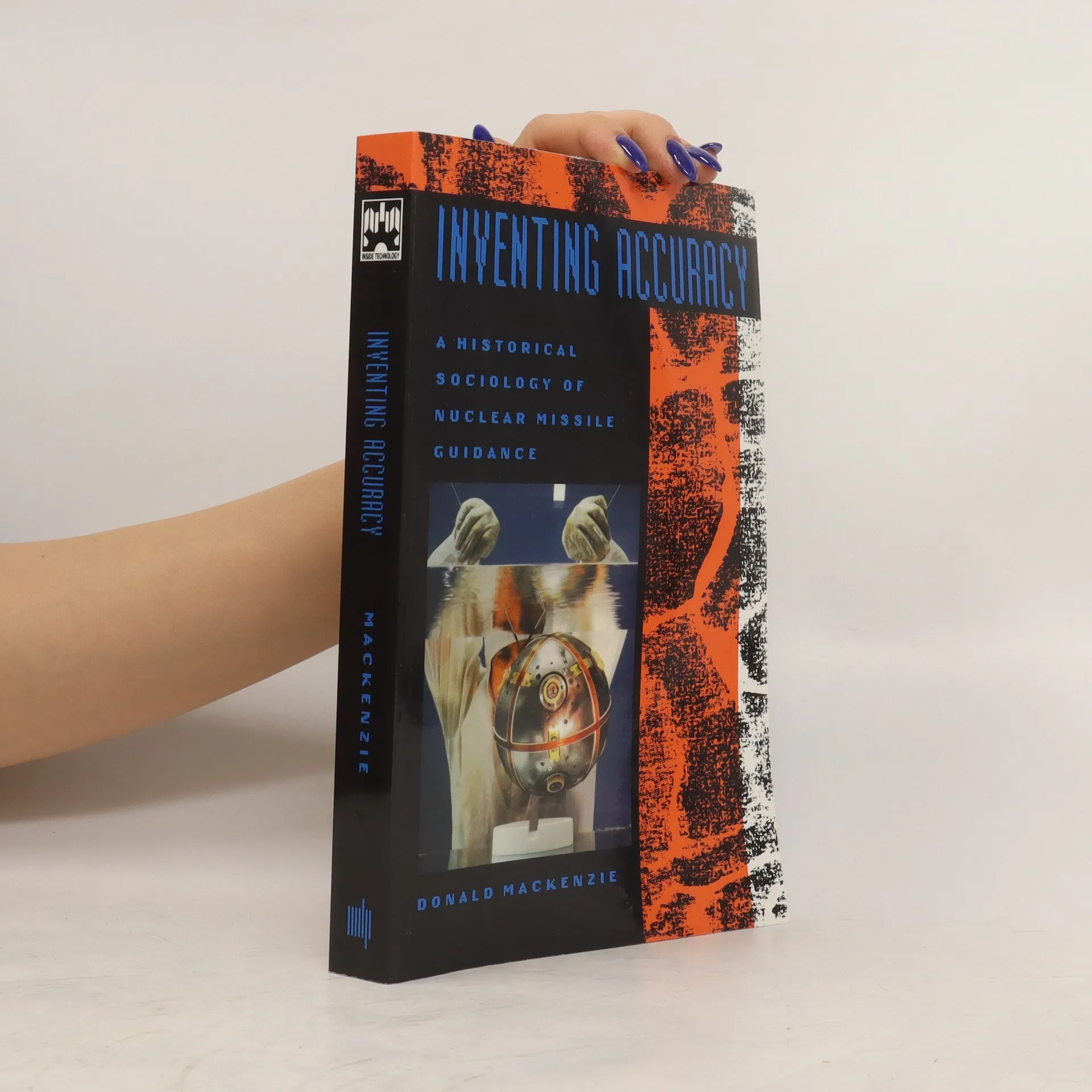
      Inventing Accuracy

      • 478 Seiten
      • 17 Lesestunden
      4,1(68)Abgeben

      "Mackenzie has achieved a masterful synthesis of engrossing narrative, imaginative concepts, historical perspective, and social concern." Donald MacKenzie follows one line of technology—strategic ballistic missile guidance through a succession of weapons systems to reveal the workings of a world that is neither awesome nor unstoppable. He uncovers the parameters, the pressures, and the politics that make up the complex social construction of an equally complex technology.

      Inventing Accuracy
    • 1992
    • 1990

      Mörder ohne Gesicht

      • 334 Seiten
      • 12 Lesestunden
      3,8(61148)Abgeben

      Ein altes Bauernpaar ist auf seinem Hof brutal ermordet worden. Kurz vor ihrem Tod hatte die Bäuerin noch einen letzten seltsamen Hinweis gegeben … Wallanders erster Fall. Kurt Wallander stieß die Tür mit dem Fuß auf. Es war schlimmer, als er es sich vorgestellt hatte. Viel schlimmer. Später würde er sagen, daß es das Schlimmste war, was er je gesehen hatte. Und dabei hatte er weiß Gott schon eine Menge gesehen. Ein altes Bauernpaar ist auf seinem Hof ermordet worden. Nicht nur das Motiv der Tat liegt völlig im Dunkeln, vor allem deren furchtbare Brutalität irritiert die ermittelnden Polizisten um Kurt Wallander. Und dann hatte die alte Bäuerin, kurz bevor sie im Krankenhaus starb, den Beamten noch einen letzten, seltsamen Hinweis gegeben ... Ein raffinierter psychologischer Kriminalroman in der Tradition Sjöwall/Wahlöös. ›Mörder ohne Gesicht‹ wurde 1992 als bester Thriller Skandinaviens ausgezeichnt.

      Mörder ohne Gesicht
    • 1989

      Der verlorene Verlierer

      • 173 Seiten
      • 7 Lesestunden

      Geld macht zwar nicht glücklich, aber es beruhigt ungemein. Diese Überzeugung macht die drei Männer zu Komplizen. Sie sind bereit, jeden Preis dafür zu zahlen.Aber ihre Rechnung geht nicht auf. Denn daß Geld auch den Charakter verderben kann, das haben sie nicht einkalkuliert. Und für diesen Fehler müssen sie teuer bezahlen ... (Dieser Text bezieht sich auf eine frühere Ausgabe.)

      Der verlorene Verlierer