


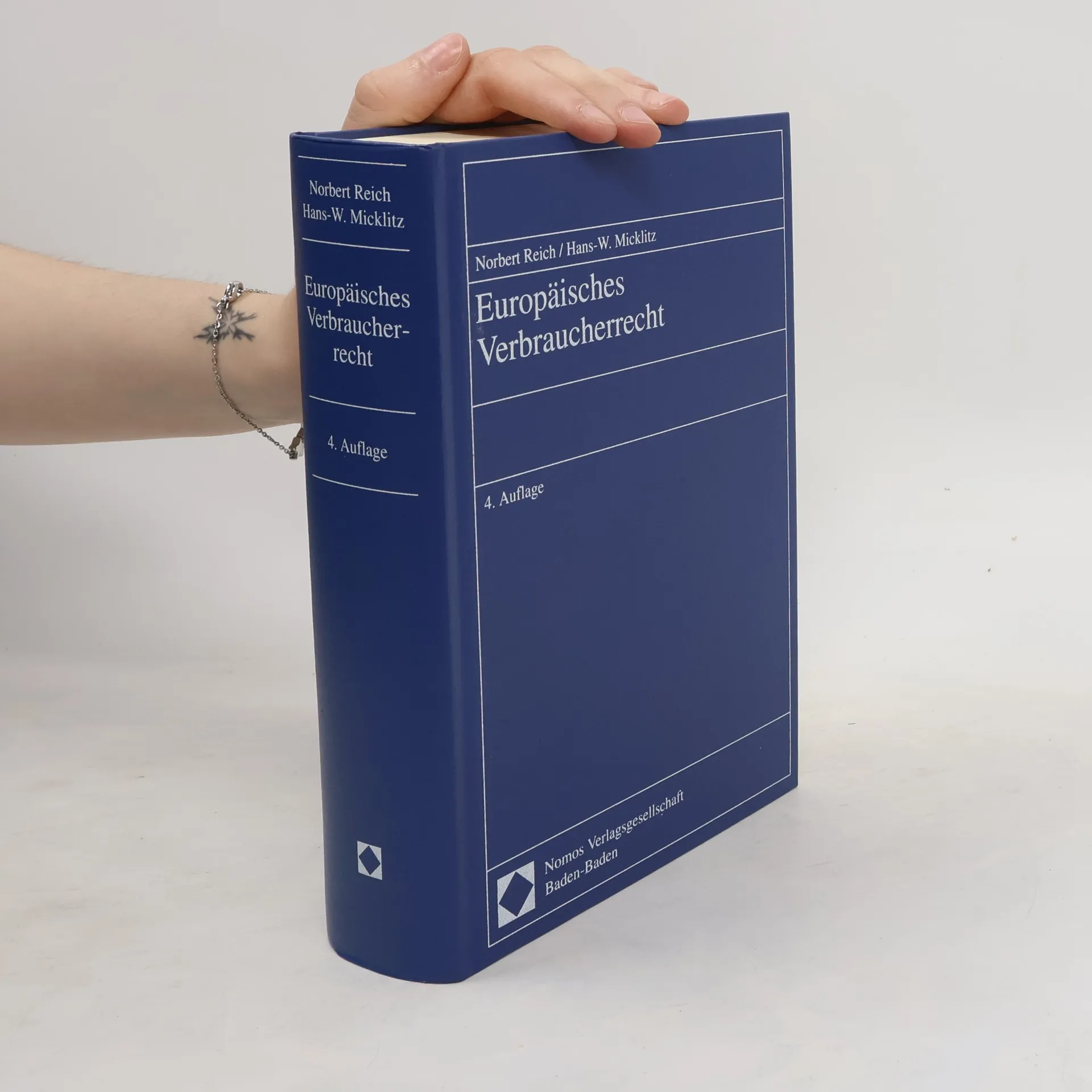
Die 4. Auflage des Standardwerks zum »Europäischen Verbraucherrecht« spiegelt die wachsende praktische Bedeutung des Themas sowie die intensive EU-Gesetzgebung und die Rechtsprechung des EuGH wider. Der Fokus liegt auf zentralen Themen wie dem Verbraucher im Binnenmarkt, Marktverhaltensrecht, Vertragsrecht, Finanzdienstleistungen sowie der Sicherheit und Umweltqualität von Produkten und Dienstleistungen. Das Handbuch bietet eine umfassende Darstellung des verbraucherrelevanten Primär- und Sekundärrechts des Binnenmarkts. Leser erhalten Klarheit darüber, wie Verträge im europäischen Kontext geschlossen, Finanzdienstleistungen vermarktet und Risiken bewältigt werden können, einschließlich der Berücksichtigung von Kollisionsregeln im Rechtsschutz. Dieses Werk ist ein unverzichtbares Handwerkszeug für die juristische Wissenschaft und Praxis, insbesondere für Rechtsanwälte, Unternehmen und Verbraucherschutzorganisationen. Die Autoren, Prof. Dr. Dr. h. c. Norbert Reich und Prof. Dr. Hans-W. Micklitz, sind renommierte Experten auf ihrem Gebiet. Die Publikation wird als zuverlässige und umfassende Darstellung sowie als problemorientierte Einführung in das europäische Wirtschaftsrecht gelobt, und sie bietet eine sorgfältig recherchierte Übersicht, die für Praktiker von großem Wert ist.
Norbert Reich Bücher


Understanding EU Internal Market Law
- 720 Seiten
- 26 Lesestunden
This book offers a comprehensive analysis of the objectives, principles, and methods of EU Internal Market law, highlighting its substantive law as the most developed aspect of EU law. The authors introduce the legal nuances of the Internal Market, covering its sources, instruments, methods of interpretation, effects, and the interplay between Union and national law in the introductory chapter. They also explore the acquis, case law of the European Courts, and secondary EU legislation. The discussion evolves from the notion of EU law as applicable only to market citizens to its relevance for all citizens and residents in Member States, impacting everyone’s rights and duties alongside national law based on the principle of equal treatment. Subsequent chapters analyze the original liberal spirit of EU law, focusing on market accessibility through free movement rules, competition, and intellectual property regulations. The book also addresses the trend of establishing horizontal standards, such as non-discrimination and fundamental rights. A dedicated chapter examines the concept of autonomy, emphasizing the need for Member States and market citizens to respect the granted autonomy. Lastly, the book discusses accountability and liability concerning the Union, its Member States, undertakings, and citizens. This joint work by three authors from different jurisdictions continues the approach of previous editions, integrating diver