

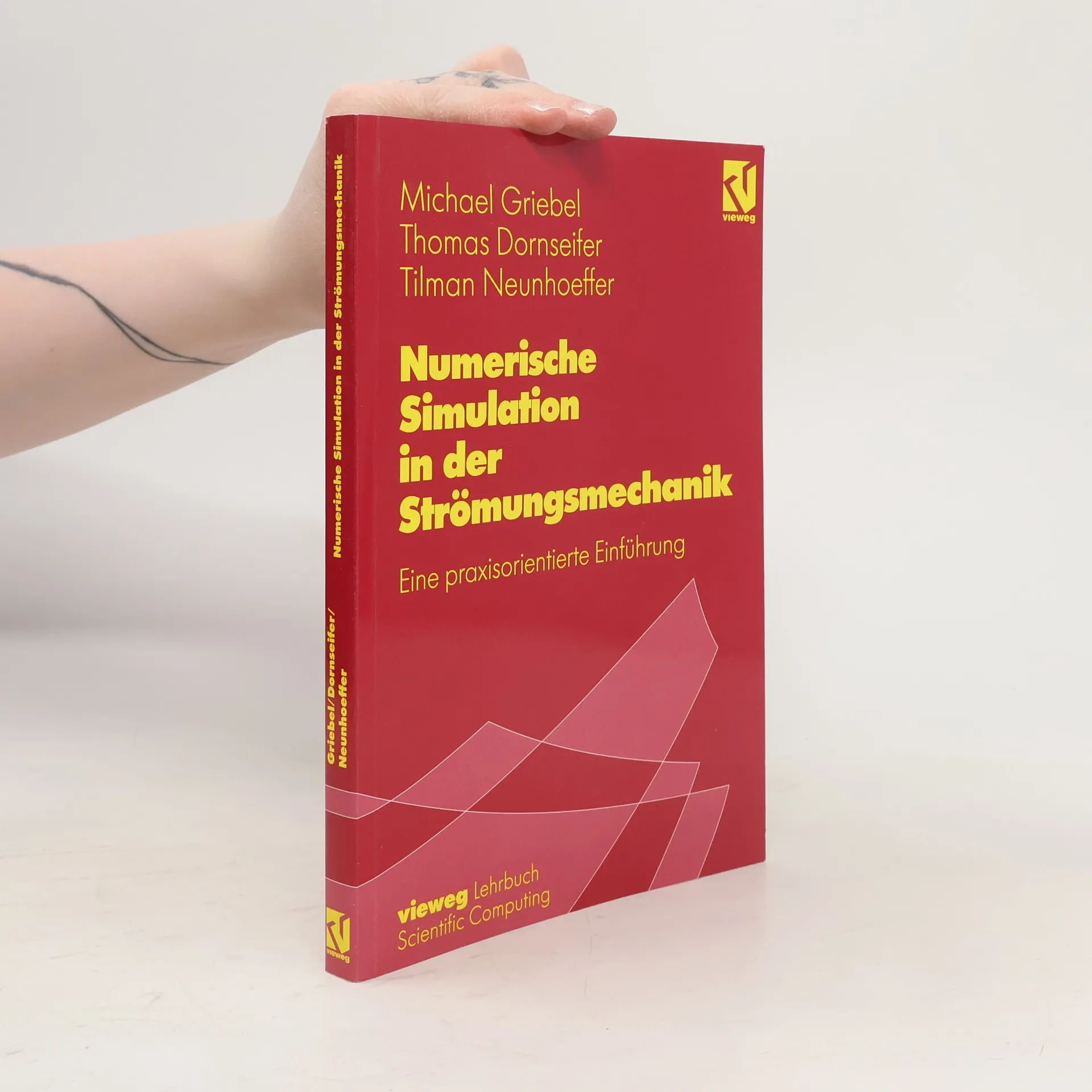
Die numerische Simulation stellt eine Verbindung zwischen dem praktischen Experiment und dem theoretischen Ansatz her und wird in Zukunft zu einer Schlüsseltechnologie heranwachsen. Eine entscheidende Rolle kommt hier der interdisziplinären Zusammenarbeit von Ingenieuren, Informatikern und Mathematikern zu. Dieses Buch gibt am Beispiel der Strömungsmechanik eine Einführung in die numerische Simulation und beleuchtet auf einfache Weise deren vielfältige Aspekte von der Modellbildung über Diskretisierung, Algorithmen und schnelle Löser, Parallelisierung bis hin zur Visualisierung. Neben der Beschreibung der einzelnen Schritte bei der numerischen Simulation werden auch detaillierte Hinweise zur Umsetzung in ein Computerprogramm gegeben. In zahlreichen Abbildungen werden Simulationsergebnisse präsentiert, die den Leser dazu animieren, ein Simulationsprogramm zu erstellen und es für eigene Berechnungen zu nutzen. Das Buch richtet sich an Studierende der Fachrichtungen Physik, Maschinenwesen, Informatik und Mathematik, sowie an Naturwissenschaftler und Ingenieure, die im Selbststudium erste Einblicke in die numerische Simulation von Strömungen erhalten wollen.
Michael Griebel Bücher

Numerische Simulation in der Moleküldynamik
Numerik, Algorithmen, Parallelisierung, Anwendungen (Springer-Lehrbuch)
- 480 Seiten
- 17 Lesestunden
Das Buch behandelt Methoden des wissenschaftlichen Rechnens in der Moleküldynamik, einem Bereich, der in vielen Anwendungen der Chemie, der Biowissenschaften, der Materialwissenschaften, insbesondere der Nanotechnologie, sowie der Astrophysik eine wichtige Rolle spielt. Es führt in die wichtigsten Simulationstechniken zur numerischen Behandlung der Newtonschen Bewegungsgleichungen ein. Der Schwerpunkt liegt hierbei auf der schnellen Auswertung kurz- und langreichweitiger Kräfte mittels Linked Cell-, P$//3$M-, Baum- und Multipol-Verfahren, sowie deren paralleler Implementierung und Lastbalancierung auf Rechensystemen mit verteiltem Speicher. Die einzelnen Kapitel beinhalten darüberhinaus detailierte Hinweise, um die Verfahren Schritt für Schritt in ein Programmpaket umzusetzen. In zahlreichen farbigen Abbildungen werden Simulationsergebnisse für eine Reihe von Anwendungen präsentiert.
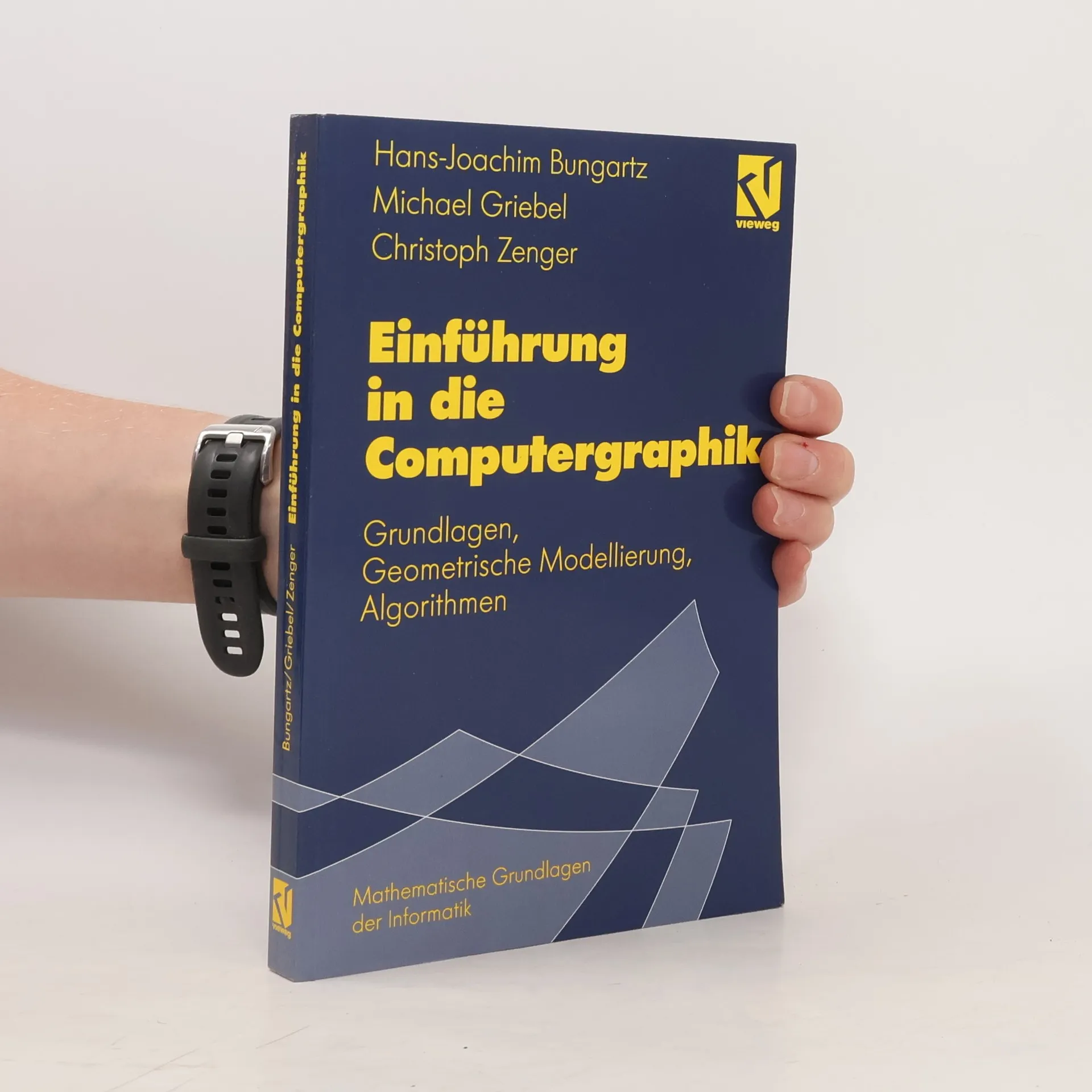
Mathematische Grundlagen der Informatik: Einführung in die Computergraphik
Grundlagen, geometrische Modellierung, Algorithmen
- 237 Seiten
- 9 Lesestunden
Dieses Buch gibt eine umfassende Einführung in die verschiedenen Aspekte der Computergraphik. Neben der Diskussion grundlegender Fragestellungen (Koordinatensysteme, Rasterung, Farbmodelle) werden dabei sowohl die geometrische Modellierung dreidimensionaler Objekte (Volumen-, Oberflächen- und Kantenmodellierung) als auch deren graphische Darstellung (Sichtbarkeitsentscheid, Schattierung, Ray-Tracing, Radiosity) besprochen. Weiterhin wird die Rolle der Computergraphik in modernen Anwendungen wie Animation, Visualisierung oder Virtual Reality beleuchtet. Der Leser erhält so einen vollständigen Überblick über die einzelnen Arbeitsschritte und Techniken von der realen Szene bis zum Bild bzw. zur Visualisierung am Ausgabegerät. Über 220 z. T. farbige Abbildungen illustrieren dabei die einzelnen Verfahren und geben Einblick in die weiten Möglichkeiten moderner Computergraphik.