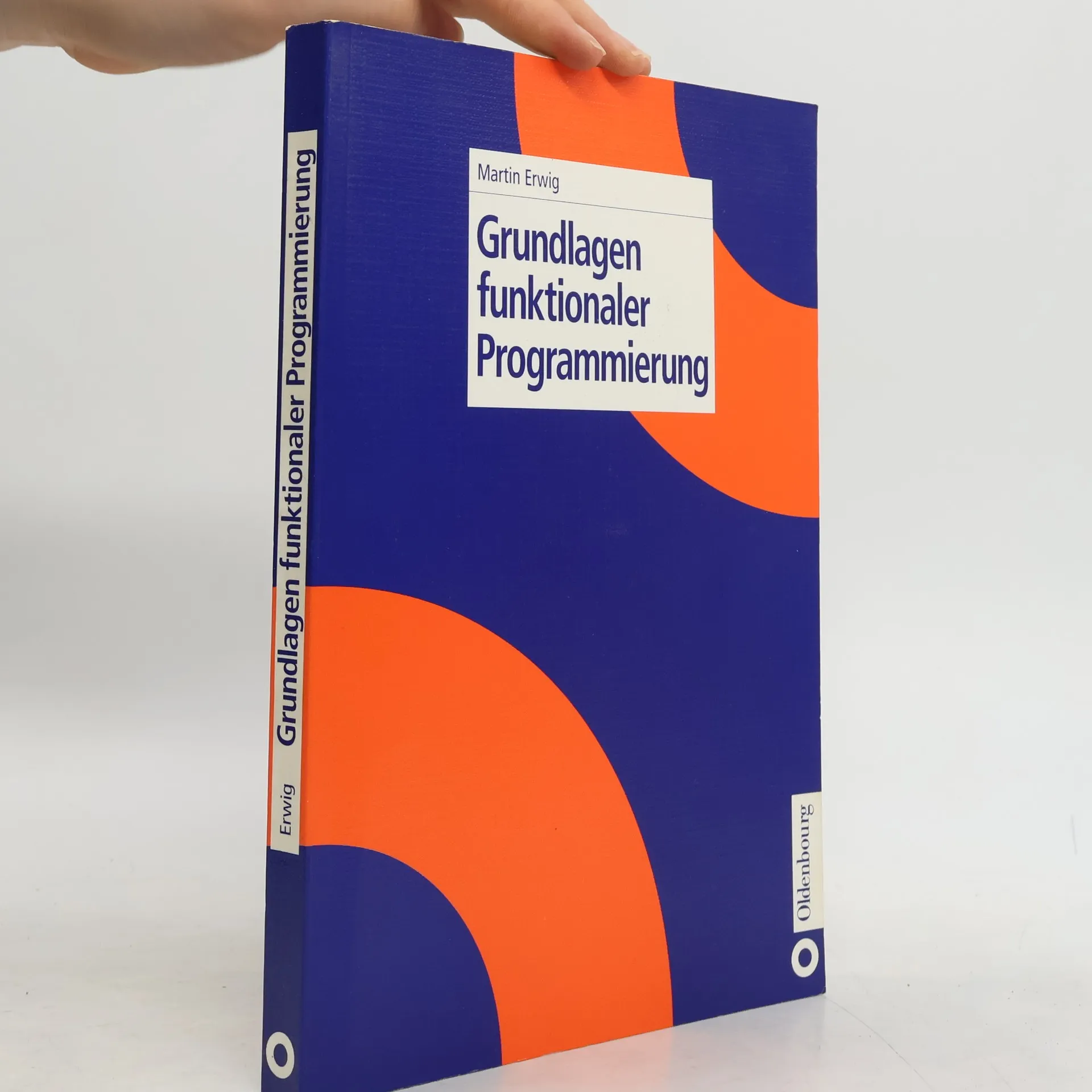
Grundlagen funktionaler Programmierung
- 192 Seiten
- 7 Lesestunden


Imagine a computer scientist intently focused on a screen, hacking or developing an app. Now, erase that image. In this insightful work, computation is framed as an activity extending beyond electronic devices, with computer science defined as the study of systematic problem solving. Daily routines, such as getting out of bed, illustrate problem-solving through well-defined steps, known as algorithms. The author uses relatable examples to explain computing concepts, such as Hansel and Gretel’s algorithm for finding their way home, the unsolvability theme in Groundhog Day, Sherlock Holmes’s data manipulation in crime-solving, and the magic of Harry Potter understood through types and abstraction. Indiana Jones exemplifies the complexity of search algorithms. The discussion also covers data representation, "intractable" problems, language and syntax, control structures, loops, the halting problem, recursion, and error detection in algorithms. This engaging narrative makes computation accessible and highlights its relevance in everyday life, prompting reflection on our own daily algorithms, like the morning routine.
Focusing on the essential principles of programming languages, this book serves as a comprehensive introduction to the foundations that govern most languages. It covers both functional and logic programming, providing readers with a broad perspective on how programming languages function as the linguistic interface between humans and machines. The text is designed to enhance understanding of how to control machine behavior, making it an indispensable resource for anyone looking to grasp the fundamentals of programming languages.